
Stena Europe: The Hot Spot Nobody Found
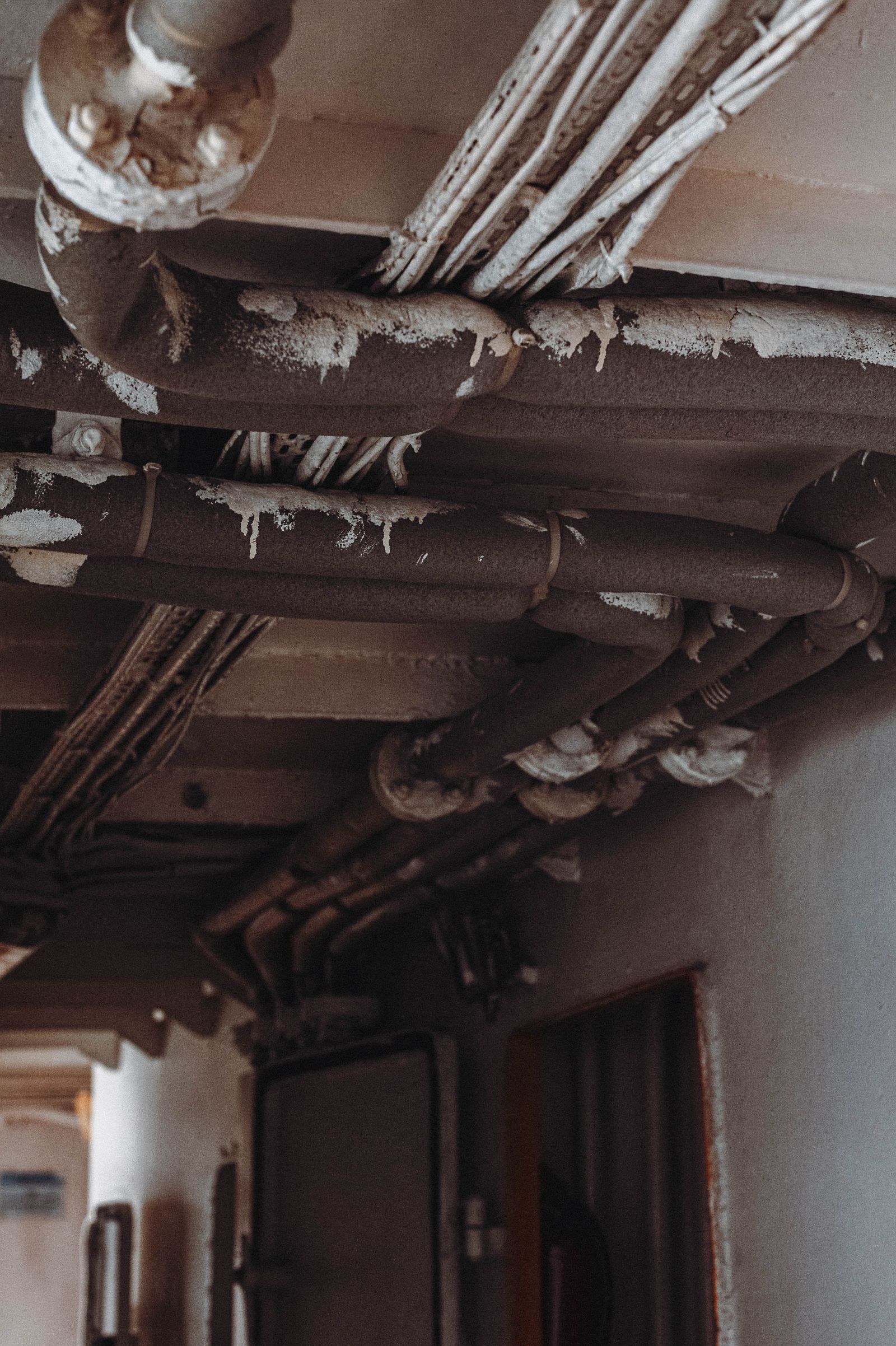
The crew's spot thermometer never found it. After the fire, a thermal camera showed exposed hot surfaces on every one of the four engines.
At about 2115 on 11 February 2023 the Stena Europe had an engine room fire while approaching Fishguard. The crew had been checking exhaust temperatures with an infrared spot thermometer, and it never found the hot surface that ignited the fuel spray. After the casualty, technical staff went through the machinery space with a thermal imaging camera and found exposed hot surfaces on every engine.
What happened, and what it cost
A short-sea ro-pax crossing that ended with an engine out for weeks. The Stena Europe, IMO 7901760, was built in 1981 at Götaverken and rebuilt in 1982 and 2002 — 24,828 GT on 149.05 m by 26.55 m, operated by Stena Line with four main engines. She was inbound to Fishguard from Rosslare with 88 passengers and 59 crew when the fire started.
The mechanism was ordinary and well known. Pressurised fuel escaped from a loose fuel pipe connection and sprayed onto a high-temperature exhaust pipe. The MAIB found that the two protections designed to prevent exactly that — spray shielding and insulation — were not effective, and that manufacturer-recommended modifications had not been fitted. The relevant service bulletin had been published in 1995.
The outcome was better than the mechanism deserved. The crew extinguished the fire themselves. Everyone aboard disembarked safely, with no injuries and no pollution. The port main engine room sustained substantial damage and one of the four main engines was out of service for several weeks.
The rule is 220°C. The manifold was at about 400.
This was not a marginal exceedance found with hindsight. SOLAS Chapter II-2 requires that surfaces with temperatures above 220°C which may be impinged as a result of a fuel system failure shall be properly insulated. The exhaust manifold where ignition occurred was reported at a surface temperature of about 750°F — roughly 400°C — and it was uninsulated. The surface was at nearly double the threshold that the rule exists to cover.
The regulatory logic is worth restating because it explains why the measurement question matters so much. SOLAS does not require that fuel never leaks; it assumes fuel systems fail and requires that the hot surfaces they can reach be covered. Insulation is the barrier of last resort. Once a section of it is missing, the entire control depends on somebody noticing.
A spot thermometer answers a different question
The crew were not neglecting temperature monitoring. They were doing it with an instrument that could not find what they were looking for. MAIB recorded that the temperature measuring equipment used to monitor the engine exhaust insulation did not effectively identify any hot spots, and that the crew had been using an infrared spot thermometer to check individual locations — an approach that overlooked many exposed high-temperature sites.
Consider what an insulation defect actually is. A gap at a flange. A displaced lagging mattress. A section removed for maintenance and imperfectly reinstated. It is small, it is arbitrarily located, and there is no way to predict where it will be. A spot thermometer returns an accurate temperature for the place it is aimed at, and says nothing whatsoever about the surface fifteen centimetres to the left. Surveying a large, geometrically complex machinery space that way is sampling, and the sample is chosen by whoever is holding the gun.
The post-casualty survey settles the point. When Stena technical staff went back through the machinery space with a thermal imaging camera, they found exposed hot surfaces on every engine. The condition was not peculiar to the engine that burned. It was general — and the reason nobody had reported it was that the method in use could not see it. The MAIB report itself carries a thermal image taken with a FLIR ONE Edge Pro on 18 April 2023, showing hot longitudinal surfaces along a main engine.
What MAIB asked for
Recommendations 2024/170 to 2024/174 went to the Maritime and Coastguard Agency and to Stena Line Ltd. The operator was asked to review its defect reporting system, to provide training to improve equipment inspections, to promulgate details of the accident across its fleet, and to introduce the use of thermal imaging cameras for the identification of exposed high-temperature surfaces.
The wider recommendation is the more interesting one. MAIB proposed that the IMO require thermographic equipment rather than spot thermometers for these inspections, on the reasoning that full-area images make gaps and hot spots easier to identify — and that this would support the existing requirement for running machinery checks confirming that insulation covering heated surfaces has been properly reinstalled or replaced.
That last clause names the real failure mode. Insulation gets removed for maintenance and put back. The defect is a maintenance artefact, created by the same work that keeps the machinery running, and it is invisible to inspection unless the whole surface is imaged. A regime that verifies reinstatement by pointing a thermometer at a few remembered locations is verifying the wrong thing.
What it means for owners and underwriters
For owners, the audit question is the modality of the instrument, not its presence. "Exhaust temperature monitoring is carried out" is not an answer to anything. The questions that matter are whether the method covers an area or samples points, whether it is used after every disturbance of insulation rather than on a calendar, and whether the resulting images are retained so that a surveyor can see what was covered rather than take the inspection on trust.
The read-across to the vehicle deck is ours rather than the MAIB's, but it is the same argument in a different space. Point devices sample; area and line devices cover. This corpus makes that case about ro-ro decks, where the same geometry problem applies to a stow that changes every voyage. An official investigator has now made it about machinery spaces, with a published report and a proposal to the IMO behind it.
For underwriters, note what kind of finding this is. A manufacturer service bulletin published in 1995 and still unimplemented in 2023 is a management-system finding, not a hardware one, and it is the sort of thing that survives a satisfactory class record. Note also that this fire was won: the crew put it out, nobody was hurt, and the loss was an engine for several weeks rather than a hull. The same ignition mechanism in a less attended space, or on a ship without four engines, does not end the same way.
How RoRoSAFE helps
A spot thermometer answers one question at one point, and it missed the manifold. Continuous thermal monitoring answers the question everywhere, all the time. RoRoSAFE applies that on the vehicle deck, reading every parked vehicle against its baseline and flagging a hot spot before visible smoke. It covers vehicle decks, not engine rooms.
Pilot: one deck · installed alongside the berth · no drydock · 6 months of dashboard access
Sources
- 1. UK Marine Accident Investigation Branch — Report 20/2024, "Engine room fire on board ro-ro passenger ferry Stena Europe", published December 2024 (gov.uk report page, read directly): fire on 11 February 2023 at 2115 while approaching Fishguard, Wales, from Rosslare, Ireland; significant damage to the engine room; nobody injured and no damage to the environment; fire extinguished by the crew. Safety issues identified: pressurised fuel from a loose fuel pipe connection sprayed onto a high temperature exhaust pipe; two designed protections not effective; manufacturer-recommended modifications not fitted; crew insufficiently trained to inspect engine fuel systems; temperature monitoring equipment did not effectively identify any hot spots. Recommendations 2024/170 to 2024/174 addressed to the Maritime and Coastguard Agency and Stena Line Ltd.
- 2. The Maritime Executive — "After Ferry Fire, MAIB Recommends Infrared Cameras for Engine Inspections": the crew had used an infrared spot thermometer to check individual locations, which overlooked many exposed high-temperature sites; after the fire, when Stena technical staff used a thermal imaging camera instead, they found exposed hot surfaces on every engine; the uninsulated exhaust manifold where ignition occurred had a surface temperature of about 750°F at the time of the fire; MAIB advocated thermographic equipment rather than spot thermometers, to improve hot spot identification and facilitate the IMO requirement for running machinery checks that insulation covering heated surfaces has been properly reinstalled or replaced; 88 passengers and 59 crew aboard, all safely disembarked; the loosened fuel line flange failure had been flagged by the manufacturer in a 1995 service bulletin the operator never implemented.
- 3. MaritimeCyprus summary of MAIB report 20/2024: substantial damage to the port main engine room; one of four main engines disabled for several weeks; safety issues as listed above.
- 4. SOLAS Chapter II-2 — regulation 4.2.2.6.1: surfaces with temperatures above 220°C which may be impinged as a result of a fuel system failure shall be properly insulated; applied to ships above 500 gross tonnage, alongside requirements for jacketed high-pressure fuel piping and screening of connections on flammable oil systems.
- 5. Vessel particulars — Stena Europe, IMO 7901760, built 1981 by Götaverken, rebuilt 1982 and 2002, 24,828 GT, 149.05 m × 26.55 m, ro-ro passenger ferry, Stena Line.
Questions, answered
What caused the Stena Europe engine room fire?+
Pressurised fuel from a loose fuel pipe connection sprayed onto a high-temperature exhaust pipe on 11 February 2023. The MAIB found that the spray shielding and insulation intended to prevent that outcome were not effective, and that manufacturer-recommended modifications — the subject of a service bulletin published in 1995 — had not been fitted.
Why did the crew's temperature checks miss the hot spot?+
They were using an infrared spot thermometer, which returns an accurate reading only where it is aimed. Insulation defects are small and arbitrarily located — a gap at a flange, a displaced lagging section — so checking individual locations overlooked many exposed high-temperature sites. It is a coverage failure rather than an accuracy one.
What did the thermal camera find afterwards?+
Exposed hot surfaces on every engine. When Stena technical staff surveyed the machinery space with a thermal imaging camera after the fire, the condition proved to be general rather than confined to the engine that burned — which indicates the defects had been present and unreported because the inspection method in use could not detect them.
What did MAIB recommend?+
Recommendations 2024/170 to 2024/174 went to the Maritime and Coastguard Agency and Stena Line Ltd, covering defect reporting, inspection training, fleet-wide promulgation, and the introduction of thermal imaging cameras for identifying exposed high-temperature surfaces. MAIB also proposed that the IMO require thermographic equipment rather than spot thermometers for these inspections.
Continue the thread

SOLAS II-2/7: Fixed Detection vs IR
Draft SOLAS II-2/7.11 would put two portable IR imagers on container ships. On a packed vehicle deck a hand-held imager can't reach most of the cargo.

Marine-Spec Thermal Cameras on Deck
The spec that decides fitment is not resolution. It is which EN 54 part the camera certifies to, because that fixes which FSS Code duty it can meet.

Thermal Cameras vs Thermal Grids at Sea
Both can image temperature. They fail in different places. On a cargo deck the failure modes are what determine the answer.
Euroferry Olympia: When the Deck Had People
The 2022 Euroferry Olympia fire began in a garage and killed 11 truck drivers on the vehicle decks — proof a car-deck fire is a life-safety event.
Grande Europa: Two Fires, One Voyage
The crew beat a deck-3 fire in 45 minutes. Three hours later a second fire started on deck 8 — that one took ten hours and a salvor.