
Grande Europa: Two Fires, One Voyage
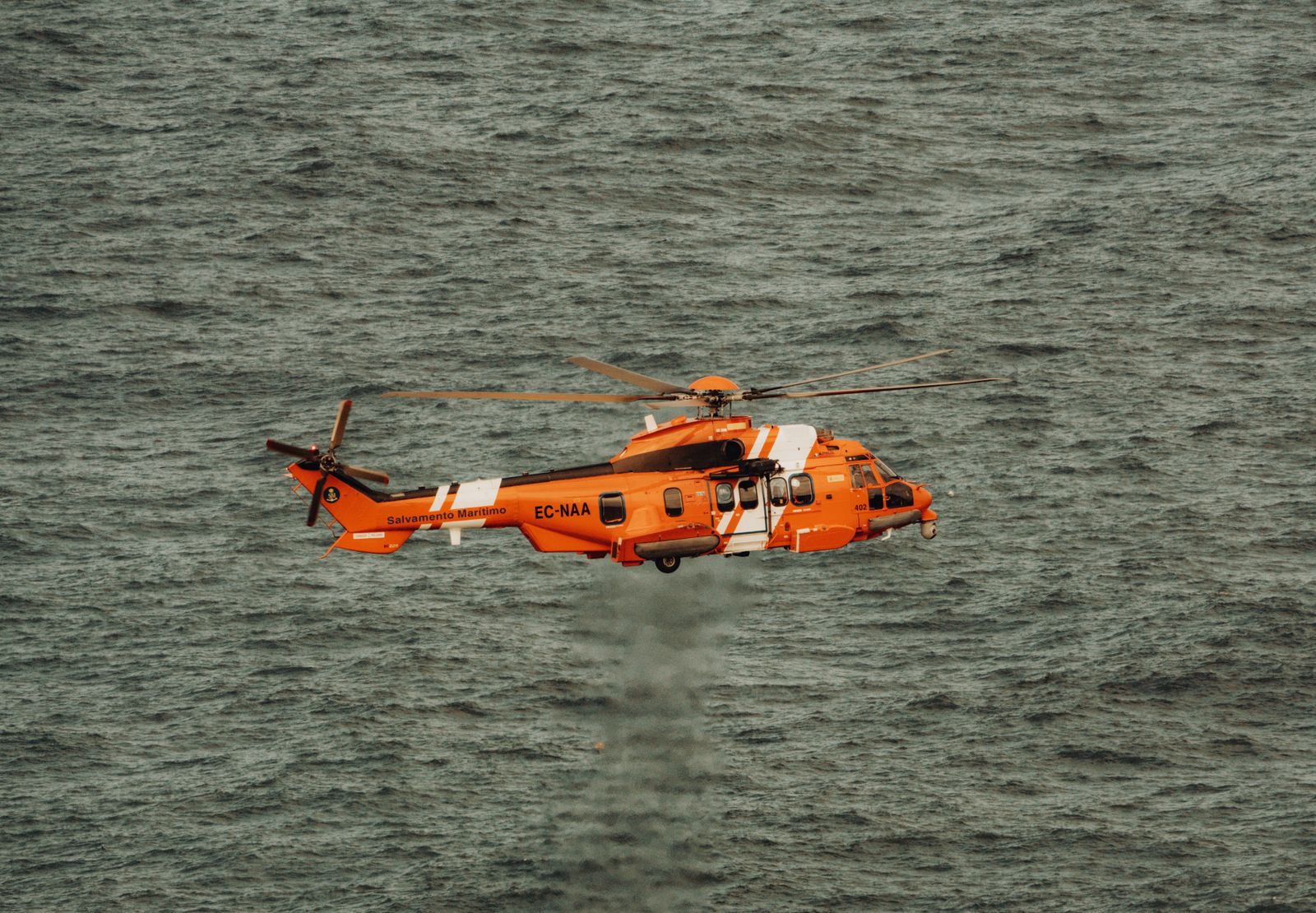
The crew beat a deck-3 fire in 45 minutes. Three hours later a second fire started on deck 8 — that one took ten hours and a salvor.
On 15 May 2019 the Grande Europa had two fires on one voyage. The crew found the first on deck 3 at 00:45 and put it out in about 45 minutes with the ship's own equipment. The second started on deck 8 at 04:00, spread to deck 9, and took until 14:00 — with 15 of 25 crew lifted off by helicopter, three state rescue vessels on scene and a commercial salvor engaged.
The ship and what it was carrying
A mid-life Italian ro-ro on a short Mediterranean leg. The Grande Europa, IMO 9138381, was built in 1998 at Fincantieri's Castellammare di Stabia yard, 51,714 GT on 181.3 m by 32.25 m, operated by the Grimaldi Group of Naples under the Italian flag. She was running from Salerno to Valencia when the first alarm came in about 25 nautical miles off Palma de Mallorca.
The cargo matters for what came next. Grimaldi reported 1,687 vehicles aboard — mostly new cars, vans, trucks and excavators — alongside 49 containers holding mainly food products. The operator's own preliminary account placed both fires in new vehicles, saying the two fires started from two new vehicles and then spread to nearby units. Not a used-car consignment, not a declared dangerous-goods box.
Forty-five minutes, then ten hours
The same crew fought both fires and the outcomes were not comparable. The deck 3 fire was detected at 00:45, attacked with the firefighting equipment already aboard, and was out inside three quarters of an hour. No external assistance, no evacuation, no salvage contract. On the evidence available it is a textbook result — early detection, prompt intervention, contained.
The deck 8 fire began at 04:00 and behaved differently from the start. It spread upward into deck 9 and was not extinguished until 14:00. Spain's Salvamento Marítimo put the Salvamar Acrux, Guardamar Calíope and Marta Mata on scene and lifted 15 crew off by helicopter, Helimer 205; ten remained aboard to work the casualty and the tow. Grimaldi engaged the salvage contractor Ardent. The ship kept her engines and was assisted into Palma de Mallorca under tow.
What happens to a deck after the alarm is cleared
No public report resolves the mechanism, and that has to be said plainly before anything is built on it. The operator described two separate fires in two separate vehicles. Deck 3 and deck 8 are five decks apart, which does not suggest a simple spread path, but no published investigation establishes whether the second event was a re-ignition, an undetected propagation, or an ignition entirely independent of the first.
The monitoring question survives all three readings. Once a fire has been fought and beaten, the panel is reset and the space goes back to routine surveillance — but the space is not the one the surveillance was commissioned against. Structure retains heat. Vehicles nearby have been heated and wetted. The deck atmosphere carries combustion products and whatever the crew put on the fire. Alarm thresholds set against a cold, quiet baseline are now working against a disturbed one, and the people reading them have been awake and fighting a fire.
That is the operating condition in which a second event has to be caught, and it is the condition detection schemes are least often specified for. Acceptance testing is done on a clean deck. Threshold-setting assumes a stable baseline. The post-incident hour — arguably the highest-risk hour on the whole voyage — is normally left to the same configuration that was watching the cold ship.
The remedies the operator asked for
Grimaldi went public with three specific demands within a day, and they are worth reading against the operator's own preliminary finding. The company called for stricter controls on vehicle batteries — stating that these often cause short-circuits aboard vessels and in port terminals — for a total prohibition on personal effects in second-hand vehicles carried on ro-ro ships, and for the IMO to institute mandatory certification for the stuffing of containers with dangerous goods.
Two of those three address cargo that was not implicated. The preliminary account put both fires in new vehicles, not in second-hand units carrying personal effects and not in a container. The battery point is the one that lands on the facts, and it is the one that has aged best.
That deserves emphasis, because the chronology is often told the other way round. This was May 2019 — nearly three years before the Felicity Ace, and before the vehicle-carrier battery-fire debate reached underwriters at scale. An operator that had just lost the Grande America nine weeks earlier was already naming vehicle batteries short-circuiting as the control gap on car decks. The argument did not begin with electric vehicles; it began with cars.
What it means for owners and underwriters
For owners, the operational point is that the survivable outcome and the serious one shared a single night on a single ship. A fire response plan that is validated against the first event — detect, attack, extinguish, restore — has not been validated against the state the ship is in at 02:00 with a burnt deck below and eight hours of watch left. Ask what the plan says about the second event, who is awake for it, and what the detection configuration is doing differently while the deck is still hot.
For underwriters, the casualty is a reminder that evidence quality varies enormously across otherwise similar losses. This ship survived, so no total-loss adjustment forced a public record; no investigation report has been published, so the industry has an operator's preliminary statement and contemporaneous trade reporting and very little else. That is a different failure from the Sincerity Ace, where a casualty with five deaths produced no published report at all — but it leaves the same gap. Two fires on one voyage is a pattern worth pricing, and there is no document to price it from.
How RoRoSAFE helps
The second fire started after the first alarm was cleared. RoRoSAFE's per-vehicle thermal sensing keeps watching every bay after an event is declared over, on the bridge and ashore, so a second vehicle heating up hours later is flagged at its location before visible smoke. It does not stop watching when the first fire is out.
Pilot: one deck · installed alongside the berth · no drydock · 6 months of dashboard access
Sources
- 1. The Maritime Executive — "Grimaldi Ro/Ro Catches Fire off Mallorca", May 2019: fire outbreak 0400 on Wednesday 15 May 2019 approximately 25 miles off Palma de Mallorca; 15 crew evacuated by helicopter from the Grimaldi Lines ro/ro Grande Europa with 10 remaining aboard to assist with the response and towing; Salvamento Marítimo units Salvamar Acrux, Guardamar Calíope and Marta Mata on scene with helicopter Helimer 205; salvage contractor Ardent engaged by Grimaldi; arrival at the Palma harbour entrance at approximately 2100 UTC; vessel taken under tow to Palma de Mallorca.
- 2. gCaptain — "Grimaldi Group Calls for Tighter Cargo Controls After Fires", May 2019: first fire 00:45 on deck 3, extinguished by the crew in approximately 45 minutes with the firefighting equipment aboard; second fire 04:00 on deck 8, spreading to deck 9; 25 crew aboard, 15 evacuated, no reported injuries; 1,687 mostly new vehicles (cars, vans, trucks, excavators) and 49 containers of mainly food products; vessel towed to Palma de Mallorca; Grimaldi's calls for stricter controls on car batteries to prevent short-circuits, prohibition of personal effects in second-hand vehicles on ro-ro vessels, and mandatory classification-society certification for container stuffing with dangerous goods.
- 3. Automotive Logistics — "Grimaldi calls for stricter cargo rules following latest vessel fires", May 2019: two separate fires on 15 May 2019, first 00:45 on deck 3 extinguished after 45 minutes, second 04:00 on deck 8 spreading to deck 9; preliminary investigations indicating the two fires started from two new vehicles and then spread to other nearby units; almost 1,700 new passenger cars and 49 containers of food products; Grimaldi's statement that vehicle batteries often cause short-circuits on board vessels and in port terminals; demand for a total prohibition of personal effects in second-hand vehicles embarked on ro-ro vessels; call for the IMO to institute mandatory certification for the filling of containers with dangerous goods.
- 4. Vessel particulars — Grande Europa, IMO 9138381, MMSI 247206000, vehicle carrier, Italian flag, built 1998 by Fincantieri Castellammare di Stabia, 51,714 GT, 181.3 m × 32.25 m, summer DWT 18,461, manager/owner Grimaldi Group SpA, Naples.
Questions, answered
What happened to the Grande Europa in May 2019?+
She had two separate fires on one voyage. On 15 May 2019, about 25 nautical miles off Palma de Mallorca, a fire on deck 3 was detected at 00:45 and extinguished by the crew in roughly 45 minutes. A second fire began on deck 8 at 04:00, spread to deck 9, and was not out until 14:00. Fifteen of 25 crew were airlifted off and the ship was towed into Palma.
Were the fires caused by electric vehicles?+
No source establishes that. Grimaldi's preliminary account placed both fires in new vehicles that then spread to nearby units, without identifying the propulsion type, and no investigation report has been published. What is on record is that the operator publicly named vehicle batteries short-circuiting as a control gap — in May 2019, nearly three years before the Felicity Ace.
Why does the gap between the two fires matter?+
Because for those three hours and fifteen minutes the ship was watching a deck that had just had a fire using a configuration commissioned for a deck that had not. Structure retains heat, nearby vehicles have been heated and wetted, and the atmosphere carries combustion products — so thresholds set against a cold baseline are working against a disturbed one, with a tired crew reading them.
Is there an official report on this casualty?+
None was located. The ship survived, so no total-loss adjustment forced a public record, and the available account is the operator's preliminary statement plus contemporaneous trade reporting. One secondary summary attributes a report to a flag authority that does not match the ship's Italian registry, so even the report's existence should be treated as unestablished.
Continue the thread

Genius Star XI: A Contained Li-ion Fire
Improperly lashed battery cargo caught fire twice in Pacific storms — yet the Genius Star XI reached port. The NTSB's rare contained lithium casualty.

Grande America: Anatomy of a Con-Ro Loss
The Grande America carried containers and 2,100 vehicles in one hull. Investigators couldn't fix where the fire began — and CO₂ couldn't hold it.
Sincerity Ace: The Fire With No Public Report
Five crew died when the Sincerity Ace burned 1,800 nm off Oahu in 2018. Panama investigated, the cause stayed unknown, and no report was published.

Are Crews Trained to Fight an EV Fire?
Mostly not. STCW firefighting training is generic — and a battery in thermal runaway can't be put out by routine crew firefighting at all.
Stena Europe: The Hot Spot Nobody Found
The crew's spot thermometer never found it. After the fire, a thermal camera showed exposed hot surfaces on every one of the four engines.