
Black Mass: The EV Cargo With No UN Number
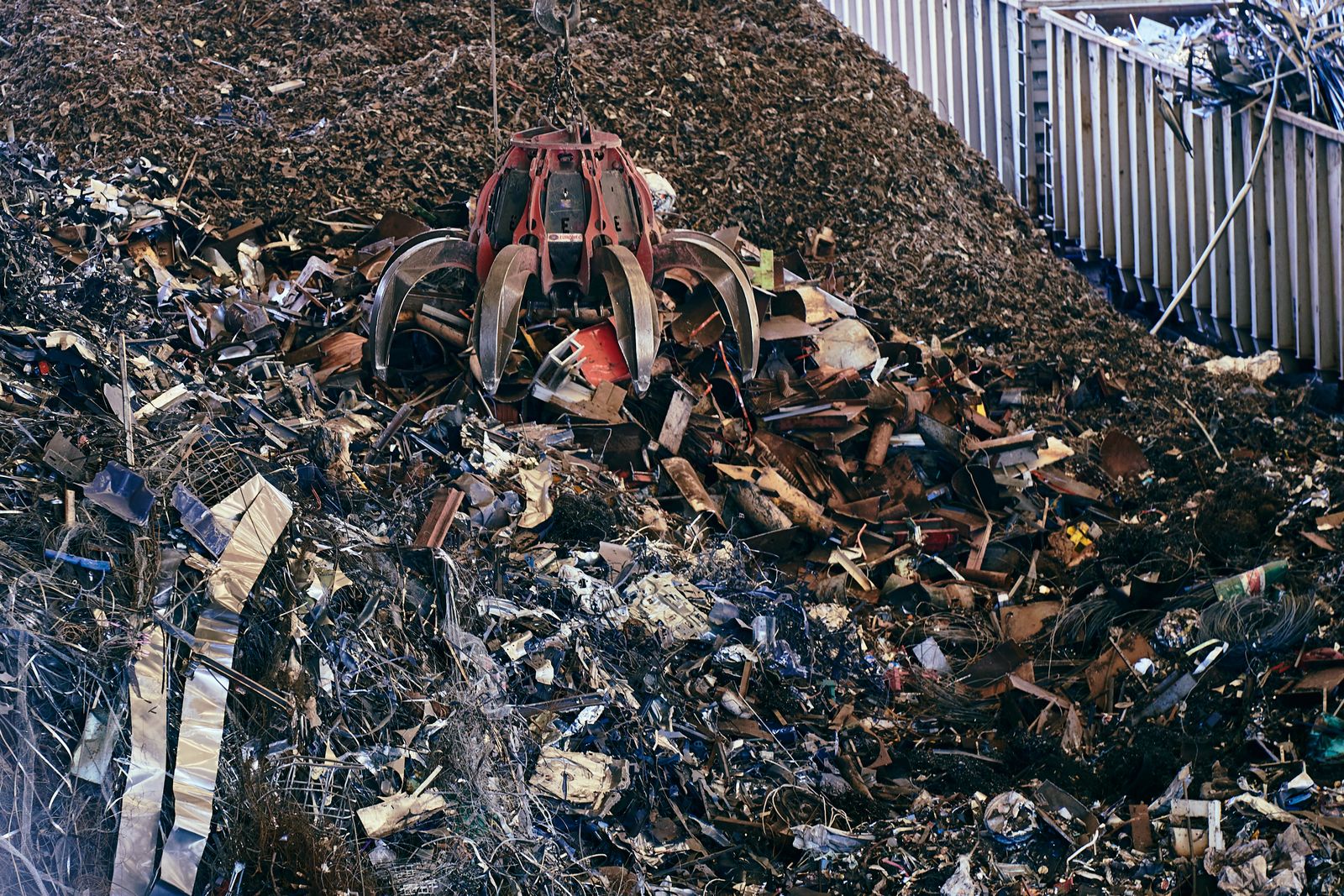
Black mass has no dedicated UN entry. The EU makes it hazardous waste from 9 November 2026 — a waste rule, not a fire classification.
The electric vehicles a car carrier delivers come back as cargo. Shredded, they become black mass — the powdered electrode material recovered from end-of-life lithium-ion batteries — and tens of thousands of tonnes of it cross oceans every year under no dedicated UN number. The EU reclassifies it as hazardous waste from 9 November 2026. That is a waste-shipment rule, and it is not a transport hazard classification.
What black mass is, and how much of it moves
It is battery electrode powder, in bulk. Black mass consists of finely ground cathode and anode material, conductive additives and residual electrolyte, produced by shredding end-of-life cells and gigafactory production scrap. It is the intermediate everything downstream depends on: the lithium, cobalt and nickel recovery that the EU's critical-raw-materials position rests on begins with this powder.
The volumes are already shipping-scale and the growth curve is steep. EU exports of black mass were estimated at 40,000–55,000 tonnes in 2025, worth €150–300 million depending on metal prices. Total volumes are projected to rise from roughly 80,000–100,000 tonnes in 2025 to between 350,000 and 450,000 tonnes by 2035. Underneath that sits the feedstock itself: spent lithium-ion battery volume from EVs and stationary storage is projected to grow from 1.4 GWh in 2020 to 112.3 GWh in 2030 and 449.5 GWh in 2040.
Most of it leaves. Europe exports the large majority of its black mass for refining elsewhere, predominantly in Asia, with South Korea a principal destination because its OECD membership keeps the shipment legal under waste-transfer rules. Ifri's December 2024 study put more than 50% of European black mass and factory scrap as leaving the continent, and noted it is difficult to state the figure precisely — because member states do not classify the material the same way.
The hazard is smouldering, not thermal runaway
This is the part that inverts the assumptions a vehicle-deck fire philosophy is built on. Research published in the Journal of Loss Prevention in the Process Industries in 2025 assessed the fire and explosion hazards of representative black mass samples and found the smouldering fire hazard high and the dust explosion hazard low. Self-heating was found for every sample tested.
The gas behaviour is what makes it a detection question rather than a stowage footnote. The same work reports that flammable gases — hydrogen and ammonia among them — and volatiles released by bulk black mass in enclosures cannot be ignored, and that the concern rises when moisture or water is present. The mechanisms are chemical rather than electrical: hydrogen from hydrolysis of aluminium dust on contact with water, hydrogen fluoride from hydrolysis or decomposition of LiPF6, and ammonia attributed to aluminium nitride formed during earlier thermal processing.
Set the failure mode against a cell in thermal runaway and the difference is temporal. A stressed cell fails fast, hot and locally, which is what the corpus's off-gas and heat-detection arguments are tuned for. A bulk stow of black mass fails slowly, from the interior of the mass, at ambient temperature, and announces itself as gas and smoulder long before it produces a flame front. A detection philosophy written for the first case is not automatically right for the second.
Why the paperwork may not warn you
Because no dangerous-goods entry describes this material. There is no dedicated UN number for black mass. Where it is declared as dangerous goods at all, the entry commonly reached for is UN 3077, environmentally hazardous substance, solid, n.o.s. — a Class 9 entry that exists precisely for cases where the environmental hazard is the only dangerous-goods hazard attributable to the substance.
Read that against the laboratory findings and the gap is plain. A cargo the fire-safety literature associates with self-heating, smouldering and hydrogen evolution in enclosed spaces can be carried under an entry whose whole purpose is to flag harm to the marine environment. The declaration is not necessarily wrong. It is answering a different question from the one a master needs answered.
Industry bodies have said as much. Recharge's work on batteries active-materials mixtures records a lack of coherence between the various approaches to defining products derived from treating waste batteries, and states the need to harmonise the conditions for transporting the various types of black mass. That harmonisation has not happened.
Three regimes, none of them a fire code
The rules that have moved are waste rules, and they are diverging. Commission Delegated Decision (EU) 2025/934, adopted 5 March 2025, amends the European List of Waste and applies from 9 November 2026. It creates hazardous entries covering battery-recycling slags and the intermediate fractions produced by thermal and mechanical treatment of waste batteries, alongside hazardous classifications for lithium-based, nickel-based and zinc-based waste batteries themselves. The consequence for trade is direct: export for recovery to non-OECD countries becomes prohibited, and shipments within the EU and to other OECD states fall under prior notification and consent.
China moved the other way, and earlier. National standard GB/T 45203-2024, released on 31 December 2024 and effective 1 July 2025, treats qualifying black mass as a raw material rather than waste, with a customs code following from 1 August 2025. Qualification is compositional — Category 1 material must meet minimum nickel-plus-cobalt and lithium contents and a water-soluble fluoride ceiling. The same substance is therefore hazardous waste leaving Rotterdam and an importable raw material arriving in China.
The Basel Convention has not closed the gap. At COP-17, held 28 April to 9 May 2025, parties accelerated technical guidelines on the environmentally sound management of waste batteries other than lead-acid, whose current draft treats black mass as waste, with final adoption expected at COP-18 in Panama in April 2027. Proposals to add lithium, cobalt and nickel compounds to Annex I remain under negotiation.
What it means for owners and underwriters
For owners, the practical instruction is to ask what the cargo is rather than what the entry says. If a box holds bulk battery-recycling intermediate, the relevant failure is slow interior self-heating in an enclosed space with hydrogen and hydrogen fluoride in the evolved gas — and the standard water response is implicated in the gas generation. Segregation, ventilation and monitoring decisions should follow from the material's known behaviour, not from a Class 9 environmental entry that is silent on all of it.
For underwriters, 9 November 2026 is a routing event before it is a compliance event. Closing non-OECD recovery exports does not reduce the tonnage; it redirects it into intra-EU and OECD lanes under prior-consent paperwork. Redirected trade is new-route trade, on ships and through terminals that have not carried it before. And a cargo class whose own volumes cannot be stated precisely — because exporters in different member states classify it differently — is a cargo class that is difficult to accumulate, price or exclude.
How RoRoSAFE helps
Black mass fails by smouldering, and the paperwork may not warn anyone that it is aboard. A smouldering load gives off heat and gas long before flame. RoRoSAFE's thermal and gas cells detect exactly that kind of slow local rise, and report it to the bridge before smoke is visible. It is a detection layer for enclosed ro-ro decks, not a substitute for correct declaration.
Pilot: one deck · installed alongside the berth · no drydock · 6 months of dashboard access
Sources
- 1. Commission Delegated Decision (EU) 2025/934, adopted 5 March 2025, amending Decision 2000/532/EC (the European List of Waste): new hazardous entries for slags from waste lithium-based, nickel-based and other battery recycling (10 08 21*, 10 08 23*, 10 08 25*), for intermediate fractions from thermal and mechanical treatment of waste batteries (19 14 series), for waste lithium-based and nickel-based batteries (16 06 07*, 16 06 08*) and for battery-manufacturing wastes. Article on application: "It shall apply from 9 November 2026."
- 2. European Commission — "Battery-related waste codes update set to boost circular economy", 5 March 2025: the Commission will classify black mass from batteries as hazardous waste; black mass and lithium-based, nickel-based, zinc-based, sodium-sulphur and alkaline waste batteries classed as hazardous; stated consequence is prohibition of exports for recovery to non-OECD countries and prior notification and consent for shipments within the EU and to other OECD states.
- 3. Journal of Loss Prevention in the Process Industries (2025) — "Smoldering fire and explosion hazards of black mass in the lithium-ion battery recycling industry": smouldering fire hazard assessed high and dust explosion hazard low for representative black mass samples; self-heating found for all selected samples; flammable gases including H2 and NH3 and volatiles released by bulk samples in enclosures identified as a safety concern, particularly where moisture or water is present; gas mechanisms reported as H2 from hydrolysis of aluminium dust with water, HF from hydrolysis or decomposition of LiPF6, and NH3 attributed to AlN formed at high temperature during pyrolysis.
- 4. GB/T 45203-2024, "Black mass for lithium ion battery recycling" — China's national standard, released 31 December 2024, effective 1 July 2025, with the customs (HS) code for recycled black mass raw material implemented from 1 August 2025; qualifying material is treated as non-waste. Category 1 NCM/LCO material reported as requiring minimum combined nickel and cobalt of 25%, lithium of 3.5%, and water-soluble fluoride of 0.4%.
- 5. Basel Convention — COP-17, 28 April to 9 May 2025: parties agreed to accelerate preparation of technical guidelines on the environmentally sound management of waste batteries other than lead-acid, the current draft of which refers to black mass as waste, with adoption expected at COP-18 (Panama, 19–30 April 2027); proposals to add lithium, cobalt and nickel and their compounds to Annex I remain under consideration.
- 6. Ifri — "Europe's Black Mass Evasion: From Black Box to Strategic Recycling", December 2024: more than 50% of European black mass and factory scrap reported as leaving Europe, principally to South Korea and South-East Asia; precise export quantities described as difficult to establish because of the lack of harmonised classification (product versus hazardous waste) used by exporters across member states.
- 7. Environmental Science & Technology (2025) — "Harmonizing Global Hazardous-Waste Classifications for Lithium-Ion Battery Black Mass": records the EU hazardous-waste classification against China's non-waste treatment of qualifying material, and projects spent lithium-ion battery volumes from EVs and stationary storage rising from 1.4 GWh in 2020 to 112.3 GWh in 2030, 449.5 GWh in 2040 and 1,336.5 GWh in 2050.
- 8. Recharge — position work on batteries active-materials mixtures: records the lack of coherence between approaches to defining products from the treatment of waste batteries, and the need to harmonise the conditions for transporting the various types of black mass.
Questions, answered
Is black mass classified as dangerous goods for sea carriage?+
There is no dedicated UN entry for black mass. Where it is declared as dangerous goods, the entry commonly used is UN 3077, environmentally hazardous substance, solid, n.o.s. — a Class 9 entry intended for cases where harm to the environment is the only dangerous-goods hazard. It does not describe self-heating, smouldering or flammable gas evolution.
What actually happens when black mass catches fire?+
It smoulders rather than flashes. Published testing found a high smouldering hazard and a low dust-explosion hazard across representative samples, with self-heating present in every sample. Bulk material in an enclosed space releases flammable gases including hydrogen and ammonia, and the concern increases when moisture or water is present — so water can generate gas rather than suppress it.
What changes on 9 November 2026?+
Commission Delegated Decision (EU) 2025/934 applies from that date, making battery-recycling intermediates and waste batteries hazardous under the European List of Waste. Export for recovery to non-OECD countries becomes prohibited, and shipments within the EU and to other OECD states require prior notification and consent. It is a waste-shipment control, not a transport hazard classification.
Why do the EU and China classify the same material differently?+
Because they are answering different questions. The EU treats black mass as hazardous waste to keep critical raw materials inside the European economy and to control where it can be sent. China's GB/T 45203-2024, effective 1 July 2025, treats compositionally qualifying black mass as an importable raw material. The same consignment can therefore leave Europe as waste and arrive as feedstock.
Continue the thread

Can You Ship a Damaged EV Battery?
Yes — under SP 376, one of the IMDG Code's strictest regimes. Yet the same damaged pack, still inside a car on a ro-ro deck, can sail undeclared.

Are Used EV Exports a Hidden Fire Risk?
Yes — used EVs ship with unknown state of charge and hidden accident damage, the conditions the NTSB links to higher fire risk than new cars.

Can a Ro-Ro Still Carry Grid Battery Cargo?
IMDG 42-24 moved UN 3536 battery energy storage to on-deck stowage only. On a ro-ro, most of the ship is enclosed — which narrows the deck.

What the 2025 IMDG Code Changes for RoRo
IMDG Code Amendment 42-24, mandatory 1 Jan 2026, gives EVs their own UN 3556 class and retires generic UN 3171 — changing how car carriers declare them.
What Happens When a Car Carrier Is Scrapped?
The Hong Kong Convention came into force in June 2025 — and it binds ships in service, not just at the yard. A retrofit changes the inventory.