
Felicity Ace: Anatomy of an Unproven Fire
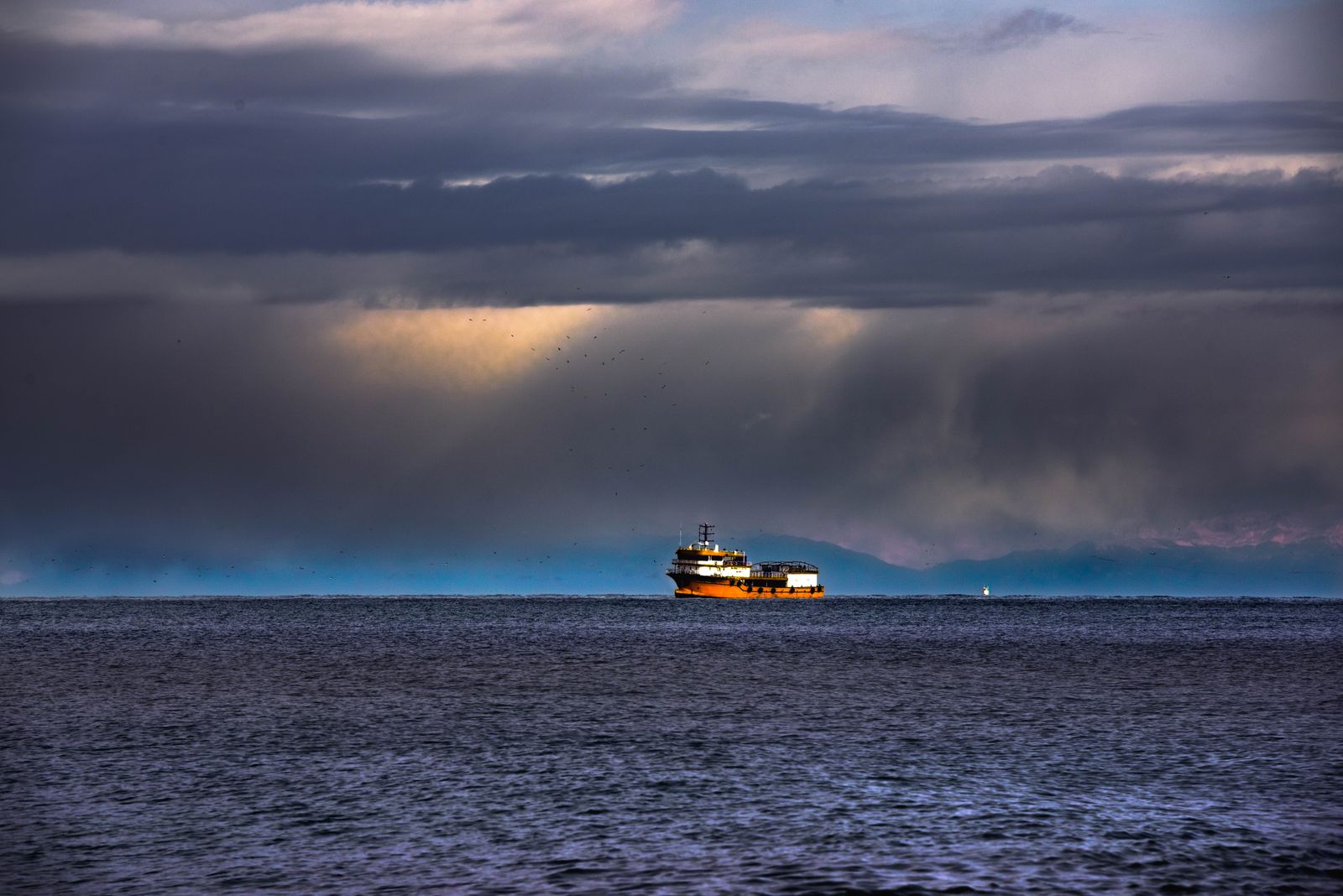
The Felicity Ace sank in 2022 with ~4,000 VW Group cars. In May 2026 a German court threw out MOL's claim against Porsche — the cause was never proven.
The Felicity Ace is the case that proves a car-carrier fire can be a total loss no one can be made to pay for. A 2022 casualty that took nearly 4,000 Volkswagen Group vehicles to the seabed off the Azores, it ended not in a finding of cause but in a courtroom: on 29 May 2026 the Regional Court of Stuttgart dismissed MOL's claim against Porsche because the plaintiffs could not prove a Porsche battery started the fire. The evidence had burned and sunk with the ship.
What was lost
A fully loaded car carrier, a fortnight to sink, and a manifest of high-value marques.
- The Panama-flagged Felicity Ace, operated by Mitsui O.S.K. Lines, caught fire on 16 February 2022 about 90 nautical miles south-west of the Azores, en route from Emden, Germany, to the United States.
- All 22 crew were evacuated safely; no lives were lost.
- The vessel burned and drifted for roughly two weeks, then sank on 1 March 2022.
- Cargo was nearly 4,000 vehicles across Volkswagen, Audi, Porsche, Bentley and Lamborghini — including more than 100 Porsche Taycan electric cars.
- Contemporary reporting put the loss in the region of $438 million.
The claim, and the courtroom
With the ship gone, the money moved to litigation — and stalled on proof. MOL and its hull insurers alleged that a self-igniting lithium-ion battery in a new Porsche Taycan on the vehicle deck started the blaze, and pursued the Volkswagen Group in two German regional courts: a smaller claim of about €30 million ($34 million) at Stuttgart, and a much larger action, running to several hundred million euros, at Braunschweig. On 29 May 2026 the Stuttgart court dismissed the €30 million claim, finding that the plaintiffs had not proven a Porsche vehicle was the source of the fire. The burden lay with the plaintiffs; the court was not convinced. The ruling can be appealed, and the Braunschweig proceedings remain live — but the first substantive test of the EV-cause theory failed on evidence, not on liability principle.
Why the cause could never be pinned
Because everything that could have identified the origin was consumed, submerged, or never recorded. The fire destroyed the vehicle decks and the vessel sank in deep Atlantic water, foreclosing the physical forensics that a land casualty would allow. The Panama Maritime Authority's investigation report was never publicly released, so there is no authoritative account of ignition. And the ship carried no per-deck, per-vehicle event record of the kind that could have timestamped a first anomaly and located it — nothing an investigator or an adjuster could reconstruct after the hull was gone. A theory that an EV battery self-ignited is plausible; it is not provable on the evidence that survived. In a courtroom, plausible loses.
What the case establishes for owners and underwriters
That recovery against a cargo manufacturer depends on evidence the ship is not currently built to preserve. The Felicity Ace shows the recovery route — subrogated action against the maker of an allegedly defective EV — running straight into an evidentiary wall the fire builds. Without a claims-grade record of where and when the first thermal or off-gas anomaly appeared, the owner and its hull insurers cannot discharge the burden of proof, and a nine-figure loss stays with the marine market rather than shifting to the product's manufacturer.
- Treat detection data as claims evidence, not only as a fire-safety measure — a timestamped, per-vehicle anomaly record is what a subrogation case against a manufacturer actually needs, and its absence is why Felicity Ace stalled at 'unproven'.
- Assume the safety report may never come. The Panama Maritime Authority's Felicity Ace report was not published; an operator that wants to understand its own casualty cannot rely on the flag State to produce the record.
- Price the burden of proof. For underwriters, the recoverability of a car-deck fire loss against a cargo interest now visibly turns on whether the vessel can evidence origin — a question of installed capability, not of manifest.
- Read the litigation as a market signal, not a one-off. The EV-cause theory failed its first test on evidence; the more valuable the electrified cargo, the more the recovery hinges on data the ship must capture in real time or lose forever.
How RoRoSAFE helps
The court needed proof of which vehicle started the fire, and the evidence went down with the ship. RoRoSAFE keeps tamper-evident, time-stamped per-vehicle thermal and gas logs, shared with shore, so the first vehicle to alert is on record whatever happens to the hull. Found early enough, the fire may never reach that point.
Pilot: one deck · installed alongside the berth · no drydock · 6 months of dashboard access
Sources
- gCaptain — 'Porsche Wins Felicity Ace Lawsuit as Cause of Fire Remains Unproven': Regional Court of Stuttgart dismissed MOL and hull insurers' ~€30 million ($34 million) claim on 29 May 2026, finding the plaintiffs failed to prove a Porsche vehicle was the source; ruling not final and appealable; separate Braunschweig proceedings seeking several hundred million euros remain pending; Panama Maritime Authority investigation report never publicly released — gcaptain.com.
- Maritime Executive — 'Court Dismisses Lawsuit Against Porsche Over Felicity Ace Fire' and 'Volkswagen Sued by MOL for the Loss of Felicity Ace Car Carrier': MOL and insurers alleged a self-igniting Porsche Taycan lithium-ion battery started the fire; two German suits (Stuttgart and Braunschweig) — maritime-executive.com.
- Splash247 — 'MOL and Allianz take Volkswagen to court over sinking of Felicity Ace car carrier': the subrogated recovery action by owner and hull insurers against the Volkswagen Group — splash247.com.
- Contemporary casualty reporting (Feb–Mar 2022): Felicity Ace, Panama flag, operated by Mitsui O.S.K. Lines, caught fire ~90 nm SW of the Azores on 16 February 2022 en route Emden → United States; all 22 crew evacuated; sank 1 March 2022; ~4,000 Volkswagen Group vehicles aboard including 100-plus Porsche Taycan EVs; loss reported around $438 million.
- Companion RoRoSAFE analysis — 'Why Felicity Ace's Cause Was Never Proven' (the evidentiary essay this anatomy anchors), 'Subrogation and the Cargo-Manufacturer Question' (the recovery route the ruling tested), and 'Morning Midas: Anatomy of a Total Loss' (the 2025 sibling casualty and its layered claim).
Questions, answered
What happened to the Felicity Ace?+
The Panama-flagged car carrier, operated by Mitsui O.S.K. Lines, caught fire on 16 February 2022 about 90 nautical miles south-west of the Azores while sailing from Emden, Germany, to the United States. All 22 crew were evacuated safely. The vessel burned and drifted for around two weeks before sinking on 1 March 2022 with nearly 4,000 Volkswagen Group vehicles aboard.
Did an electric vehicle cause the Felicity Ace fire?+
It was alleged but never proven. MOL and its hull insurers claimed a self-igniting lithium-ion battery in a new Porsche Taycan started the fire, but on 29 May 2026 the Regional Court of Stuttgart dismissed their claim against Porsche, finding the plaintiffs had not proven a Porsche vehicle was the source. The true cause remains officially unestablished; the flag State's report was never published.
Why couldn't the cause be established?+
Because the evidence did not survive. The fire destroyed the vehicle decks, the vessel sank in deep water beyond forensic recovery, the Panama Maritime Authority's investigation report was never released, and the ship carried no per-deck event record that could have timestamped and located a first anomaly. A car-carrier fire tends to consume the very evidence needed to prove where it began.
What does the Felicity Ace ruling mean for owners and insurers?+
That recovering a car-deck fire loss from a cargo manufacturer depends on evidence the ship is not built to preserve. Without a claims-grade record of where and when the first thermal or off-gas anomaly appeared, the burden of proof cannot be met, and the loss stays with the marine market. Detection data is becoming a recovery asset, not just a safety feature.
Continue the thread

Why Felicity Ace's Cause Was Never Proven
Because the evidence burned, sank in 3,000 m of water and was never recorded. Every car-deck fire with a proven cause stayed afloat; no deep-sea loss did.

Subrogation and the Cargo-Manufacturer Question
Can insurers recover an EV-fire loss from the carmaker? Stuttgart said no in May 2026: nobody could prove which car started the Felicity Ace fire.

Morning Midas: Anatomy of a Total Loss
The Morning Midas sank in June 2025 — the ninth car-carrier total loss in a decade — and its claim split across hull, P&I, and cargo underwriters.