
Auto Banner: 67 Hours Alongside a Pier
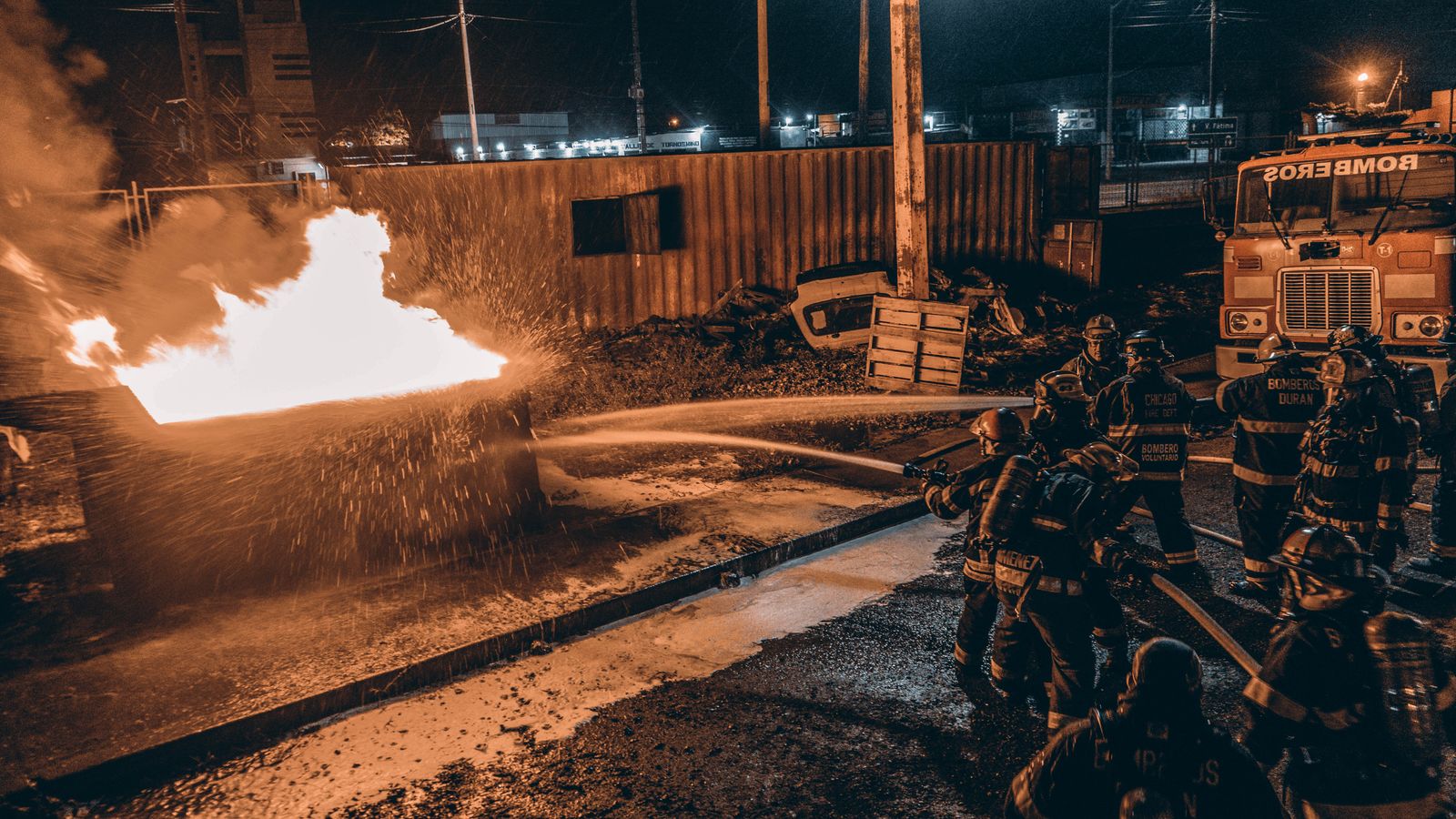
A 2018 used-car cargo burned for 67 hours alongside in Incheon, destroying ~1,500 vehicles. No EVs involved — the car-deck problem predates them.
The Auto Banner is the case to put in front of anyone who believes the car-deck fire problem arrived with electric vehicles. On 21 May 2018 a fire began in a used car aboard a 1988-built PCTC lying alongside at the Port of Incheon. It burned for 67 hours, took hundreds of firefighters with shore resources immediately to hand, and destroyed roughly 1,500 of the 2,440 vehicles on board. There were no electric vehicles involved.
What happened
A conventional used-vehicle cargo, in the best possible location for firefighting, that still could not be reached.
- The Auto Banner, built 1988 and operated by Hyundai Glovis, was alongside at Incheon loading used cars for export to Libya when fire broke out at around 09:40 local time on 21 May 2018.
- All 28 crew evacuated to the pier; there were no casualties.
- Reported cargo was 2,440 vehicles plus some 5,000 tyres, of which roughly 1,500 vehicles were destroyed.
- The fire was extinguished after 67 hours, using hundreds of firefighters, dozens of fire engines, tugs, coast guard and search-and-rescue vessels, and firefighting helicopters.
- Officials attributed the origin to one of the vehicles, with an overheated engine reported as a suspected cause.
- A port state control inspection at Portland, Oregon in January 2018 — four months earlier — had recorded no deficiencies.
Why 67 hours, with a whole city's fire service alongside
Because the thing that makes a car carrier efficient is the same thing that makes it unfightable from outside. Vehicles are parked bumper to bumper across wide, largely undivided decks with low overhead, which is excellent cargo density and terrible fire architecture. Once smoke fills that space there is no route in for a hose team, and there is nothing to attack from the quay: water applied to the ship's side cools steel, it does not reach the seat of a fire three decks in. Shore firefighting on a burning PCTC is therefore mostly boundary cooling and containment — waiting the fire out while trying to stop it spreading and to keep the hull from losing strength or stability from accumulated water. Incheon had every advantage a casualty can have: alongside, in a major port, with abundant resources arriving within minutes. It still took nearly three days.
The cargo nobody had characterised
This was a used-vehicle export cargo, which is the least-known cargo a car carrier loads. New vehicles arrive from a factory with a known specification and a controlled history. Used cars destined for export arrive from auctions, fleets and salvage channels with unverified maintenance, unknown electrical condition, variable fuel in the tank, and — increasingly today — batteries whose history nobody has recorded. The ship receives a count, not a condition assessment. That was true in 2018 for internal-combustion cars and it remains true now, because vehicles carried in flag-approved ro-ro vehicle spaces sit outside most of the IMDG Code's declaration machinery. The Auto Banner shows the cost of that information gap in its simplest form: a fire started in one vehicle among thousands, and nobody could have said in advance which one was a candidate.
What it says about the EV argument
That the structural problem is the deck, and electrification is an accelerant on top of it — not the origin of it. It is tempting, on both sides of the EV debate, to treat car-carrier fire risk as an electric-vehicle story: advocates because it makes the case urgent, sceptics because pointing at pre-EV casualties looks like a rebuttal. The Auto Banner refuses both readings. A dense stow of unverified used vehicles on undivided decks was already capable of a near-total cargo loss with abundant shore firefighting present.
What lithium-ion cargo changes is the timeline and the energy: thermal runaway develops faster than an engine-bay fire, is harder to cool, and can reignite. So the honest framing is that EVs did not create this exposure — they compressed the window in which anything can be done about it. That makes early, per-vehicle detection more valuable than the pre-EV era implied, not less, because the pre-EV era already demonstrated that once a car deck is alight, arriving later is not a recoverable position.
What operators and underwriters should take from it
- Do not model port fires as the manageable case. Being alongside gives you people and water; it does not give you access. Incheon had both and still needed 67 hours.
- Treat used-vehicle export cargoes as a distinct risk class. The condition of the units is unknown by construction, and a vehicle count is not a cargo assessment.
- Read PSC status for what it is. A clean inspection four months prior did not describe the risk that was driven aboard, and it will not describe an EV's battery history either.
- Judge the detection case on the deck, not the drivetrain. The pre-EV record shows the loss mechanism is dense stow plus late detection; electrification shortens the fuse on a hazard that already existed.
- For underwriters: an in-port total-or-near-total cargo loss is an established outcome on this ship type with conventional cargo, which should anchor expectations for what an EV-dense deck can do.
How RoRoSAFE helps
Auto Banner burned for 67 hours with a whole city's fire service alongside, because the fire had spread before it could be fought. RoRoSAFE watches every parked vehicle, used car or EV, for heat and vent gases, and flags a developing event before visible smoke. It gives the crew and port the start they did not have: one vehicle, not 1,500.
Pilot: one deck · installed alongside the berth · no drydock · 6 months of dashboard access
Sources
- Maritime Executive — 'Car Carrier Catches Fire at Incheon' (May 2018): fire broke out on the car carrier Auto Banner at the port of Incheon, South Korea; vessel built 1988; 28 crew safely evacuated to the pier with no casualties; cargo of used automobiles destined for Libya; officials believe the fire started in one of the vehicles and spread; external water-based firefighting, Korean Coast Guard cutter and firefighting helicopter deployed; a port state control inspection at Portland, Oregon in January 2018 revealed no deficiencies — maritime-executive.com.
- Splash247 — 'Major fire rips through car carrier docked at Incheon' (May 2018); gCaptain and Safety4Sea contemporaneous reporting: fire began around 09:40 local on 21 May 2018; the vessel is Panama-registered and operated by Hyundai Glovis; the fire was extinguished after 67 hours of large-scale firefighting involving hundreds of firefighters, dozens of engines, tugs, SAR ships and helicopters; of 2,440 cars on board roughly 1,500 were burned, together with about 5,000 tyres; an overheated car engine was reported as a possible source — splash247.com / gcaptain.com / safety4sea.com.
- Cause: no public official investigation report establishing a conclusive cause was located. Contemporary reporting attributed the origin to a vehicle, with an overheated engine suspected, and a Korean investigation was said to be under way.
- IMDG Code Special Provision 961: vehicles carried on ro-ro ships with flag-approved vehicle spaces fall outside most of the Code where its conditions are met — the declaration gap that leaves a used-vehicle cargo uncharacterised — imo.org.
- Companion RoRoSAFE analysis — 'Grande Costa d'Avorio: Anatomy of a Port Fire' (the shore-response casualty with firefighter fatalities), 'Port Fire or Mid-Ocean: Which Is Worse?' (the comparison this case informs), and 'Are Used EV Exports a Hidden Car-Carrier Fire Risk?' (the modern version of the same uncharacterised cargo).
Questions, answered
What happened to the Auto Banner at Incheon?+
On 21 May 2018 a fire broke out aboard the 1988-built car carrier Auto Banner while it lay alongside at the Port of Incheon, South Korea, loading used cars for export to Libya. All 28 crew evacuated with no casualties. The fire took 67 hours to extinguish and destroyed roughly 1,500 of the 2,440 vehicles aboard, along with about 5,000 tyres.
Were electric vehicles involved in the Auto Banner fire?+
No. It was a conventional used internal-combustion vehicle cargo, and officials attributed the origin to one of the vehicles, with an overheated engine reported as a suspected cause. That is precisely why the case matters: a dense stow of unverified used cars produced a near-total cargo loss years before EV carriage became a mainstream concern.
Why did a fire alongside a pier take 67 hours to put out?+
Because being in port provides people and water but not access. Vehicles are parked bumper to bumper across wide, largely undivided decks, so once smoke fills the space there is no route in for a hose team, and water applied from the quay cools the ship's side without reaching the seat of the fire. Shore response becomes boundary cooling and containment — effectively waiting the fire out.
What does a 2018 fire tell us about EV fire risk today?+
That the structural exposure is the deck, and electrification compresses the response window rather than creating the hazard. A dense stow of uncharacterised used vehicles was already capable of near-total cargo loss with abundant firefighting present. Lithium-ion cargo develops faster, is harder to cool and can reignite — which makes early, per-vehicle detection more valuable, not less.
Continue the thread

Grande Costa d'Avorio: Fatal Loading Fire
The NTSB traced the fatal 2023 Grande Costa d'Avorio fire to a Jeep used as a cargo pusher — and a CO2 system the crew could not seal off.

Are Used EV Exports a Hidden Fire Risk?
Yes — used EVs ship with unknown state of charge and hidden accident damage, the conditions the NTSB links to higher fire risk than new cars.
Car-Carrier Fire Risk: Detection, Not EVs
The powertrain debate misses the point. On an enclosed car deck the variable that decides a total loss is how early a fire is caught — not EV share.
Al Salam Boccaccio 98: Sunk by Firewater
A car-deck fire the crew fought. Blocked scuppers held the water, free surface took the stability, and 1,031 of 1,418 aboard were lost.