
What Happens When Vehicle Cargo Is Misdeclared?

On a ro-ro, a misdeclared vehicle is usually a damaged car, a live battery or a boot of goods, not a wrong UN number. Who finds it, and who pays.
On a ro-ro, a misdeclared vehicle is rarely a wrong UN number. It is a non-runner booked as a runner, a damaged EV booked as new, a battery left connected, or a used car packed with goods. The ship usually finds out on the ramp or in a fire. The shipper carries the legal liability, but the ship carries the fire, so the booking alone cannot be the control.
Insurers are starting to say so. In IUMI's June 2026 newsletter, Mohamed Farghaly of the IUMI Loss Prevention Committee wrote that insurers depend on cargo declarations without deep validation and deal with misdeclaration mainly at the claims stage. His conclusion: 'Misdeclared cargo should be treated as a material insurance risk, not merely a compliance issue.'
The four ways vehicle cargo gets misdeclared
Vehicle cargo goes wrong in what the booking says the vehicle is, not in what chemical class it belongs to. Most vehicles on a ro-ro are exempt from full dangerous-goods declaration, so the details that matter to fire risk travel on the booking and the terminal's gate record instead.
- Propulsion: a battery-electric or hybrid vehicle booked as a conventional car, so stowage and emergency planning assume the wrong fire.
- Condition: a damaged, flood-affected or non-running vehicle booked as sound, with an unknown state of charge or a crushed battery pack.
- Preparation: a battery left connected, or fuel above the quantity the carrier's terms allow, when the booking says the vehicle was prepared.
- Contents: a used car carrying personal effects or trade goods that nobody listed, adding fuel load and hiding ignition sources behind the glass.
What the record actually shows
The public casualty record points to vehicle condition and preparation failing behind the paperwork, more than to false declarations. On Höegh Xiamen at Jacksonville in June 2020, the NTSB traced the fire to an improperly disconnected battery in a used vehicle. The US Coast Guard then checked a sample of 59 vehicles and found not one battery secured to the charterer's own procedure. The ship and 2,420 used vehicles, valued at USD 40 million, were a total loss.
The NTSB counted five similar accidents since 2015. After two fires on Grande Europa in May 2019, Grimaldi called for stricter controls on vehicle batteries and a total prohibition on personal effects in second-hand vehicles carried on ro-ro ships. The operator's own preliminary account placed those two fires in new vehicles, which is a reminder that the call was about a known risk, not a proven cause.
Who is liable when it goes wrong
In law, the shipper carries most of it. Under the Hague-Visby Rules, a shipper guarantees the accuracy of the particulars it furnishes and must indemnify the carrier for loss arising from inaccuracies. Where dangerous goods are shipped without the carrier's informed consent, the carrier may land, destroy or render them harmless without compensation, and the shipper is liable for all damages and expenses arising from the shipment.
In practice, recovery is slow and partial. The fire happens first, the vehicles that could prove the misdeclaration usually burn with the ship, and the claim then runs through adjusters, insurers and courts for years. A shipper of used cars may also be a small exporter with limited cover. For the owner, a successful indemnity claim years later does not bring back the ship, the schedule or the crew's safety on the night.
How operators catch it before it sails
- At booking: require propulsion type, condition and running status as mandatory fields, as the ICS and International Group P&I Common Guidance on vehicle loading recommends.
- At the gate: record condition, battery state and visible damage with photographs, and refuse units that do not match their booking.
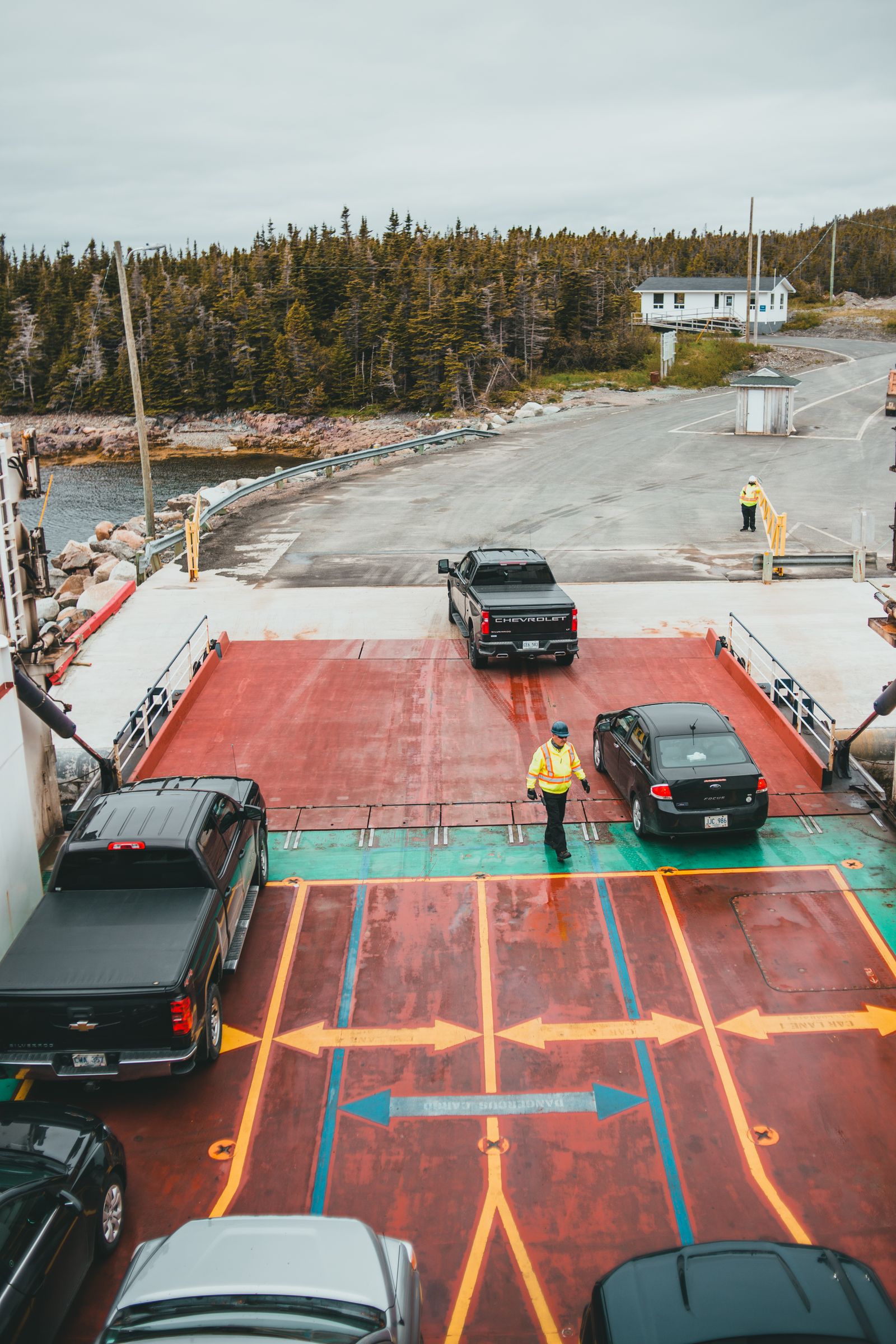
- On the ramp: treat any non-runner that needs pushing or towing as unverified condition, and stow it where it can be watched and reached.
- In the contract: state the carrier's rules on personal effects, fuel and battery preparation in the booking terms, so the indemnity has something clear to rest on.
- At sea: assume one misdeclared unit got through, and watch the deck accordingly.
How RoRoSAFE helps
No booking check catches every damaged battery or live connection. RoRoSAFE watches what the paperwork cannot: a thermal and battery-vent gas sensor cell under each parked vehicle, alerting the bridge and shore to the deck and bay before visible smoke, whatever the booking said. Tamper-evident logs also give owners and insurers an evidence trail when a claim turns on what a vehicle was actually doing. It complements SOLAS detection; it does not replace it.
Pilot: one deck · installed alongside the berth · no drydock · 6 months of dashboard access
Sources
- 1. IUMI Newsletter, June 2026 — Mohamed H. Farghaly (Suez Canal Insurance; IUMI Loss Prevention Committee), 'Misdeclared cargo – why losses continue' (9 June 2026): insurers depend on declarations without deep validation and address misdeclaration mainly at the claims stage; 'Misdeclared cargo should be treated as a material insurance risk, not merely a compliance issue.'
- 2. NTSB — Marine Accident Report MAR-21/04, fire aboard vehicle carrier Höegh Xiamen, 4 June 2020: probable cause an improperly disconnected battery in a used vehicle; USCG sample of 59 vehicles, none secured to the battery-disconnect procedure; five similar accidents since 2015; ship and 2,420 used vehicles valued at USD 40 million.
- 3. The Maritime Executive, Seatrade Maritime and Splash247 — coverage of Grimaldi's statement after the Grande Europa fires, May 2019: calls for stricter controls on vehicle batteries and a total prohibition on personal effects in second-hand vehicles on ro-ro ships; operator's preliminary account placing both fires in new vehicles.
- 4. Hague-Visby Rules, Article III(5) (shipper's guarantee of the accuracy of particulars and indemnity) and Article IV(6) (dangerous goods shipped without the carrier's informed consent; shipper liable for all damages and expenses).
- 5. ICS / International Group of P&I Clubs / TT Club — 'Common Guidance on the Presentation and Loading of Vehicles' (Version 1.4): propulsion type and condition declared at booking; terminal checks before loading.
- 6. IMDG Code, Special Provision 961 — conditions under which vehicles carried on ro-ro ships are not subject to the full dangerous-goods provisions.
Questions, answered
What does misdeclared vehicle cargo mean on a ro-ro?+
It usually means the booking does not match the vehicle: an electric or hybrid car booked as conventional, a damaged or non-running vehicle booked as sound, a battery left connected when the vehicle was declared prepared, or a used car carrying unlisted personal effects or goods. Most ro-ro vehicles are exempt from full dangerous-goods declaration, so these details travel on the booking.
Has misdeclaration caused a major car-carrier fire?+
The public record points more to vehicle condition and preparation than to false declarations. On Höegh Xiamen in 2020, the NTSB traced the fire to an improperly disconnected battery in a used vehicle, and a US Coast Guard sample of 59 vehicles found none secured to procedure. The ship and 2,420 vehicles, worth USD 40 million, were lost.
Who is liable if a shipper misdeclares a vehicle?+
Under the Hague-Visby Rules, the shipper guarantees the accuracy of the particulars it provides and must indemnify the carrier for losses from inaccuracies, and it is liable for all damages from dangerous goods shipped without the carrier's informed consent. In practice, recovery is slow and partial, because the evidence often burns with the ship.
How can operators catch misdeclared vehicles before sailing?+
Make propulsion type, condition and running status mandatory booking fields, record condition and battery state at the terminal gate with photographs, refuse units that do not match their booking, treat pushed or towed non-runners as unverified, and write the carrier's rules on personal effects, fuel and battery preparation into the booking terms.
Continue the thread
Who Declares an EV as Dangerous Cargo?
On a ro-ro, Special Provision 961 means an EV is not dangerous goods. So the ship gets no chemistry, no state of charge, no damage history.

Höegh Xiamen: Anatomy of a Total Loss
The NTSB traced a $40M car-carrier total loss to one used vehicle's improperly disconnected battery — and the oversight that let 2,420 cars load unchecked.

What the New Vehicle Loading Guidance Requires
ICS/IGP&I Common Guidance sets a booking-to-discharge data chain for vehicles: declared propulsion type, recorded SOC, and an OEM emergency guide.

Are Used EV Exports a Hidden Fire Risk?
Yes — used EVs ship with unknown state of charge and hidden accident damage, the conditions the NTSB links to higher fire risk than new cars.
Grande Europa: Two Fires, One Voyage
The crew beat a deck-3 fire in 45 minutes. Three hours later a second fire started on deck 8 — that one took ten hours and a salvor.