
What Does the Skipanes Fire Tell Hybrid Ro-Ros?

Little about batteries so far. The new hybrid ro-ro's 2 September fire was in the engine room, its cause is still open, and about 900 EVs were aboard.
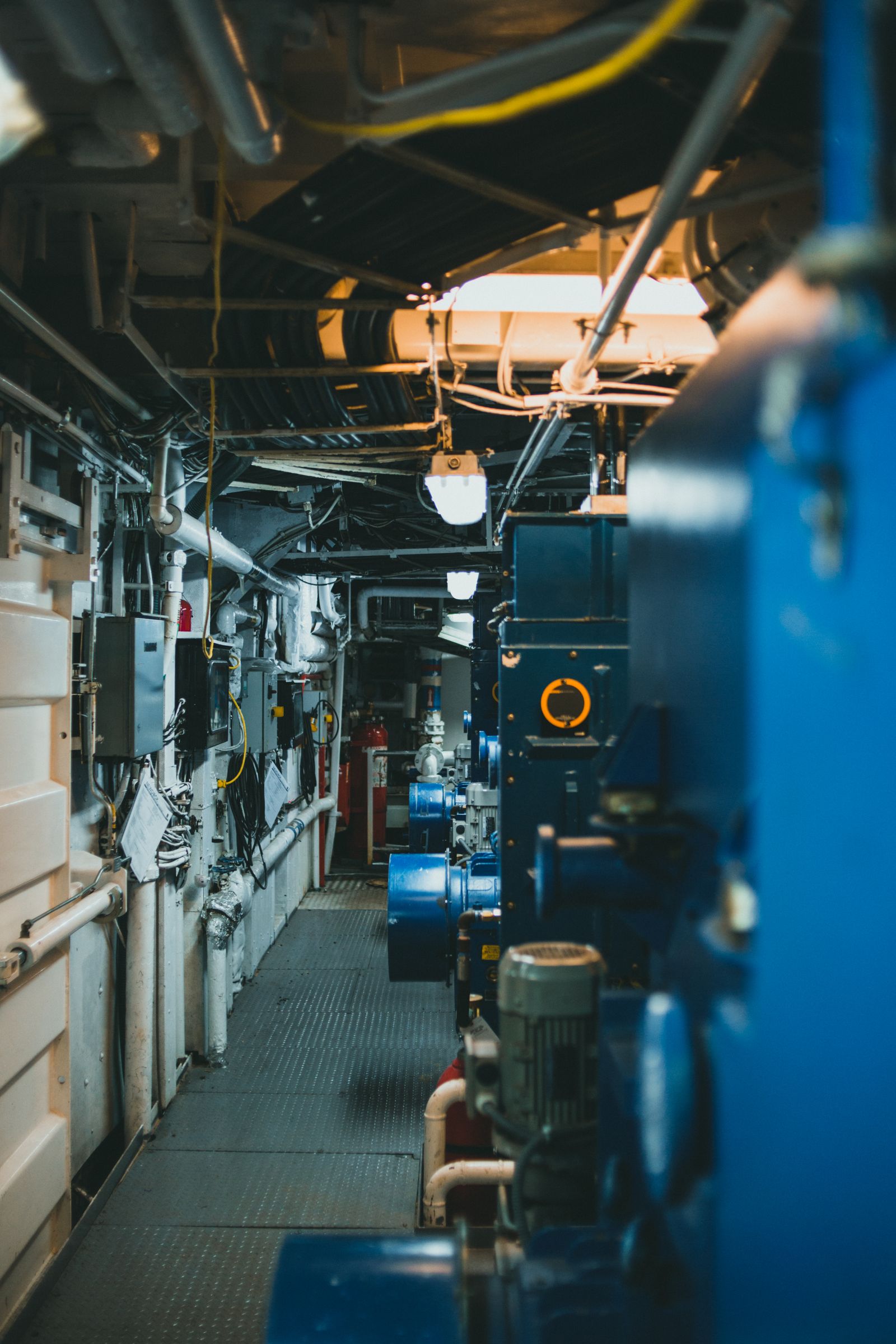
So far, very little about batteries. Skipanes, a battery-hybrid, methanol-ready ro-ro handed to Smyril Line in late August 2026, had a fire on 2 September about 20 nm off Taiwan. It started in the engine room, the crew put it out with the CO₂ system, and nobody was hurt. The cause has not been published, and nothing reported so far points to the ship's batteries.
What the casualty does show is the pattern of 2026. Three serious fires on vehicle-carrying ships this year started below the cargo, in the machinery space: Thames Highway in January, the LNG-fuelled Min Jiang Kou in August and now Skipanes. Each carried a large EV cargo or new propulsion technology, and in each the cargo was not where the fire began. For owners ordering hybrid and dual-fuel tonnage, that is the useful reading.
What happened on Skipanes
A brand-new ship lost about two months of service to an engine-room fire on its delivery voyage. Skipanes, 30,301 GT and 189.5 m with 3,300 lane metres on four decks, was built by CIMC Raffles in Yantai to a design developed with Knud E. Hansen. It is DNV-classed, with a 13,300 kW main engine, batteries, shore-power connection and engines arranged for later conversion to methanol. It was the second of a pair ordered in 2024, but went first because its sister Akranes had technical problems. Smyril Line took delivery on 25 August.
- 2 September, afternoon — engine-room fire about 20 nm off Taiwan, on the delivery voyage towards the North Atlantic via Port Louis, Mauritius.
- The crew of 23 extinguished it with the ship's CO₂ system; no injuries.
- About 900 electric cars were aboard as cargo, according to Faroese and trade reporting.
- Smyril Line chief executive Jens Meinhard Rasmussen: the company "cannot say anything about the cause until the authorities have inspected the ship", and the damage was "limited".
- After inspection at a Chinese yard, the ship sailed for repairs in Hong Kong, expected to take six to eight weeks.
Was the battery involved?
There is no evidence that it was, and the design makes it a separate question. On a hybrid ship the battery energy storage system sits in its own room, built to class rules that escalate with stored energy. DNV's class guidance limits a battery room to 5 MWh unless extra safeguards are fitted, and beyond that it requires cell-level thermal-runaway isolation, dedicated off-gas ventilation and internal suppression. Skipanes's battery capacity has not been published. Smyril Line's own statements describe an engine-room fire and decline to name a cause until the authorities have inspected the ship. Until they do, linking this fire to lithium would be speculation.
Why the engine room is still the usual origin
Because that is where fuel, oil and hot surfaces meet, on any ship, whatever it carries. The Swedish Club found engine-room fires to be infrequent but among its most expensive hull claims: 28 cases over 2008–2017, at an average of USD 1.85 million each, against USD 320,000 for an average hull and machinery claim. Its dominant cause is lube oil or fuel oil sprayed as a mist onto a hot surface. Its guidance is that surfaces above 220 °C must be insulated, high-pressure oil pipes jacketed, and flanges screened.
Thames Highway fits that pattern. Its January 2026 fire was reported to have started when a cracked fuel line on an auxiliary engine sprayed diesel onto a hot surface; the 477 EVs in its cargo were never involved. Min Jiang Kou's 6 August fire also began in the engine room, and the LNG-fuelled ship was abandoned by her 22 crew. Skipanes's cause is not yet known. Its fire also stayed in the space where it started.
What a hybrid ro-ro adds to the fire plan
More spaces to protect, and more equipment that a machinery fire can take out. A battery-hybrid ship adds a battery room with its own detection, ventilation and suppression, plus the power electronics and converters that connect it to the switchboard. A methanol-ready ship adds, once converted, fuel tanks and fuel preparation spaces governed by IMO's interim guidelines for methyl and ethyl alcohol fuels. None of this makes the ship riskier by default; it widens the fire plan. The crew has to know which system covers which space, and the owner has to check that cable runs and controls for each system survive a fire in a neighbouring compartment.
There is also a timing point for newbuilds. Skipanes burned eight days after handover, on a long delivery voyage with a crew new to the ship and systems not yet proven in service. That is when the shipbuilder's guarantee period, the yard's support and the hull underwriter's view of a first-year casualty all come into play at once.
What it means for owners and underwriters
Treat the engine room and the cargo decks as two separate fire problems, and plan for both. For owners taking delivery of hybrid or dual-fuel tonnage, the Swedish Club's basics still apply first: insulation of hot surfaces, oil-spray screening and leak detection, checked before the delivery voyage, not after. For underwriters, the 2026 record is a reminder that a ship carrying hundreds of EVs can still have its most likely fire in the machinery space, and that the cargo decks need their own answer. On Skipanes the CO₂ system held the fire in the engine room. The roughly 900 cars above it are the inventory that a different kind of fire would have reached.
How RoRoSAFE helps
RoRoSAFE watches the vehicle decks, not the engine room, so it would not have changed how Skipanes's machinery fire was found or fought. Its job is the other fire on a ship like this: the cargo. It puts infrared thermal and battery-vent gas sensing under each parked vehicle, with alerts naming the deck and bay before visible smoke. It complements SOLAS systems and holds no class type approval yet.
Pilot: one deck · installed alongside the berth · no drydock · 6 months of dashboard access
Sources
- 1. Baird Maritime — "Newly delivered Ro-Ro vessel suffers onboard fire off Taiwan" (September 2026): Skipanes, CIMC Raffles-built, Smyril Line; engine-room fire about 20 nm off Taiwan on the delivery voyage; extinguished with the ship's CO₂ system; returned to China for technical inspection; 189.5 m, 27.2 m beam, 3,300 lane metres, DNV-classed, battery hybrid and methanol-capable.
- 2. Shippax — "Engine room fire aboard Smyril Line newbuilding during delivery voyage" and "New RoRo vessel SKIPANES delivered to Smyril Line" (2026): fire on the afternoon of 2 September; 23 crew, no injuries; 30,301 GT; delivered from CIMC Raffles; sister AKRANES had technical problems, so SKIPANES delivered first; next scheduled call Port Louis, Mauritius; Smyril Line statement. Shippax / Ship & Bunker on the 2024 order and Knud E. Hansen design; MAN B&W 7S50ME-C, 13,300 kW; battery systems and shore power.
- 3. Daily Northern — "Fire aboard new Smyril Line ship expected to cause delays" (4 September 2026) and "Skipanes heads to Hong Kong for six to eight weeks of repairs" (18 September 2026): delivery on 25 August; CEO Jens Meinhard Rasmussen's statements on cause and limited damage; about 900 electric vehicles aboard; repairs in Hong Kong of six to eight weeks.
- 4. The Swedish Club — "Dealing with engine room fires" (4 May 2022): 28 engine-room fire reports 2008–2017; average cost USD 1,850,000 per occurrence against USD 320,000 for an average H&M claim; dominant cause oil mist sprayed onto hot surfaces; surfaces above 220 °C to be insulated, high-pressure oil piping jacketed.
- 5. DNV class guidance DNV-CG-0660 battery-room limits (5 MWh; 5–25 MWh band) and EMSA's BESS guidance are covered, with their sources, in the linked post Is the Ship's Own Battery a Fire Risk?. Skipanes's battery capacity was not found in any published source.
- 6. Thames Highway (January 2026) and Min Jiang Kou (6 August 2026) are covered, with their sources, in the linked posts Was the Thames Highway Fire an EV Fire? and What Does Min Jiang Kou Mean for LNG PCTCs?.
- 7. IMO MSC.1/Circ.1621 — Interim guidelines for the safety of ships using methyl/ethyl alcohol as fuel (2020).
Questions, answered
What caused the Skipanes fire?+
It has not been published. The fire broke out in the engine room on 2 September 2026, about 20 nm off Taiwan, eight days after Smyril Line took delivery. The crew put it out with the CO₂ system and nobody was hurt. Smyril Line said it could not comment on the cause until the authorities had inspected the ship.
Did the battery on Skipanes cause the fire?+
Nothing reported so far suggests it did. Smyril Line describes an engine-room fire, and on a hybrid ship the battery system sits in a dedicated room built to class rules, such as DNV's limits on battery-room energy and requirements for off-gas ventilation and suppression. Until the investigation reports, linking the fire to the batteries would be speculation.
Were electric cars on board Skipanes?+
Yes. Faroese and trade reports say about 900 electric cars were aboard as cargo on the delivery voyage from China. The fire stayed in the engine room and was extinguished with the ship's CO₂ system. There is no report of the vehicle decks being affected.
Why do engine-room fires matter on car carriers?+
Because they are among the most expensive ship fires. The Swedish Club found engine-room fires averaged USD 1.85 million per claim, against USD 320,000 for an average hull claim, usually from oil spraying onto a hot surface. In 2026, Thames Highway, Min Jiang Kou and Skipanes all had fires that started in the machinery space, not among their vehicles.
Continue the thread

Is the Ship's Own Battery a Fire Risk?
DNV caps a ship's own battery room at 5 MWh before demanding cell-level isolation. Its car decks can hold far more lithium energy with none of it.

Was the Thames Highway Fire an EV Fire?
No — the Thames Highway fire started in the engine room, not among its 477 EVs. But a deck of EVs is exactly why fast containment mattered.
What Does Min Jiang Kou Mean for LNG PCTCs?
Min Jiang Kou is the first serious fire on an LNG dual-fuel PCTC. The IGF Code's gas safeguards assume a crew and power, and she lost both for weeks.

How Multi-Fuel PCTCs Change the Deck
Ammonia detection alarms at 25 ppm, far below anything that burns. On a multi-fuel PCTC the sensing priority inverts from fire to toxicity.
How Long Must a CO₂-Flooded Space Stay Sealed?
Until boundaries reach ambient — hours to days. The FSS Code sets no hold time, NFPA 12 sets 20 minutes, and re-entry at 3 hours has re-ignited fires.