
Is a Car Carrier a Floating Accumulation Risk?

Yes — and wider than one hull. Felicity Ace lost ~$400M of cars on one ship, but accumulation also stacks up dockside and across a shared battery defect.
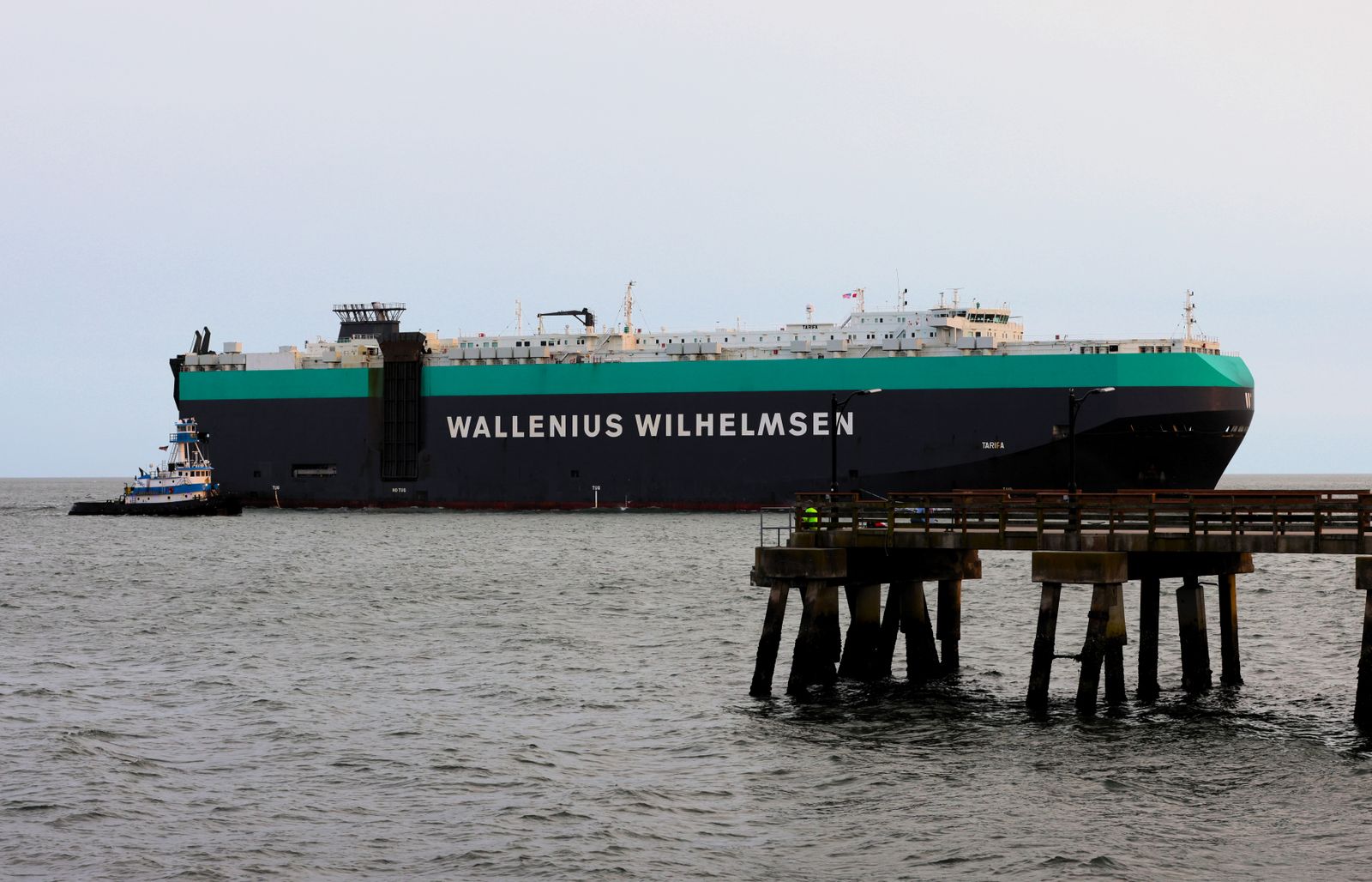
Yes — and the exposure is wider than the one burning ship everyone pictures. A modern car carrier concentrates thousands of high-value vehicles and battery packs into a single hull, and the Felicity Ace lost an estimated $401 million in cars on one sailing in 2022. But accumulation also stacks up dockside before loading, and correlates across the whole book when one battery defect sits in thousands of identical cars. A per-voyage view prices only the first of the three.
Accumulation, not just a big fire
Accumulation — aggregation, in reinsurance terms — is the word for value that fails together, and on a car carrier it takes three forms an underwriter has to price separately. There is the single-hull severity of one total loss, the static value stacked at the terminal before and after the voyage, and the systemic correlation of a shared cargo defect across many hulls at once. The Felicity Ace fire is only the most visible of the three; the other two are the ones a per-voyage cargo line tends to miss.
One: the single-hull severity
This is the face everyone sees. A vehicle carrier packs thousands of cars onto large, undivided decks that let a fire spread, so one ignition can become one catastrophic-severity claim. The Felicity Ace sank in 2022 with roughly 4,000 vehicles — an estimated $401 million in cars out of about $438 million of total goods — and the Fremantle Highway burned in 2023 carrying 3,783 vehicles, 498 of them battery-electric. Allianz's loss analysis is blunt about the trend: as vessels grow larger, the values at risk rise and the consequences of a fire are amplified. One hull, one total loss.
Two: the value stacked on the quay
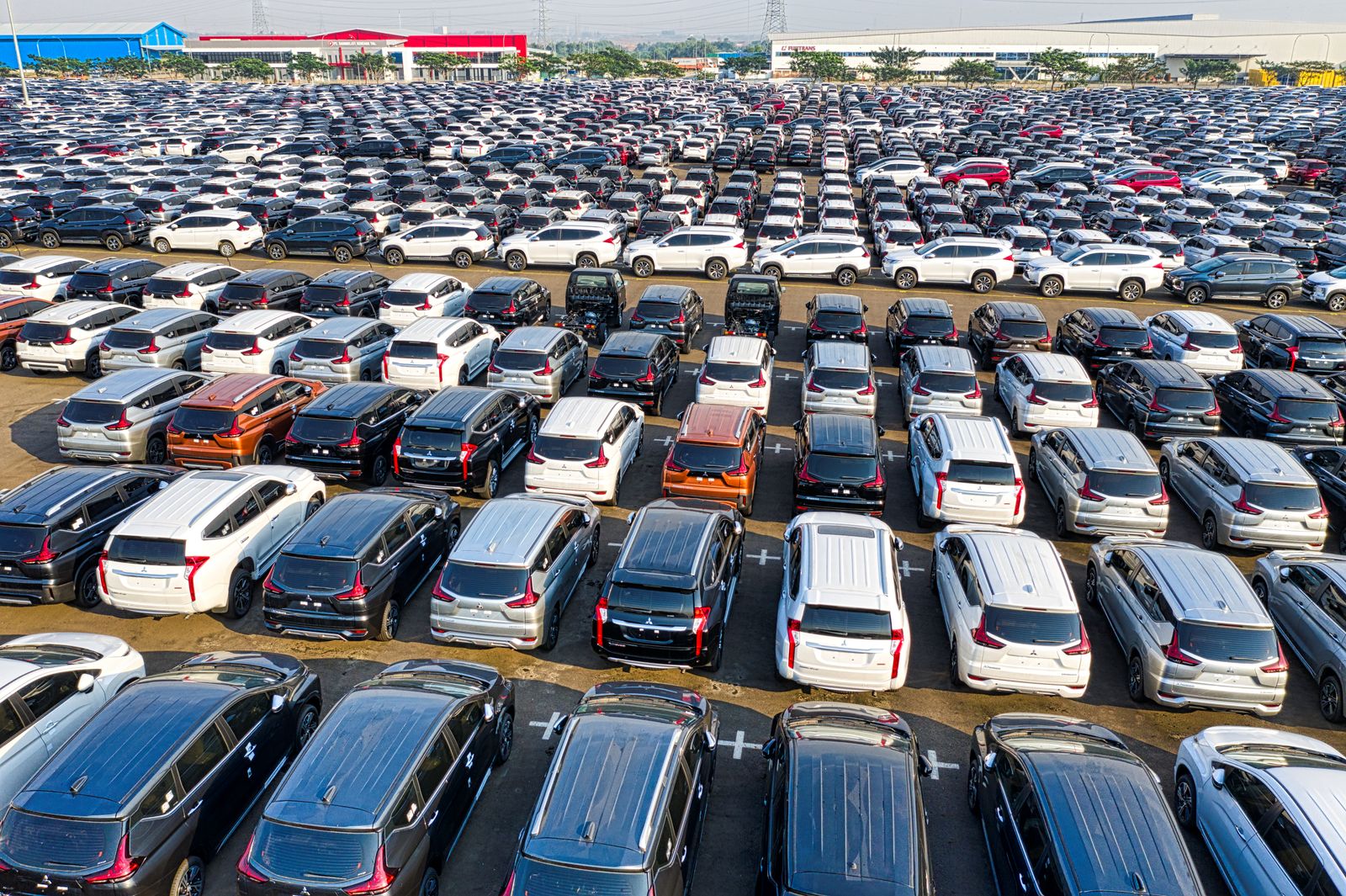
Before it is a voyage it is a yard. Vehicles stage at car terminals in the tens of thousands, packed as tight as they sit on the deck, and that concentration is static, dense and often insured in the same layers as the cargo afloat. IUMI's warning of a 'significant vulnerability in the event of a major loss in a key premium centre' is, read plainly, a port-accumulation warning: a terminal fire — or a vessel fire while still at berth — lands in exactly the place where value piles up. A catastrophe model that begins the clock at loading and stops it at discharge never sees the quay, which is where a large share of the exposure actually sits.
Three: the defect that correlates the whole book
This is the quiet one, and the one a per-vessel model is structurally blind to. Accumulation is not only spatial — it is by cause. If a single battery cell type or vehicle model is the ignition source, that same defect exists in thousands of identical cars spread across many ships, terminals and trade lanes at once. The Felicity Ace litigation makes the point concrete: Mitsui O.S.K. Lines and Allianz have pursued Volkswagen over an alleged battery in a Porsche electric vehicle as the trigger, with the car brands' exposure alone estimated around $155 million. A recall-grade defect is a systemic aggregation event because the correlation lives in the cargo, not the geography — and no amount of spreading ships across the ocean diversifies it away.
Why it is getting denser
All three axes are moving the wrong way at once. Frequency is up — Allianz counted 250 fire and explosion incidents in 2024, a 20% rise and the highest in a decade, attributed partly to lithium-ion batteries. Value density is up — EVs raise the price of each unit and add the ignition mode, and Allianz projects the battery market to more than double to about $322 billion by 2030. And hull size is up — 9,300-CEU newbuilds push still more concentrated value onto a single keel. Denser cargo, more of it, on bigger ships: accumulation compounds rather than trades off.
What it means for underwriters and owners
For underwriters, car-carrier accumulation has to be modelled on three axes — hull severity, port static accumulation and cargo-defect correlation — not as a single per-voyage cargo line, and the correlation axis is the one a soft market is least likely to have reserved against. For owners, the levers that shorten the tail are the ones an underwriter can actually see and rate: auditable per-vehicle fire detection that stops a single-cell fault from becoming the whole-hull loss, and loading data that ties each unit to its chemistry so a defect can be found before it sails. You cannot diversify accumulation away — but you can shorten the severity of each event, and that is what turns a feared tail into a rateable one.
How RoRoSAFE helps
Accumulation turns one late detection into a very large loss. RoRoSAFE shortens that interval on the ship and on the quay: per-vehicle thermal and battery-vent gas sensing flags a failing pack before visible smoke. The same grid pattern covers enclosed decks and port staging yards, so detection follows the value from yard to hold.
Pilot: one deck · installed alongside the berth · no drydock · 6 months of dashboard access
Sources
- 1. Allianz Commercial — 'Larger vessels, bigger losses' and Safety & Shipping Review 2025: values at risk rise with vessel size and fire consequences amplify; lithium-ion a growing risk for container and car carriers; 250 fire/explosion incidents in 2024 (+20% YoY, decade high); battery market ~$322bn by 2030 — commercial.allianz.com
- 2. IUMI Stats Report 2025 — ocean hull market soft (global premium ~USD 9.67bn); 'significant vulnerability in the event of a major loss in a key premium centre' (port/accumulation exposure) — iumi.com
- 3. Felicity Ace (2022) — ~4,000 vehicles; estimated ~$401M in cars of ~$438M total goods; Mitsui O.S.K. Lines and Allianz litigation vs Volkswagen over an alleged Porsche EV battery; car-brand exposure ~$155M — gcaptain.com, Maritime Executive, Reinsurance News
- 4. Fremantle Highway (2023) — 3,783 vehicles including 498 battery-electric — gcaptain.com
Questions, answered
What is accumulation risk on a car carrier?+
It is the concentration of value that can be lost together. On a car carrier it has three forms an underwriter prices separately: the single-hull severity of one total loss, the static value stacked at the terminal before and after a voyage, and the correlation of a shared battery or model defect across many ships at once. Only the first is a single fire; the other two a per-voyage view tends to miss.
How much value is concentrated on one car carrier?+
Enough to make a single fire a catastrophe claim. The Felicity Ace sank in 2022 with roughly 4,000 vehicles and an estimated $401 million in cars — about $438 million of total goods. As newbuilds reach 9,300 CEU and EVs raise the price of each unit, the value concentrated on one hull keeps climbing, which is why fire sits in reinsurance and accumulation models rather than only primary rating.
Why does a shared battery defect create accumulation risk?+
Because the exposure is correlated by cause, not geography. If one battery cell type or model is the ignition source, that defect exists in thousands of identical cars spread across many ships and terminals. Spreading vehicles across voyages diversifies weather and navigation risk but not a common defect — the Felicity Ace litigation over an alleged Porsche EV battery shows a single manufacturer fault driving correlated claims.
Can fire detection reduce a car carrier's accumulation risk?+
It cannot remove accumulation, but it can shorten the severity of each event. Auditable per-vehicle detection that catches a single-cell fault early keeps one fire from becoming a whole-hull total loss, and loading data that ties each vehicle to its chemistry helps flag a defect before it sails. Those are the levers an underwriter can see and rate, which is why detection increasingly shapes terms.
Continue the thread

Is Car-Carrier Fire a Soft Market's Blind Spot?
Marine reinsurance capacity is soft and hull rates are falling in 2026, yet car-carrier fire is the accumulation loss underwriters still single out.
Can a Car Carrier Fire Hit the P&I Pool?
One car-carrier fire rarely breaks the reinsurance tower — but its wreck-removal and pollution tail climbs fast into the P&I pool every owner funds.

Hull Deductibles on Car Carriers, Reset
Hull rates are soft in 2026, yet underwriters take a firmer line on car carriers. Terms and deductibles, not headline rates, are where that shows.

Do Pure-EV Car Carriers Change the Risk?
Carmakers like BYD now run near-fully-electric car carriers — BYD Shenzhen holds 9,200 vehicles. That concentrates the fire load, but also the knowledge.
Does EV Accumulation Start on the Quay?
Terminal dwell runs to 14 days at some ports and yards hold tens of thousands of cars. The ship got a detection mandate in 2026; the yard did not.