
Can a Car Carrier Fire Hit the P&I Pool?
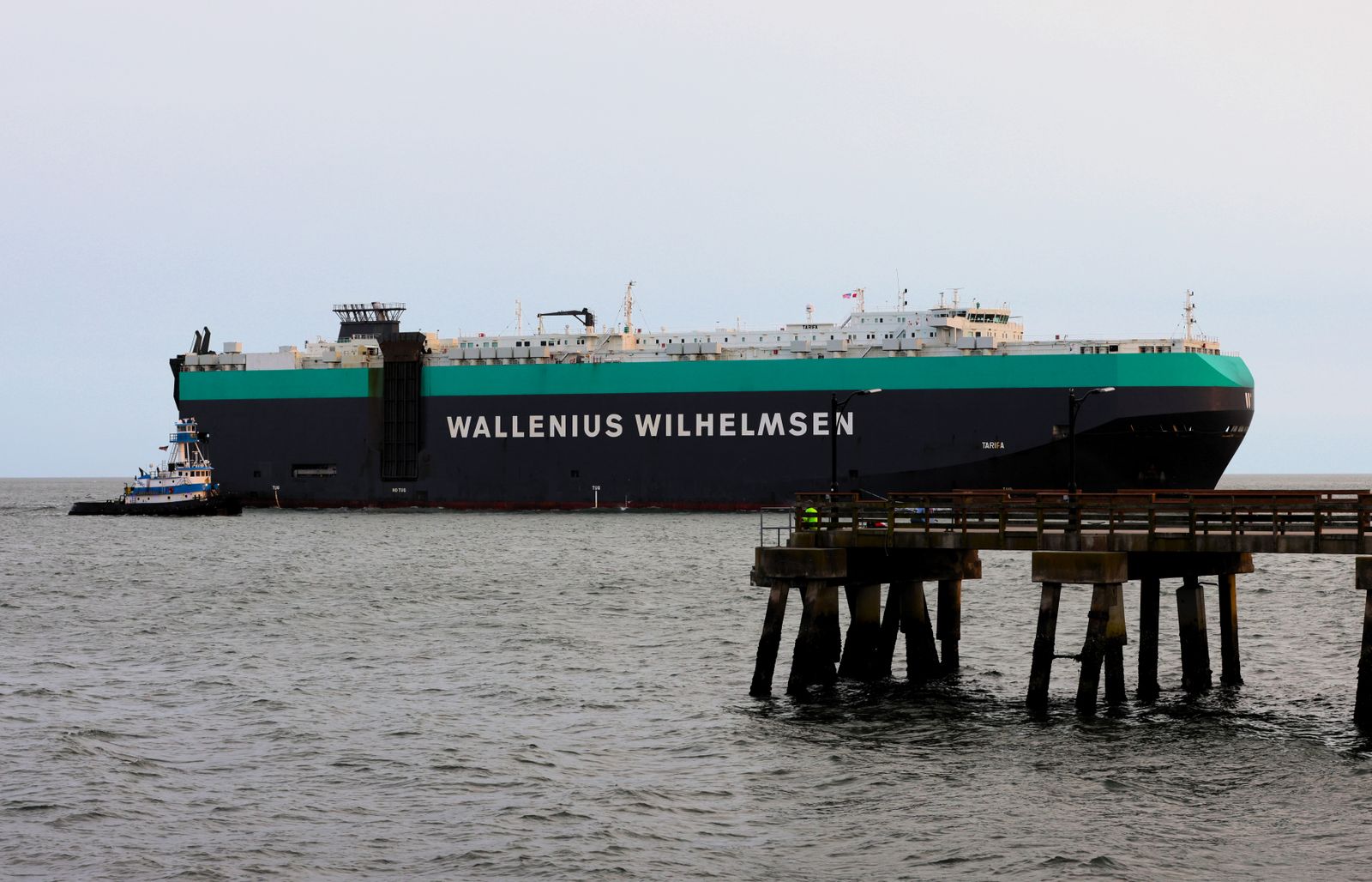
One car-carrier fire rarely breaks the reinsurance tower — but its wreck-removal and pollution tail climbs fast into the P&I pool every owner funds.
Rarely on its own. A single car-carrier fire almost never exhausts the International Group's reinsurance tower, which reaches about US$3.35 billion for the 2026/27 policy year. But the parts a P&I club actually pays — wreck removal, pollution, crew and passenger liability — climb fast into the mutualised Pool that all thirteen Group clubs fund together, and every shipowner pays for that severity through the reinsurance premium built into their rate.
How the P&I pool is layered
A P&I liability is shared in tiers, not carried by one club. For the 2026/27 policy year each club keeps the first US$10 million of any claim itself — the Individual Club Retention. Above that, US$90 million is pooled across the thirteen International Group clubs, so the Pool absorbs claims up to US$100 million. Beyond US$100 million the Group Excess of Loss (GXL) market reinsurance takes over: US$2.25 billion of cover in three layers, then a further US$1 billion 'collective overspill', for a combined limit of roughly US$3.35 billion. The point of the structure is mutualisation — a large loss at one club is paid by all of them, and then by the reinsurance market whose premium, now over US$1 billion a year, is folded into every member's per-gross-ton rate.
Where a car-carrier fire actually lands
Not in the hull line — in the liability tiers, and only some of them. The headline number on a car-carrier casualty is usually hull and cargo, which P&I does not cover: the Felicity Ace loss in 2022, put at about US$438 million, was roughly US$400 million of vehicles — a hull-and-cargo matter for those underwriters, not a Pool claim. What reaches the P&I Pool is the third-party tail: wreck removal, pollution and injury. The Golden Ray showed the scale that tail can reach — wreck removal alone ran to about US$842 million, a liability that would pierce a club's US$10 million retention, exhaust the US$90 million Pool layer, and burn deep into the first GXL reinsurance layer. That is the characteristic shape of a car-carrier P&I claim: a modest hull number sitting under a potentially enormous liability.
Why it's aggregation, not one fire
The systemic risk is the run, not the single event. No car-carrier fire has yet broken the tower; the two Pool claims driving 2026/27 pricing are the Dali bridge allision and the X-Press Pearl container fire, together expected to exceed US$1 billion in P&I losses. But because the Pool is mutual, a cluster of vehicle-carrier total losses — Golden Ray, Felicity Ace and Fremantle Highway inside a few years — accumulates as Pool cost and feeds the reinsurance premium every owner pays per gross ton. A single fire is survivable for the structure; a pattern of them reprices the whole book. That is why the sector's fire record shows up as a line item on ships that have never had an incident.
What actually moves the car-carrier rate
Not the fires — not yet. In the International Group's reinsurance rating, car carriers sit inside the 'dry cargo' category, which fell 5% for 2026/27 to US$0.5751 per gross ton. The rate that jumped was 'fully cellular container' — up 15% to US$1.0237 per gross ton — because container casualties dominated recent Pool claims. So car carriers have not driven a category rate spike. But their exposure profile makes them a strong candidate for the next billion-dollar Pool claim: wreck removal that is frequently uncapped, high-value coastal pollution, and, on a RoPax carrying passengers, liabilities that run under a US$3 billion passenger-and-crew limit with a US$2 billion passenger sub-limit. The rate is calm because the severe car-carrier claim has been hull and cargo so far — the P&I tail is the one still loaded and waiting.
What it means for owners and underwriters
For owners, the reinsurance element of the P&I rate is mutual: you pay for the sector's severity whether or not your own ships burn, so the fire record of vessels you do not operate is still on your invoice. For underwriters, a car-carrier fire is a Pool-claim question as much as a hull one, because it is the liability tail — wreck removal, pollution, injury — not the cargo, that reaches the shared reinsurance layers. Both read the same way. The cheapest control on a mutualised, severity-driven cost is anything that stops a single-vehicle fault from becoming the total loss that starts the wreck-removal and pollution clock. Early detection is a Pool-cost argument, not only a ship-safety one.
How RoRoSAFE helps
The pollution and wreck-removal tail that reaches the P&I pool grows with how far a fire spreads before it is contained. RoRoSAFE targets the start of that curve: per-vehicle thermal and gas sensing that flags a battery event before visible smoke, while suppression can still hold it to a few vehicles. A smaller fire leaves a smaller tail, and that is where the pool's exposure starts.
Pilot: one deck · installed alongside the berth · no drydock · 6 months of dashboard access
Sources
- International Group of P&I Clubs — 2026/27 Pool and Group Excess of Loss (GXL) reinsurance structure: Individual Club Retention US$10m, Pool US$90m excess US$10m, GXL US$2.25bn excess US$100m (Layer 1 US$650m xs US$100m; Layer 2 US$750m xs US$750m; Layer 3 US$850m xs US$1.5bn), Collective Overspill US$1bn excess US$2.35bn — igpandi.org.
- Japan P&I Club / Gard member circulars — 2026/27 International Group reinsurance: per-gross-ton rates by category (fully cellular container +15% to US$1.0237; dry cargo −5% to US$0.5751; passenger −8.5%); passenger-and-crew limit US$3bn with US$2bn passenger sub-limit; oil-pollution limit US$1bn.
- Insurance Business / Marsh P&I renewal tracker (2026) — container reinsurance rate rise driven by Dali and X-Press Pearl Pool claims expected to exceed US$1bn combined; total Group reinsurance premium now over US$1bn.
- Russell Group / Lloyd's List / Maritime Executive — Felicity Ace (2022): total loss ~US$438m, of which ~US$400m vehicles (a hull-and-cargo loss, not a P&I Pool claim).
- NTSB Marine Accident Report MAR-21/03 and Lloyd's List / TradeWinds — Golden Ray (2019): wreck removal ~US$842m, a P&I liability.
Questions, answered
Does a car carrier fire hit the P&I pool or hull insurance?+
Both, but different parts. The hull and the cargo — often the largest headline number — are covered by hull and cargo underwriters, not P&I. What reaches the mutualised P&I Pool is the third-party liability tail: wreck removal, pollution and crew or passenger injury. On a severe casualty that tail can dwarf the hull, as the Golden Ray's ~US$842m wreck removal showed.
How big is the International Group reinsurance tower for 2026/27?+
About US$3.35 billion in total. Each club retains the first US$10 million of a claim, US$90 million is pooled across the thirteen clubs up to US$100 million, then Group Excess of Loss reinsurance adds US$2.25 billion, and a US$1 billion collective overspill sits above that. Cover for oil pollution is limited to US$1 billion and passenger-and-crew liability to US$3 billion.
Are car carrier fires raising P&I reinsurance rates?+
Not directly, yet. Car carriers are rated in the 'dry cargo' category, which fell 5% for 2026/27. The rate that rose 15% was fully cellular container, driven by the Dali and X-Press Pearl Pool claims. But because the Pool is mutual, a run of vehicle-carrier total losses would accumulate as Pool cost and feed the reinsurance premium every owner pays.
Why does the P&I structure matter to a shipowner who hasn't had a fire?+
Because P&I is mutual. A large wreck-removal or pollution claim at one club is funded by all thirteen, then by the reinsurance market whose premium — now over US$1 billion a year — is built into every member's per-gross-ton rate. The sector's fire record therefore appears as a cost on ships that have never had an incident.
Continue the thread

Is Car-Carrier Fire a Soft Market's Blind Spot?
Marine reinsurance capacity is soft and hull rates are falling in 2026, yet car-carrier fire is the accumulation loss underwriters still single out.
Is Wreck Removal a Car Carrier's Biggest Risk?
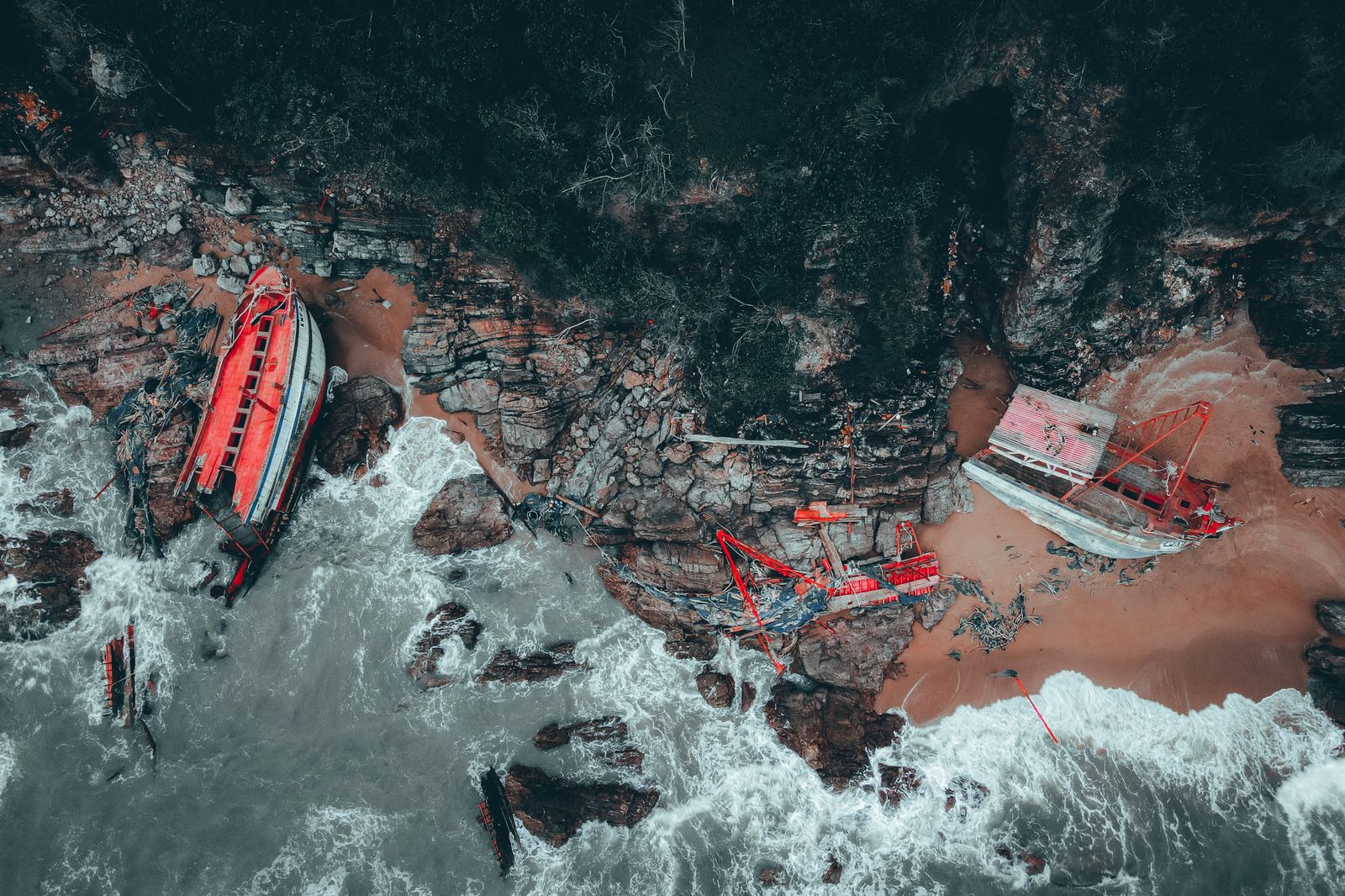
Under the Nairobi Convention, removing a wreck is strict-liability — and many states cap it at nothing. On Golden Ray it ran ~13x the hull value.

P&I Renewal 2026 — What Changed for RoRo Tonnage
The 2026 P&I renewal set a ~6% average general increase across the International Group. For car carriers, each fleet's record sets the real price.