
Does a Car in a Container Escape the Rules?
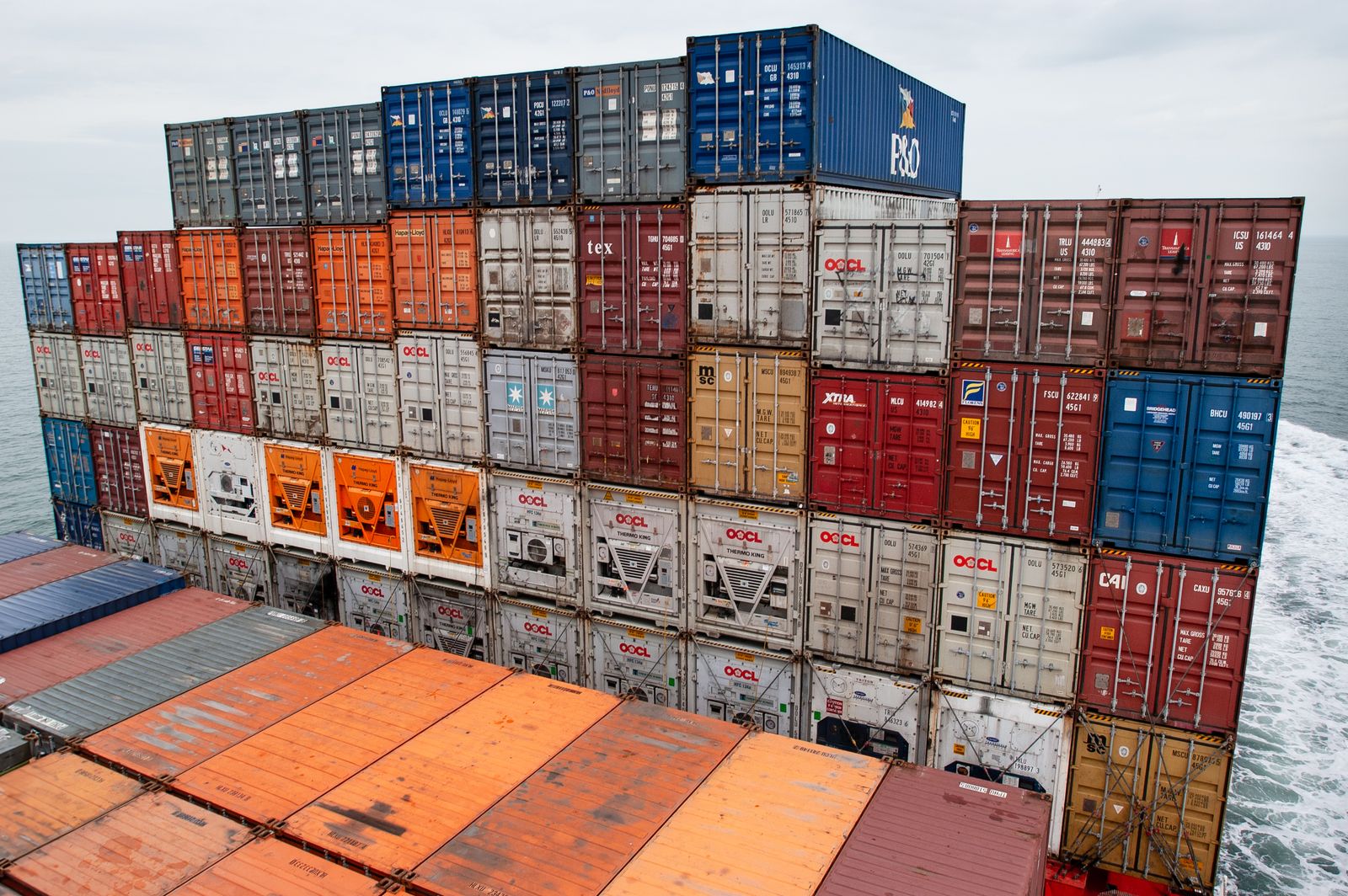
Not after 2028. IMDG Amendment 43-26 ties the SP 961 exemption to SOLAS II-2/20 approved spaces — and a container stack is not one of them.
For now, largely yes. From 2028, no. The capacity crunch on car carriers has pushed a large volume of finished vehicles into containers, and the IMDG relief that vehicles have long enjoyed is being rewritten to depend on the space a vehicle is carried in rather than on the vehicle itself. Amendment 43-26 makes a container stack the wrong side of that line.
Why cars are going into boxes
Because the ro-ro slots are not there and the price of the ones that are has moved sharply. Trade reporting puts daily charter rates for large car carriers at around $42,500 at the end of 2025 and roughly $70,000 by June 2026 — about 65% in a year — with dedicated slots booked well in advance. Freight forwarders and manufacturers facing that have moved cars into containers rather than hold export volume, and the figure most often cited is roughly four million Chinese export vehicles a year travelling in boxes.
This is a cyclical squeeze rather than a permanent modal shift, which matters for how seriously to take it. Around 58 new ro-ro and PCTC deliveries are scheduled during 2026, adding an estimated 5–7% to global capacity against finished-vehicle trade growth of 1–3%, and roughly a million containerised cars from China are expected to switch back to ro-ro as that capacity lands. The volume in boxes should fall. The rule change arriving behind it will not.
What Amendment 43-26 changes
It adds a safety-condition gate and then narrows the main exemption. The IMO's Editorial and Technical Group agreed three changes for Amendment 43-26, voluntary from 1 January 2027 and mandatory from 1 January 2028. A new Special Provision 980 prohibits the transport of unsafe vehicles outright: consignors must assess a vehicle's safety condition before offering it for shipment, and damaged batteries must be removed before it travels. It applies to all vehicles, waste vehicles included, and excludes only vehicles driven aboard by passengers on ro-ro passenger ships.
SP 961 — the provision that has let vehicles travel largely outside the IMDG Code's requirements — takes SP 980's conditions on board and adds a restriction that did not exist before: it now excludes hybrid and lithium battery-powered vehicles unless they are placed in areas of the ship specially built and approved to prevent and contain fires under SOLAS Chapter II-2, Regulation 20, with batteries electrically insulated. SP 962 is amended in parallel, and while unpackaged vehicles still need no marking or labelling, it mandates placarding for cargo transport units containing vehicles regardless of packaging status.
The exemption now attaches to the space, not the car
That single clause is the whole story for containerised vehicles. Read it carefully: the relief for a hybrid or an EV is conditional on the vehicle sitting in a Regulation 20 space — a vehicle, special category or ro-ro space, built and approved for the purpose. A container in a hold or a stack on deck is not that space and cannot be made into it. So the same electric vehicle that ships under a light documentary regime when driven onto an approved car deck falls outside SP 961's relief when it is loaded into a box.
The two protection regimes are not equivalent
The drafting reflects a real physical difference rather than an administrative preference. A Regulation 20 space carries a defined package: permanent mechanical ventilation independent of accommodation and machinery, fixed fire detection, and a fixed extinguishing arrangement, with the 2026 SOLAS amendments adding individually identifiable detection and video monitoring on vehicle spaces. That is what "specially built and approved to prevent and contain fires" is pointing at.
A container stack has none of it applied to the vehicle. Hold detection on a container ship is designed around general cargo, deck stows sit largely outside any detection at all, and a vehicle inside a closed box is unreachable and unobservable — no crew inspection, no thermal or gas signature escaping in a usable form, and no drencher aimed at it. Whether that makes a box better or worse in absolute terms is a separate argument: a sealed steel container also bounds a fire in a way an open car deck does not. What it clearly is not is the same regime, and Amendment 43-26 stops treating it as one.
What it means for shippers, owners and underwriters
For shippers, the containerised route is about to carry a compliance cost it does not carry today. Vehicles moved into boxes to beat a capacity squeeze will, from 2028, need to be declared and placarded as the code requires rather than waved through on SP 961, and SP 980's consignor duty to assess condition before shipment lands hardest on exactly the cargo most likely to travel this way — used and end-of-life vehicles moving to secondary markets.
For owners and underwriters, the practical question is one that manifests rarely answer today: which mode did this cargo actually move in, and does the ship carrying it have a Regulation 20 space at all. A container operator taking automotive volume during a ro-ro squeeze is accepting a cargo class whose regulatory basis changes underneath it in 2028, and the transitional year — voluntary from January 2027 — is when the two regimes will be running side by side and the paperwork will be least consistent.
How RoRoSAFE helps
Once the exemption attaches to the approved space, the protection inside that space matters more. RoRoSAFE strengthens an enclosed vehicle deck with per-vehicle thermal and battery-vent gas detection, alerting before visible smoke. That makes the SOLAS II-2/20 space the better-protected place to carry an EV, by the margin that counts. It is designed for vehicle decks; it does not monitor containers.
Pilot: one deck · installed alongside the berth · no drydock · 6 months of dashboard access
Sources
- 1. BIMCO — "IMO E&T Group advances vehicle transport safety on board ships in IMDG Code" (22 September 2025), reporting the outcomes agreed for IMDG Code Amendment 43-26: new SP 980 prohibiting transport of unsafe vehicles, requiring consignors to assess safety condition before shipment and damaged batteries to be removed, applying to all vehicles including waste vehicles and excluding vehicles driven by passengers on ro-ro passenger ships; SP 961 amended to incorporate SP 980 and to exclude hybrid and lithium battery-powered vehicles unless placed in areas specially built and approved to prevent and contain fires per SOLAS Chapter II-2 Regulation 20, with batteries electrically insulated; SP 962 amended to incorporate SP 980 and to mandate placarding for cargo transport units containing vehicles regardless of packaging status. Voluntary application 1 January 2027, mandatory 1 January 2028.
- 2. IMDG Code Amendment 42-24 (mandatory 1 January 2026) — the current position this post is measured against: lithium battery-powered vehicles carry UN 3556, and SP 961 relieves vehicles carried on designated ro-ro spaces from the code's provisions. Covered in this corpus in "EVs Got a New UN Number" and "What the 2025 IMDG Code Changes for RoRo".
- 3. SOLAS Chapter II-2 Regulation 20 — protection of vehicle, special category and ro-ro spaces: permanent mechanical ventilation independent of accommodation and machinery, fixed fire detection and fixed extinguishing arrangements; the 2026 SOLAS amendments add individually identifiable detection and video monitoring on vehicle spaces.
- 4. Seatrade Maritime — "Cars in containers the norm as ro-ro sector capacity crunch continues"; Automotive Logistics — vessel operators bringing in capacity for finished-vehicle shipments.
Questions, answered
Can you legally ship an electric vehicle in a container?+
Yes, and it happens at scale — roughly four million Chinese export vehicles a year are reported to move in boxes because car-carrier slots are scarce. What changes is the paperwork basis. Today SP 961 relieves vehicles from most IMDG requirements; from IMDG Amendment 43-26, that relief excludes hybrid and lithium vehicles unless they sit in a SOLAS II-2/20 approved space.
What is IMDG Amendment 43-26 and when does it apply?+
It is the next amendment to the IMDG Code, agreed at the IMO's Editorial and Technical Group, applying voluntarily from 1 January 2027 and mandatorily from 1 January 2028. It introduces SP 980 prohibiting transport of unsafe vehicles, narrows SP 961 so hybrid and lithium vehicles keep their exemption only in Regulation 20 spaces, and requires placarding of cargo transport units containing vehicles.
Why does the exemption depend on the space rather than the vehicle?+
Because a Regulation 20 space is a defined protection package — permanent mechanical ventilation, fixed detection and fixed extinguishing, with individually identifiable detection and video monitoring added by the 2026 SOLAS amendments. A container hold or deck stow provides none of that to the vehicle inside the box. The amendment ties the relief to the protection actually present.
Is a car safer in a container or on a car deck?+
The regimes differ rather than one being simply better. A sealed steel container bounds a fire in a way an open car deck does not, but the vehicle inside is unreachable and unobservable — no crew inspection, no usable escaping signature, no drencher aimed at it. A Regulation 20 deck gives detection, ventilation and suppression but shares one space among thousands of vehicles.
Continue the thread
EVs Got a New UN Number — Does It Help?
From IMDG 42-24, lithium EVs ship as UN 3556, not the generic UN 3171. But SP 961 still exempts them on a ro-ro, so the code rarely reaches the deck.

What the 2025 IMDG Code Changes for RoRo
IMDG Code Amendment 42-24, mandatory 1 Jan 2026, gives EVs their own UN 3556 class and retires generic UN 3171 — changing how car carriers declare them.

CINS Li-Ion Container Guidelines Meet RoRo
The 2023 CINS lithium-ion guidelines were written for containers, but their verify-segregate-declare template fits vehicle-carrier loading almost intact.

Does China's EV Export Surge Raise Fire Risk?
China exported ~2.6 million new-energy vehicles by sea in 2025 — increasingly on carmakers' own dual-fuel fleets. The exposure is density, not defect.

MSC Flaminia: Ten Days in the Sun
DVB80 booked for a warm-month sailing, then left standing in the sun. Three crew died — and the owner, operator and carrier bore no liability.