
How Fast Does a Gas Sensor Drift at Sea?
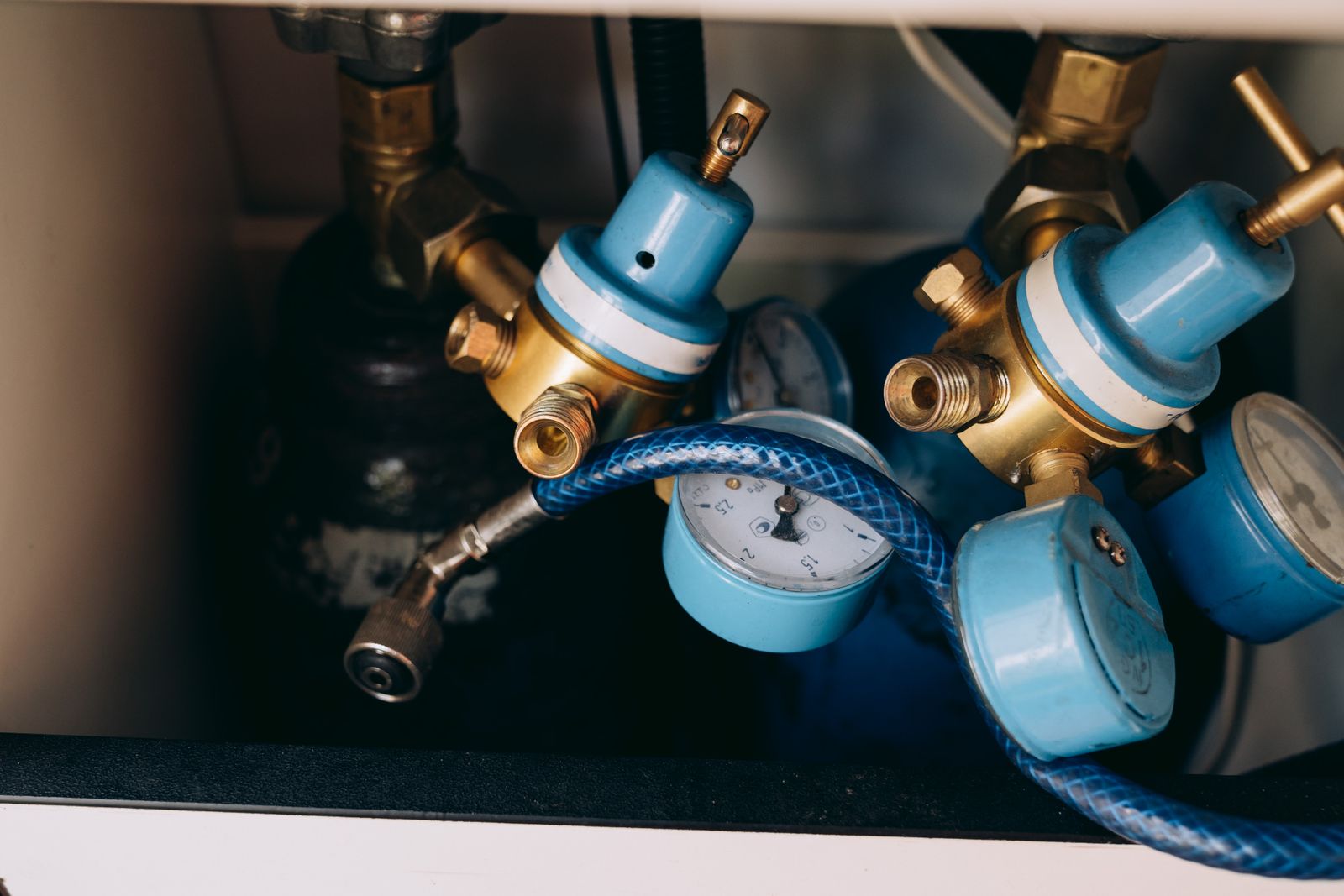
Electrochemical cells can lose up to 20% of sensitivity a year. On a vehicle deck, the threshold you set at commissioning is not the one you have later.
Fast enough that a threshold is a maintained parameter, not a commissioning constant. Manufacturers commonly specify that an electrochemical cell's sensitivity may drift by up to 20% per year, and typical service life is one to three years. A vehicle deck then supplies every condition known to accelerate that: salt-laden and often condensing humidity, a wide temperature range across a rotation, and a hydrocarbon background from the cargo itself.
What actually drifts, and how fast
Two things move independently — the zero and the span — and they fail in opposite directions. An electrochemical cell measures a target gas by an electrode reaction whose output current is proportional to concentration; both the electrolyte and the electrode surface change over time, so the sensor's sensitivity to a known concentration falls even when it still responds. Manufacturers commonly quote up to 20% sensitivity drift per year, against a typical service life of one to three years. That range is environmental, not arbitrary: kept at around 20°C and 60% relative humidity with no contaminants, the same cell type has been reported to run well beyond a decade. The baseline moves too — humidity, temperature and pressure changes shift the zero, which is why these cells are temperature-dependent and rely on internal compensation to report a stable reading at all.
Shelf life is the part that catches people out. An unused spare in a locker is already consuming its life, with typical shelf life quoted at six months to a year. A vessel that stocks a full set of replacement cells at delivery and fits them two years later has fitted partly-aged sensors and reset nothing.
Why a vehicle deck maximises every driver
The deck is close to the worst case on all three of the environmental axes that degrade these cells. Humidity first: electrochemical sensors are typically specified for something like 15–90% relative humidity non-condensing, because condensing humidity blocks the gas diffusion path into the cell and sustained high humidity dilutes the electrolyte. A ventilated vehicle space drawing marine air is routinely at the top of that band and periodically past it, with salt aerosol carried in. Temperature second: a single rotation can run a tropical loading port to a North Atlantic winter crossing, so the internal compensation is working across most of its range rather than sitting in the middle of it. And third, the cargo is the interference — a deck of internal-combustion vehicles contributes a hydrocarbon and exhaust-product background that a cell has to discriminate against continuously, not occasionally.
Cross-sensitivity here degrades discrimination, not just accuracy
In most applications cross-sensitivity is a nuisance; in this one it attacks the thing the sensing exists to do. The general problem is well documented — a carbon monoxide cell will respond to hydrogen, and the magnitude of that response depends on electrode material, diffusion rate, operating temperature and humidity, and notably on sensor age, so the cross-response itself drifts. Now put that on a lithium-runaway signature, where hydrogen and carbon monoxide are both target species that appear in a particular order and tempo. A CO channel that is partly reading hydrogen is not throwing a false alarm in the usual sense: it is reporting a real target gas on the wrong channel. What degrades is the ability to tell the two apart, and with it the ability to say where in the event sequence you are. Accuracy loss you can calibrate out; discrimination loss changes what the measurement means.
How to bound it in practice
You cannot stop the drift, so the engineering problem is keeping it inside a known band and knowing where in that band you are. Marine practice for fixed gas-detection systems converges on calibration at the manufacturer's stated interval — commonly at least annually, with portable units on a tighter three-to-six-month cycle — with bump testing far more frequently, and every bump test, calibration and sensor replacement logged in the vessel's safety management system. Worth being precise here: there is no single mandated calibration interval that governs a vehicle-deck gas-detection layer specifically. SOLAS Regulation XI-1/7 requires portable atmosphere testing instruments aboard, but that requirement is written for enclosed-space entry, not for cargo-space fire detection, so the governing interval in practice comes from the manufacturer's specification and whatever the class society and company SMS impose on top.
- Treat the alarm threshold as a maintained value with a review date, not a number set once at commissioning and inherited by every subsequent crew.
- Trend each sensor's own baseline over time. A baseline that is walking is a maintenance signal in its own right, and it is available continuously without any gas being applied.
- Bump test on a short cycle to confirm response; calibrate on the manufacturer's cycle to confirm sensitivity. They answer different questions and one does not substitute for the other.
- Manage spares as a dated consumable. Order cells against a replacement schedule rather than stockpiling at delivery, because shelf life runs whether or not the cell is fitted.
- Do not let a single gas channel carry discrimination on its own. Fusing gas with an independent thermal observation is partly a hedge against exactly this degradation — when one modality's confidence decays with age, the other does not decay with it.
- Record calibration state alongside alarm data. After an event, the question of what the sensor could have seen depends on when it was last calibrated, and that record is worth having before it is asked for.
How RoRoSAFE helps
Drift is one reason RoRoSAFE does not rely on gas alone. Each vehicle's gas channel is fused with an infrared thermal channel, and each sensor is read against a baseline rather than a fixed commissioning threshold. That limits how much a slowly drifting cell can degrade detection before it is recalibrated or replaced.
Pilot: one deck · installed alongside the berth · no drydock · 6 months of dashboard access
Sources
- Electrochemical sensor drift and life: manufacturers commonly specify sensitivity drift of up to 20% per year; typical service life for electrochemical cells is one to three years, extending well beyond a decade only under ideal stable conditions (around 20°C, 60% RH, no contaminants); typical shelf life for an unfitted cell is six months to one year — Analog Devices, 'Overcoming the Technical Challenges of Electrochemical Gas Sensing'; HazardEx, 'Understanding gas sensor lifespan'; Critical Environment Technologies, 'Electrochemical Gas Sensors & Factors Affecting Life Expectancy'.
- Cross-sensitivity behaviour: a CO cell will respond to hydrogen (and to hydrogen cyanide), with the magnitude depending on electrode material, gas diffusion rate, flow and exposure timing, operating temperature and humidity, and sensor age — Honeywell Technical Note 114, 'Sensor Specifications and Cross-Sensitivities'.
- Environmental limits: electrochemical cells are temperature-dependent and require internal temperature compensation; typical operating humidity is around 15–90% RH non-condensing, since condensing humidity blocks the diffusion pathway and consistently high humidity dilutes the electrolyte — Analog Devices; Critical Environment Technologies.
- Marine calibration practice: fixed gas-detection systems are calibrated at manufacturer-defined intervals, commonly at least annually, with portable units typically on a three-to-six-month cycle; bump testing (exposure to a known gas concentration to confirm response) is performed far more frequently; bump tests, calibrations and sensor replacements are logged in the vessel's safety management system — marine gas-detection service and equipment providers.
- IMO — SOLAS Regulation XI-1/7: requirement to carry portable atmosphere testing instruments. Noted here only to mark its scope — it addresses enclosed-space entry, and does not set a calibration interval for a cargo-space fire-detection layer — imo.org.
- Companion RoRoSAFE analysis — 'H₂, CO, CO₂: The Thermal-Runaway Signature' (what these channels are looking for), 'Setting Thermal Anomaly Detection Thresholds' (how a threshold is derived in the first place), and 'Multi-Modal Sensor Fusion' (why an independent modality hedges sensor ageing).
Questions, answered
How much does an electrochemical gas sensor drift over time?+
Manufacturers commonly specify sensitivity drift of up to 20% per year, against a typical service life of one to three years. Both the zero and the span move: the electrolyte and electrode surface change with age and exposure, while humidity, temperature and pressure shift the baseline. In ideal stable laboratory conditions the same cell type can last far longer, which is why the quoted range is so wide.
Why is a vehicle deck hard on gas sensors?+
It maximises all three degradation drivers at once. Marine air is salt-laden and often at or past the top of the typical 15–90% RH non-condensing band, where condensation blocks the diffusion path and sustained humidity dilutes the electrolyte. A single rotation can span tropical and North Atlantic temperatures, stressing internal compensation. And the cargo itself supplies a continuous hydrocarbon and exhaust background to discriminate against.
Is a bump test the same as a calibration?+
No, and conflating them is the common failure. A bump test exposes the sensor to a known gas to confirm that it responds at all. A calibration establishes that its sensitivity is still within specification. A cell that has lost 20% of its sensitivity will still respond to bump gas and still pass — while under-reporting the concentration that a threshold was set against.
Why does cross-sensitivity matter more for lithium detection?+
Because hydrogen and carbon monoxide are both target species in the runaway signature, and they appear in a particular order. A CO channel partly responding to hydrogen is not a conventional false alarm — it is a real target gas on the wrong channel. That erodes the ability to distinguish the two and therefore to place the event in its sequence. Accuracy can be calibrated back; lost discrimination changes what the reading means.
Continue the thread

H₂, CO, CO₂: The Thermal-Runaway Signature
The order matters more than the shortlist. Solvent vapour beats H₂ by about fifteen minutes — and LFP and NMC invert which gas dominates.

Setting Anomaly Thresholds: ΔT and Dwell
A trip condition has three axes — magnitude, persistence, and spatial coherence. Get the first two wrong and the third can't save you.

Multi-Modal Fusion: Heat, Gas, and Smoke
Each sensor modality has different blind spots. Multi-modal fusion is not a buzzword — it is the only architecture that survives the marine failure modes.
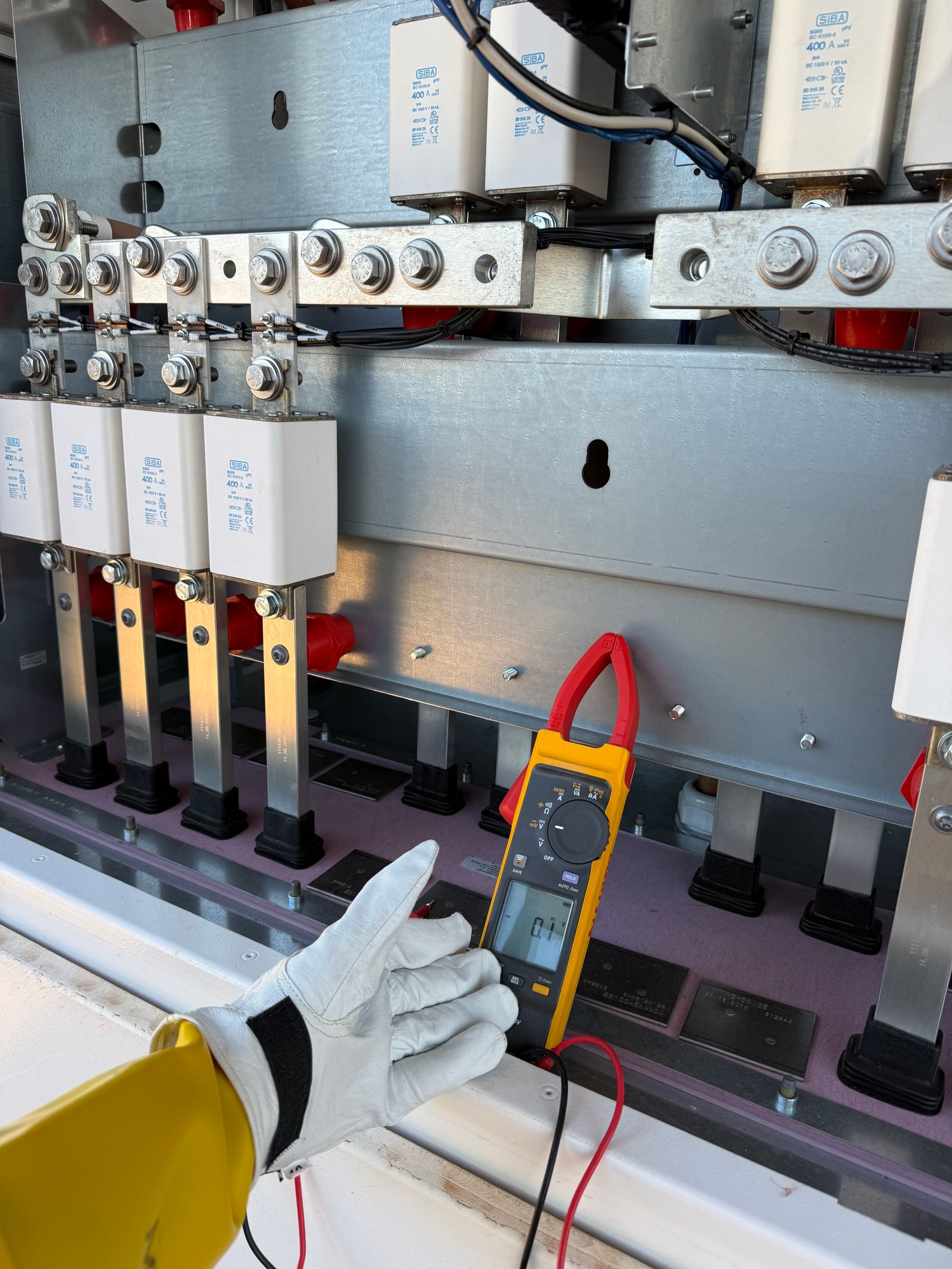
What 24 Months of Sensor Ageing Showed
A fleet tracked gas-sensor drift for ~24 months. It was not uniform, so a single fleet-wide replacement interval was either wasteful or unsafe.