
Can an Autonomous Ship Fight a Deck Fire?
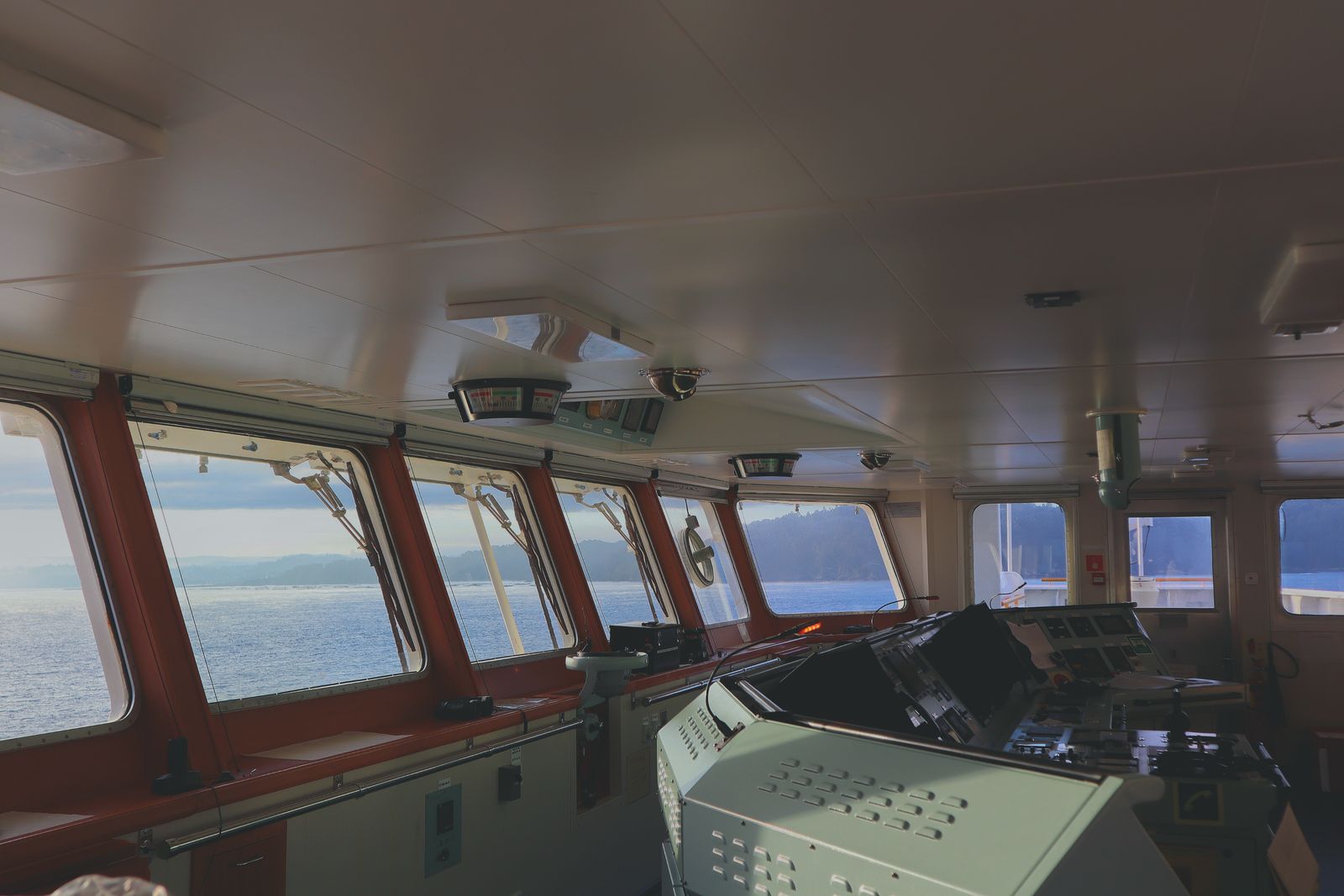
The IMO's MASS Code took effect 1 July 2026. On a reduced-crew car carrier, detection stops being an early warning and becomes the response itself.
Not the way a crewed one does. The IMO adopted its first Code for Maritime Autonomous Surface Ships at MSC 111 in May 2026, and it took effect on 1 July 2026 — non-mandatory, for cargo ships, with chapters covering both manning and fire protection, detection and extinction. On a vehicle deck the crew is not an accessory to the fire plan; it is most of the plan. Remove or relocate it and detection has to carry weight it was never designed to carry.
What the MASS Code actually did
It created the first global framework for ships operating with reduced, remote or absent crews — and started the clock on a mandatory version. Adopted at the Maritime Safety Committee's 111th session (13–22 May 2026) and in effect from 1 July 2026, the Code applies to cargo ships under SOLAS Chapter I and is non-mandatory for at least an initial period, giving flag States an experience-building phase before it hardens. Its chapter list is broad — approval process, risk assessment, operational context, system design, software principles, alert management, manning, training and watchkeeping, remote operations, and fire protection, fire detection and fire extinction among them. Two features matter most here. The Code integrates Remote Operations Centres as a recognised part of the structure, and it holds that the master retains overall responsibility for the ship even when not on board. The IMO's stated path is a mandatory Code adopted by around 1 July 2030 and entering force on 1 January 2032.
Why a vehicle deck is the hardest case
Because on a car deck the crew performs functions no fixed system performs, and they are exactly the functions that disappear first. When a detector trips on a PCTC today, a person goes and looks. They confirm what is burning and where, close the fire boundaries, verify that the space is clear before a drencher or CO2 release, start boundary cooling on adjacent decks, and keep re-assessing as the event develops. None of that is sensing — it is judgement and physical intervention among thousands of tightly stowed vehicles on a large undivided deck. A remote operator ashore inherits the judgement and loses the intervention. That is a different problem from navigation autonomy, where the machine can do the task; here the machine cannot walk the deck, and the fixed installation cannot decide.
Verification is the function that vanishes first
The single most human part of car-deck fire response is deciding whether the alarm is real, and that is the part a remote centre cannot do. Nuisance alarms on vehicle decks are a known operational cost, and today they are resolved by someone walking to the source and looking. Take that away and the discrimination has to happen in the sensing layer itself, because a Remote Operations Centre cannot investigate — it can only act or not act. That raises the bar in both directions at once: a missed event has no human backstop, and a false one may trigger an irreversible fixed-system discharge on a full cargo deck. Detection quality stops being a question of lead time and becomes a question of whether the evidence is good enough to commit a decision no one can walk back.
'Fixed First' stops being a preference
IUMI's fixed-first posture for vehicle carriers is already the direction of travel; on a reduced-crew ship it is not a preference but the entire plan. If the fixed installation is the only actor, then the trigger decision has to be made on sensor evidence alone — and that changes what the sensing has to deliver. Per-vehicle localisation is the clearest example. 'There is smoke on Deck 5' is actionable for a crew who can go and find it; for an operator ashore weighing a drencher or CO2 release across a whole deck, it is not enough information to act well. The reduced-crew case therefore pushes detection toward the same properties a good crewed system wants — early, specific, and locating the source vehicle — but removes the human margin that currently forgives their absence.
What it means for owners, class and underwriters
- Treat the fire chapter as the binding constraint on autonomy for vehicle carriers. Navigation autonomy has a machine substitute; car-deck fire response largely does not, so fire response is where a reduced-crew PCTC case will be won or lost in approval.
- Expect class and flag to probe the degraded-state fallback: what happens when detection is ambiguous, connectivity to the Remote Operations Centre is lost, or the fixed system has already discharged once.
- The master retains responsibility even when ashore — so the evidentiary record of what the detection system saw, and when, becomes central to accountability rather than incidental to it.
- For underwriters: reduced crewing on a vehicle carrier changes the loss model, not just the crew cost. Ask what replaces the human verification step before pricing an autonomy discount.
- The experience-building phase to a mandatory Code around 2030–2032 is the window to establish what adequate vehicle-deck detection looks like on a reduced-crew ship — before the requirement is written.
How RoRoSAFE helps
On a reduced-crew ship there is nobody on the deck to confirm an alarm, so detection has to locate the fire and verify it. RoRoSAFE watches each parked vehicle with both thermal and battery-vent gas sensing, fusing the two before it raises a tiered alert that names the bay. The alert goes to the bridge and to shore together, the input a remote operator needs to trigger fixed suppression early.
Pilot: one deck · installed alongside the berth · no drydock · 6 months of dashboard access
Sources
- IMO — 'IMO adopts first global Code for autonomous ships' (press briefing): the non-mandatory MASS Code was adopted at MSC 111 (13–22 May 2026) and took effect on 1 July 2026; it applies to cargo ships under SOLAS Chapter I; it integrates Remote Operations Centres, and the master retains overall responsibility for the ship even if not on board; expected adoption of a mandatory Code by around 1 July 2030 with entry into force 1 January 2032 — imo.org.
- MASS Code chapter scope, as reported from the draft: chapters covering surveys and certificates, approval process, risk assessment, operational context, system design, software principles, management of safe operations, alert management, manning/training/watchkeeping, safety of navigation, connectivity, remote operations, stability, fire protection/fire detection/fire extinction, security, search and rescue, carriage of cargoes, mooring, and machinery — Maritime Executive / Baird Maritime / gCaptain coverage of MSC 111.
- Voluntary application for an initial period (reported as at least two years) to allow Member States an experience-building phase before the Code is made mandatory under SOLAS — trade coverage of MSC 111.
- Unmanned and reduced-crew operation requires designing for emergency response without a physical crew to fight fires or manage localised failures, with fallback for 'reasonably foreseeable degraded states' — trade reporting on the MASS Code's operational-context and risk-assessment provisions.
- IUMI — position and best-practice material advocating a 'Fixed First' firefighting approach for vehicle carriers, and identifying the limits of manual intervention on vehicle decks — iumi.com.
- Companion RoRoSAFE analysis — 'Who Fights a Mid-Ocean Car-Carrier Fire?' (response reach on a crewed ship), 'IUMI 2025: The Fixed-First Approach' (the doctrine this post extends), and 'The Cost of a False Alarm at Sea' (why verification is the expensive step).
Questions, answered
What is the IMO MASS Code and when did it take effect?+
It is the IMO's first global Code for Maritime Autonomous Surface Ships, adopted at the Maritime Safety Committee's 111th session in May 2026 and effective from 1 July 2026. It is non-mandatory initially, applies to cargo ships under SOLAS Chapter I, and covers areas including manning, remote operations, connectivity and fire protection, detection and extinction. A mandatory version is expected to enter force in January 2032.
Can a reduced-crew or autonomous ship fight a vehicle-deck fire?+
Not the way a crewed ship does. Today the crew verifies the alarm, closes fire boundaries, confirms the space is clear before a drencher or CO2 release, and starts boundary cooling on adjacent decks. Those are physical interventions among tightly stowed vehicles, not sensing tasks. A remote operator inherits the judgement but loses the ability to act physically on the deck.
Why does reduced crewing raise the bar for fire detection?+
Because verification disappears. On a crewed ship a marginal alarm is resolved by someone walking to the source; a Remote Operations Centre can only act or not act. So discrimination has to happen in the sensing layer: a missed event has no human backstop, and a false one may trigger an irreversible fixed-system discharge across a loaded cargo deck.
Who is responsible if an autonomous ship has a fire?+
The master retains overall responsibility for the ship even when not on board, under the MASS Code. That makes the record of what the detection system observed, and when, central to accountability rather than incidental — the same evidentiary point that already matters after any car-carrier casualty, but with the decision-maker ashore rather than on the bridge.
Continue the thread

Who Fights a Mid-Ocean Car-Carrier Fire?
Often no one, for days. The Morning Midas burned for six days before the first tug arrived and twelve before a firefighting tug did — then it sank.

PCTC Drencher Zoning and Fixed-First
FSS Code Ch.7 sets a PCTC drencher at 5.0 L/min/m² — whether 'Fixed First' suppresses or floods the deck depends on how precisely detection zones it.
What a False Alarm Costs a Master at Sea
Seventeen minutes, in the one case with timestamps. On Commodore Clipper a real fire read as a detector fault: 11 silences, 7 resets, then the system died.
Can a Master Be Prosecuted After a Fire?
Masters get detained and charged after casualties. IMO/ILO fair-treatment guidelines are non-binding, and the crew answers for undeclared cargo.