
Does an EV Fire Make a Ship Unseaworthy?
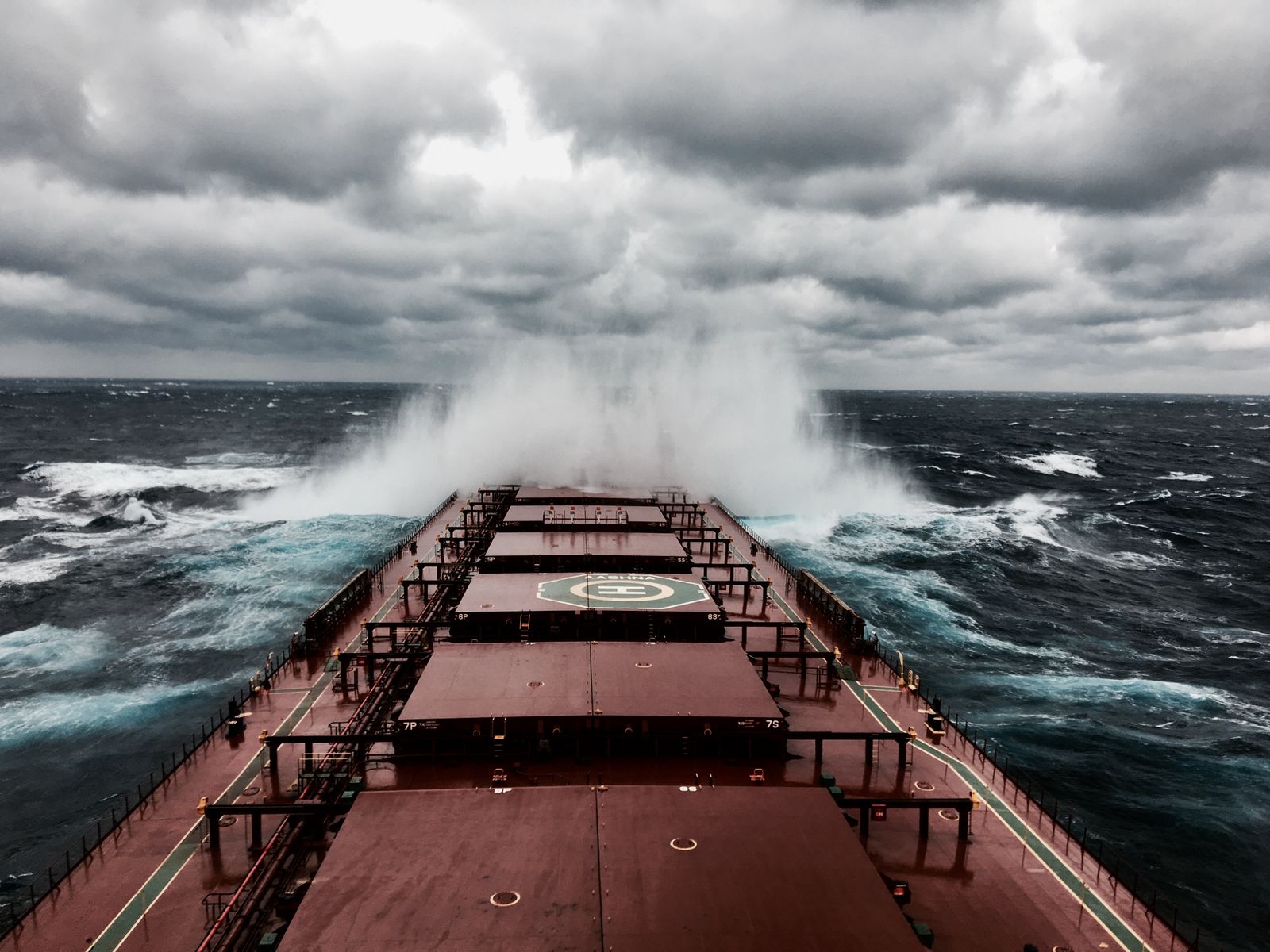
A car deck fire does not automatically excuse the carrier. If unseaworthiness caused the loss, the Hague-Visby fire defence falls away with it.
It can — and that is the part owners underrate. Fire is an excepted peril: under Hague-Visby Article IV Rule 2(b) the carrier is not liable for loss from fire absent its own actual fault or privity. But the defence sits underneath a prior obligation. If the ship was unseaworthy before the voyage and that unseaworthiness caused the loss, the exception is unavailable. A car carrier has already lost on exactly this.
The fire defence, and the hole underneath it
The exception is real but it is not first in line. Article III Rule 1 requires the carrier to exercise due diligence before and at the beginning of the voyage to make the ship seaworthy and to properly man, equip and supply her — and that obligation overrides the Article IV exceptions. The sequence matters for who has to prove what. The cargo claimant must first show the vessel was unseaworthy and that the unseaworthiness caused the loss; the burden then shifts to the carrier to prove it exercised due diligence. The carrier does not guarantee a seaworthy ship. It guarantees that it tried, to the standard of a prudent owner — the test from McFadden v Blue Star Line: would a prudent owner have sent her to sea with this defect, knowing of it?
A car carrier has already been held unseaworthy
This is not a hypothetical for this ship type — there is a judgment. Fire broke out on Deck 4 of the pure car carrier Eurasian Dream at Sharjah on 23 July 1998, while stevedores refuelled and jump-started vehicles on the deck. The master and crew did not contain it; cargo and vessel were lost, the ship a constructive total loss. In Papera Traders v Hyundai Merchant Marine (The Eurasian Dream) [2002] EWHC 118 (Comm), Cresswell J held the vessel unseaworthy: not properly manned, because master and crew were not competent in the vessel and its fire equipment; not properly equipped, with extinguishers unserviced and some defective; and inadequately documented, the managers having supplied no ship-specific fire procedures drawn from a risk assessment. The master had attended a firefighting course in 1989 and received no onboard training after joining in April 1998. The owners therefore could not reach the fire defence at all — the Article III breach closed it.
'SOLAS-compliant' is not the same as 'seaworthy'
The most useful line in the judgment is the one that separates the two. Compliance with SOLAS does not guarantee that a vessel is seaworthy under the Rules. The court made the point concretely: the vessel carried the SOLAS-required number of walkie-talkies — three — and three was still held insufficient for a car carrier in an emergency. It also expected ship-specific fire procedures derived from a risk assessment even though ISM certification was not yet mandatory for her. Read that across to a modern vehicle deck and the implication is uncomfortable: a specialised ship carrying a specialised hazard is measured against the risk it actually carries, not against the certificate it holds.
CMA CGM Libra raised what is at stake
The Supreme Court then showed how far unseaworthiness reaches. In Alize 1954 v Allianz Elementar (The CMA CGM Libra) [2021] UKSC 51, a container ship grounded leaving Xiamen in 2011 and the owners claimed general average from cargo interests. The passage plan had failed to record a warning that charted depths outside the fairway were unreliable. That defect made the vessel unseaworthy at the start of the voyage, the owners had not exercised due diligence, and their general-average claim failed. Two holdings travel directly to a car deck: the Article IV exceptions cannot be relied on against a causative Article III Rule 1 breach, and unseaworthiness needs no physical 'attribute' of the ship — a planning or procedural failure counts. Not every defect qualifies, though: it must be serious enough that a prudent owner would not have sailed with it.
Where the 2026 detection rule lands in this
It sets the floor, and the floor is not the defence. Amended SOLAS II-2/20 under Resolution MSC.550(108) requires individually identifiable fixed detection and video monitoring in vehicle, special-category and ro-ro spaces — newbuilds keel-laid from 1 January 2026, existing ships by the first survey after 1 January 2028. After those dates a ship without it is straightforwardly non-compliant. But Eurasian Dream is authority that the converse does not hold: fitting the mandated minimum does not by itself discharge due diligence. And the prudent-owner standard is not static — as class guidance, VCSF practice and detection capability become ordinary for EV-carrying tonnage, what a prudent owner would have done rises with them. The defence erodes from the industry's own progress, not from a rule change.
What it means for owners and underwriters
- Detection, crew competence and ship-specific procedures are one package legally — Eurasian Dream failed on manning, equipment and documentation together, not on any single item.
- Evidence of due diligence is the asset: drill records, servicing records, a documented EV risk assessment and a fire plan written for this ship are what the carrier produces when the burden shifts to it.
- The exposure is not only the cargo claim. Libra shows unseaworthiness can also take out a general-average contribution — the owner then funds the casualty and the recovery fails.
- For underwriters, the corollary: a hull or P&I loss on an EV deck arrives with a live unseaworthiness argument attached, and the answer sits in the owner's paperwork long before it sits in court.
The honest summary for an owner is that a car deck fire starts a legal question, not just an insurance one. The fire exception looks generous until the claimant reaches behind it, and on this ship type a claimant already has a judgment showing how. Compliance with the 2026 package is necessary and it is not sufficient. The ship that survives the argument is the one that can show, on paper, that it took the cargo it actually carries seriously before it sailed.
How RoRoSAFE helps
A court will ask whether the ship was reasonably equipped and operated for the cargo it carried. RoRoSAFE adds per-vehicle thermal and battery-vent gas detection above the SOLAS minimum, and keeps tamper-evident, time-stamped event logs of every alert and response. That is early warning at sea and documented diligence afterwards. It does not replace class-mandated systems or legal advice.
Pilot: one deck · installed alongside the berth · no drydock · 6 months of dashboard access
Sources
- 1. Papera Traders Co Ltd v Hyundai Merchant Marine Co Ltd (The Eurasian Dream) [2002] EWHC 118 (Comm), Cresswell J, judgment 7 February 2002: pure car carrier fire on Deck 4 at Sharjah, 23 July 1998 during refuelling and jump-starting of vehicles; vessel held unseaworthy — not properly manned (master and crew not competent in the vessel and its fire equipment), not properly equipped (extinguishers unserviced/defective), inadequate ship-specific documentation; owners barred from the Art IV r.2(b) fire defence by their Art III rr.1–2 breach — bailii.org.
- 2. Steamship Mutual — 'Hague/Hague-Visby Rules — Fire Defence: SOLAS Compliance Does Not Guarantee Due Diligence' (commentary on The Eurasian Dream): compliance with SOLAS will not guarantee that a vessel is seaworthy under the Rules; the SOLAS-compliant complement of three walkie-talkies was held insufficient for a car carrier, and ship-specific fire procedures from a risk assessment were expected despite ISM not being mandatory — steamshipmutual.com.
- 3. Alize 1954 and another v Allianz Elementar Versicherungs AG (The CMA CGM Libra) [2021] UKSC 51: grounding leaving Xiamen, 2011; a defective passage plan rendered the vessel unseaworthy at the start of the voyage, the owners had not exercised due diligence, and their general-average claim against cargo interests failed; Art IV.2 exceptions unavailable against a causative Art III.1 breach; no 'attribute' threshold; the prudent-owner test still governs — supremecourt.uk.
- 4. NTSB — Marine Accident Report MAR-21/04, 'Fire aboard Vehicle Carrier Höegh Xiamen' (Jacksonville, 4 June 2020): fire from an improperly disconnected vehicle battery; a USCG sample of 59 loaded vehicles found none with batteries secured to procedure; vessel and 2,420 used vehicles a $40M total loss — ntsb.gov.
- 5. IMO — Resolution MSC.550(108), amendments to SOLAS Regulation II-2/20: individually identifiable fixed fire detection and effective video monitoring in vehicle, special-category and ro-ro spaces; ships keel-laid on or after 1 January 2026, existing ships by the first survey after 1 January 2028 — imo.org.
- 6. Practitioner commentary on seaworthiness and EV carriage — Watson Farley & Williams, 'Ship Fires and Electric Vehicles'; Hill Dickinson, 'Legal considerations when transporting electric vehicles by sea': the fire defence fails where the loss links to unseaworthiness or cargoworthiness (negligent stowage, batteries not disconnected, inadequate firefighting systems); McFadden v Blue Star Line [1905] 1 KB as the prudent-owner test — wfw.com, hilldickinson.com.
- 7. Companion RoRoSAFE analysis — 'General Average and Cargo Owner Exposure' (how the casualty cost is shared) and 'Höegh Xiamen and the CTL Precedent' (the valuation side of the same loss).
Questions, answered
Does the Hague-Visby fire exception protect a carrier after a car deck fire?+
Only if the ship was seaworthy. Article IV Rule 2(b) excuses loss from fire absent the carrier's actual fault or privity, but it sits underneath the Article III Rule 1 duty to exercise due diligence before the voyage. If the claimant shows the vessel was unseaworthy and that this caused the loss, the exception is unavailable — which is precisely what happened in The Eurasian Dream.
Has a car carrier ever been held unseaworthy after a fire?+
Yes. In The Eurasian Dream [2002] EWHC 118 (Comm), a pure car carrier burned at Sharjah in July 1998 and Cresswell J held her unseaworthy on three grounds: master and crew not competent in the vessel and its fire equipment, extinguishers unserviced or defective, and no ship-specific fire procedures from a risk assessment. The owners lost access to the fire defence.
Is a SOLAS-compliant ship automatically seaworthy?+
No — the court said so directly. Compliance with SOLAS does not guarantee seaworthiness under the Hague-Visby Rules. In The Eurasian Dream the vessel carried the SOLAS-required three walkie-talkies and three was still held insufficient for a car carrier in an emergency. A specialised ship is measured against the hazard it actually carries, not the certificate it holds.
What does the CMA CGM Libra add for vehicle carriers?+
Reach and consequence. The Supreme Court held in 2021 that a defective passage plan made a ship unseaworthy — unseaworthiness needs no physical defect, a procedural failure counts — and that Article IV exceptions cannot answer a causative Article III breach. The owners' general-average claim against cargo interests failed, so the exposure is not only the cargo claim but the recovery too.
Continue the thread

General Average: The Cost Cargo Owners Miss
When a car carrier declares general average, cargo that survives pays its share. Standard cargo cover includes GA; self-insured cargo pays in full.

Höegh Xiamen: The CTL Precedent
A 2020 Jacksonville fire produced a constructive total loss and a ~$26M settlement — and reshaped how car-carrier underwriters price the loading interface.

Subrogation and the Cargo-Manufacturer Question
Can insurers recover an EV-fire loss from the carmaker? Stuttgart said no in May 2026: nobody could prove which car started the Felicity Ace fire.

Does EV-Ready Tonnage Earn a Premium?
Not yet. A 30-year-old PCTC just sold for $39.5m and rates are at records. Safety spec is priced as avoided detention, not as a hire premium.