
What the 2026 PFOS Foam Ban Means for RoRo

From 1 January 2026 SOLAS II-2 bans PFOS firefighting foam above 10 mg/kg. RoRo and car-carrier operators must swap and certify foam by first survey.
From 1 January 2026, SOLAS Chapter II-2 prohibits using or storing fire-extinguishing media that contain PFOS above 10 mg/kg (0.001% by weight). For RoRo and car-carrier operators that means every foam stock aboard — fixed deck and machinery-space systems, portable extinguishers, and reserve concentrate in foam lockers — must be confirmed PFOS-free or replaced. Existing ships comply by the first survey on or after 1 January 2026.
What exactly does the SOLAS amendment ban?
Perfluorooctane sulfonic acid (PFOS) in fire-extinguishing media, above a trace threshold. The amendment to SOLAS Reg. II-2/10.11, adopted under resolution MSC.532(107) — with parallel changes to the 1994 and 2000 High Speed Craft Codes via MSC.536(107) and MSC.537(107) — prohibits use or storage of any fire-extinguishing medium containing PFOS in concentrations above 10 mg/kg (0.001% by weight). It applies to both fixed and portable systems. The ban entered into force on 1 January 2026.
PFOS is one compound in the broader PFAS family that made legacy aqueous film-forming foam (AFFF) effective on hydrocarbon fires — and persistent in the environment. The regulation targets the chemistry, not a vessel type, so it lands across the whole fleet rather than on vehicle decks specifically.
Why does it hit RoRo and car carriers in particular?
Because vehicle carriers carry a lot of foam. A PCTC or large RoRo runs fixed foam or deluge arrangements over machinery and weather-deck areas, foam monitors and applicators, portable and wheeled foam extinguishers, and reserve concentrate held in foam lockers. Each of those is a place PFOS-bearing AFFF can still be sitting. The compliance task is not one tank — it is an inventory of every foam-containing system and store aboard.
This is a suppression-media housekeeping item, not a new detection requirement. It runs alongside — but is separate from — the SOLAS II-2/20 detection amendments that require individually identifiable smoke and heat detection on new vehicle carriers from 1 January 2026, with existing RoRo passenger ships following by the first survey on or after 1 January 2028. An operator scoping 2026 drydock work has to plan for both.
What is the compliance deadline?
It depends on keel-laying date. Ships constructed (keel laid) on or after 1 January 2026 must be delivered with no PFOS-containing foam aboard. Ships keel-laid before that date must comply no later than the first survey on or after 1 January 2026 — where "first survey" is the first annual, periodical or renewal survey of the relevant safety certificate. For most of the existing fleet that pulls the real deadline into the 2026 survey window, not some distant horizon.
What evidence does a surveyor expect?
Proof the replacement medium is clean, and proof the old medium was disposed of properly. Classification guidance from Lloyd's Register and DNV points to a manufacturer's declaration for the new foam — type, production period, batch number, and reference to its Type Approval or MED certificate — and confirmation that prohibited media were removed to appropriate shore-based reception facilities rather than discharged. MSC 110, meeting in 2026, approved a Unified Interpretation of II-2/10.11 to clarify how the ban may be documented, so flag and class expectations on paperwork are tightening, not loosening.
Does new foam change the EV-fire problem?
No — and it is worth being clear about that. Swapping to fluorine-free foam is an environmental and regulatory compliance move; it does not address the lithium-ion thermal-runaway sequence on a vehicle deck. A cell venting hydrogen and electrolyte vapour before visible smoke is a detection-timing problem, and the suppression medium — CO2, water deluge, or fluorine-free foam — only acts once a fire is already declared. The foam ban is mandatory work that operators should treat as compliance hygiene, kept separate in their heads from the detection window that decides whether a vehicle-deck fire is prevented or merely contained.
- Build a fleet foam inventory now: fixed systems, portable and wheeled extinguishers, monitors and applicators, and every drum of reserve concentrate.
- Confirm the deadline against each ship's survey schedule — existing ships are caught at the first survey on or after 1 January 2026.
- Collect the paperwork: a manufacturer declaration and Type Approval/MED reference for new media, plus a shore-reception disposal record for the old.
- Treat the foam swap as compliance, not fire-safety improvement — the detection gap on a vehicle deck is unchanged by it.
How RoRoSAFE helps
Swapping the foam is a compliance task; it does not change how early a battery fire is found. RoRoSAFE adds that missing time: per-vehicle thermal and battery-vent gas detection that alerts before visible smoke, while suppression of any kind still has a chance. It installs alongside the berth without drydock, so it can fit into the same survey window as the foam change.
Pilot: one deck · installed alongside the berth · no drydock · 6 months of dashboard access
Sources
- DNV — "PFOS prohibited in fire-extinguishing media from 1 January 2026" (SOLAS II-2 / MSC.532(107); 10 mg/kg threshold; new vs existing-ship timeline).
- Lloyd's Register — Class News 16/25, "Prohibition of use of PFOS in fire-extinguishing media" (MSC.532/536/537(107); fixed and portable; disposal to shore reception facilities; manufacturer declaration).
- DNV — "IMO Maritime Safety Committee (MSC 110)" (Unified Interpretation of II-2/10.11 on documenting the PFOS ban).
- Allianz Commercial — Safety and Shipping Review 2025 (250 ship fire incidents in 2024, +20% YoY, a decade high).
Questions, answered
When does the SOLAS PFOS firefighting-foam ban take effect?+
1 January 2026. The amendment to SOLAS Chapter II-2 (resolution MSC.532(107)) prohibits using or storing fire-extinguishing media containing PFOS above 10 mg/kg from that date. Ships keel-laid on or after 1 January 2026 must be delivered PFOS-free; older ships must comply no later than the first annual, periodical or renewal survey on or after 1 January 2026.
Which firefighting equipment on a RoRo is affected?+
All foam-containing media, fixed and portable. That includes fixed foam and deluge systems over machinery and weather-deck areas, foam monitors and applicators, portable and wheeled foam extinguishers, and reserve concentrate held in foam lockers. Storage alone counts — a drum of legacy AFFF in stores breaches the prohibition even if the charged system already uses compliant foam.
How do operators prove compliance to a surveyor?+
With documentation on both ends. Class guidance points to a manufacturer's declaration for the replacement medium — type, production period, batch number, and Type Approval or MED certificate reference — plus evidence that prohibited foam was disposed of through appropriate shore-based reception facilities. MSC 110, in 2026, approved a Unified Interpretation clarifying how the ban may be documented.
Does switching to fluorine-free foam reduce EV fire risk?+
No. The PFOS ban is an environmental and regulatory measure; it does not change how a lithium-ion fire starts or how early it is detected. Suppression media — CO2, water deluge, or fluorine-free foam — only act once a fire is declared. The detection window before visible smoke, not the foam chemistry, decides whether a vehicle-deck fire is prevented or merely contained.
Continue the thread

Does the 2026 SOLAS Rule Reach Old Ships?
Only if it is a passenger ship. MSC.550(108) catches existing ro-pax at the first survey on or after 1 Jan 2028; an existing car carrier is not named.

Why 70 Vehicles Burned on the Delphine
MV Delphine lost 60–70 vehicles in the April 2025 Zeebrugge fire even though CO2 suppression worked as designed. Detection timing is the gap.

PCTC Drencher Zoning and Fixed-First
FSS Code Ch.7 sets a PCTC drencher at 5.0 L/min/m² — whether 'Fixed First' suppresses or floods the deck depends on how precisely detection zones it.
What Happens When a Car Carrier Is Scrapped?
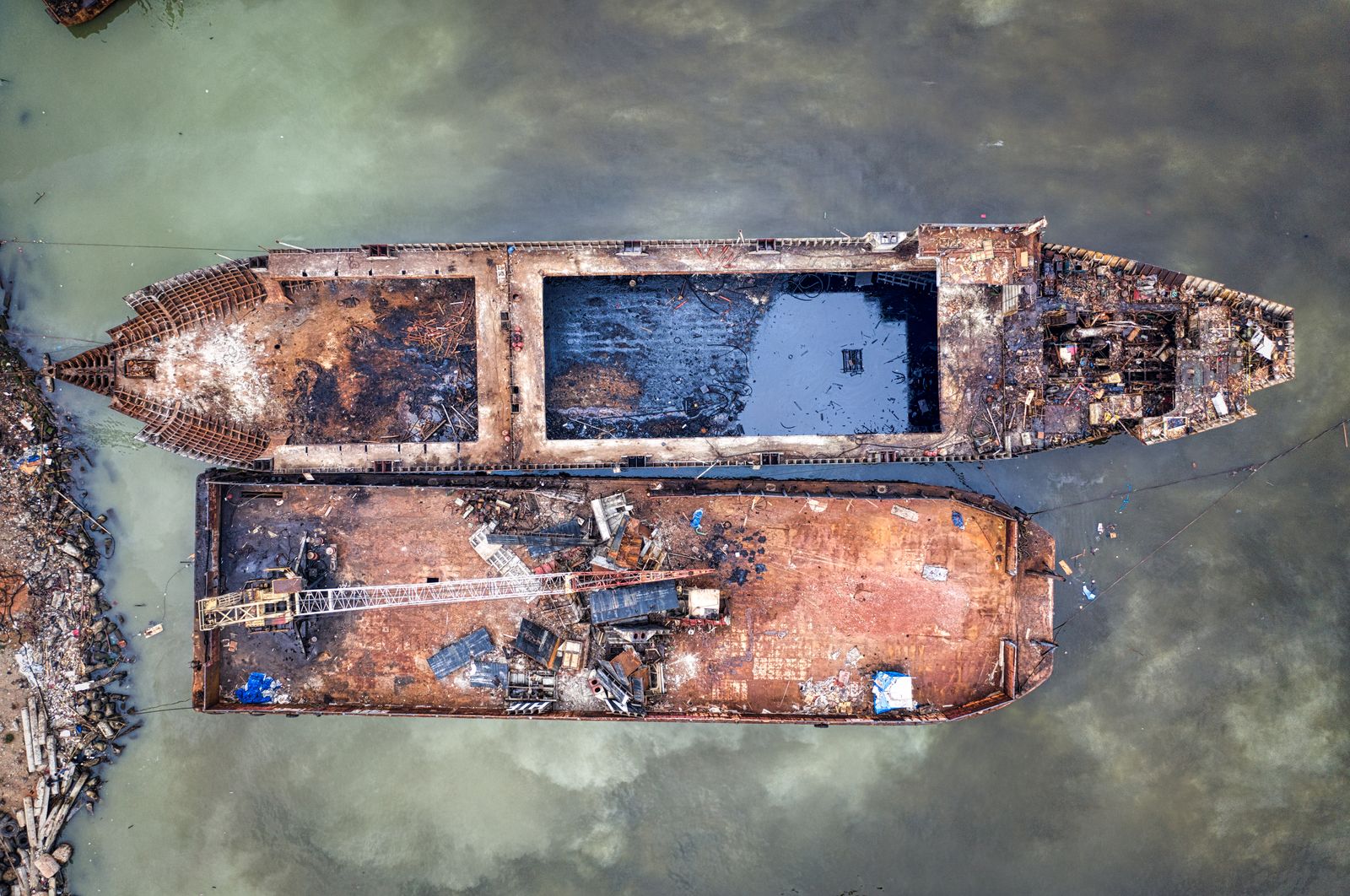
The Hong Kong Convention came into force in June 2025 — and it binds ships in service, not just at the yard. A retrofit changes the inventory.

Does Fluorine-Free Foam Work at Sea?
F3 foam replaces banned AFFF, but it underperforms with seawater and non-aspirated nozzles — the marine case. And no foam stops an EV battery fire.