
Is Battery Health a Car Carrier's Blind Spot?
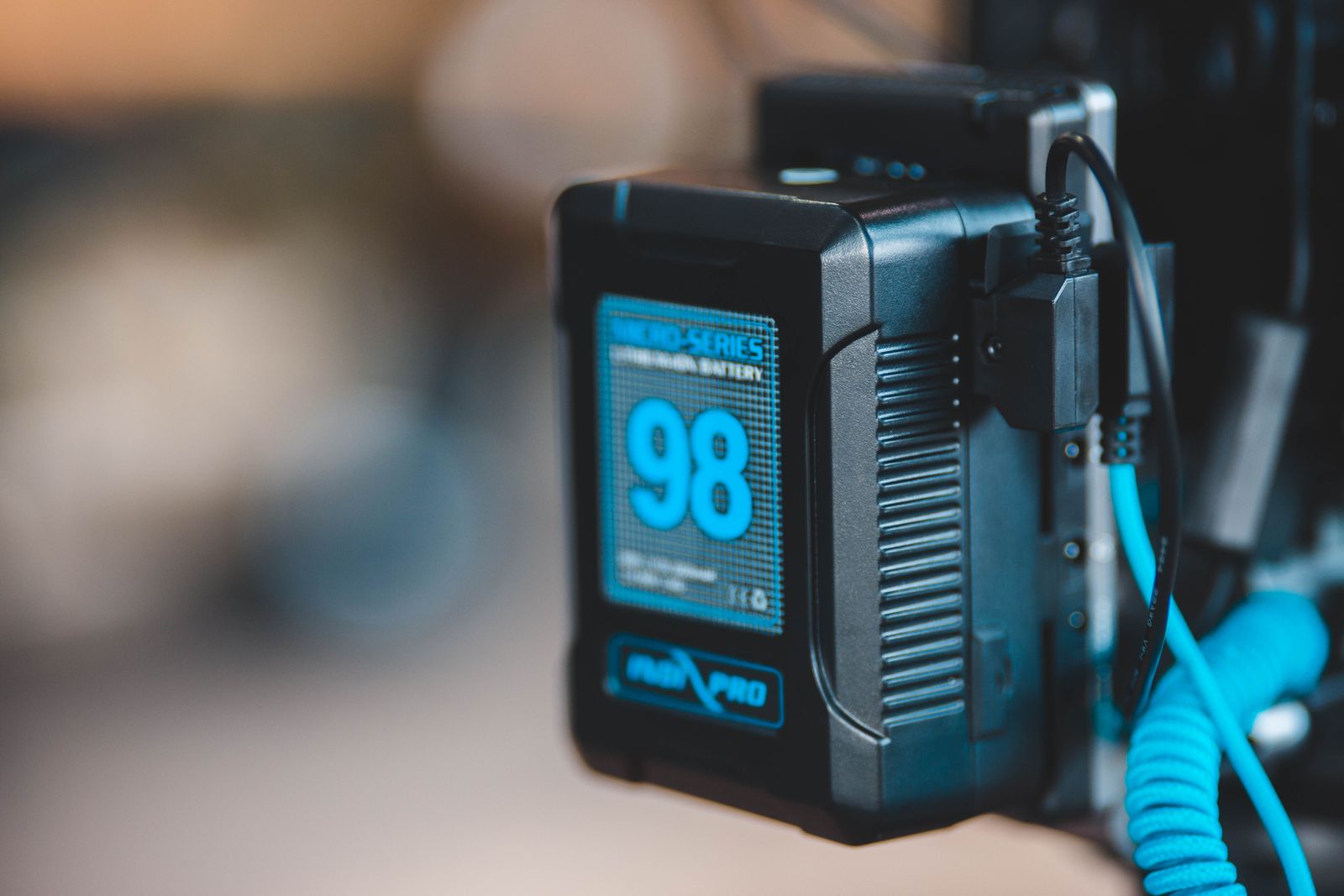
State-of-charge policy governs EV loading, but battery State of Health — how the cells aged — is a fire-risk axis no car-carrier manifest captures.
Increasingly, yes — though not in the way 'older equals more dangerous' assumes. Car carriers manage EV fire risk on a deck mostly by state of charge at loading. Battery State of Health — how far the cells have degraded, and how they got there — is a second, largely invisible risk axis. The evidence on aged cells is genuinely split, and that ambiguity is the problem: you cannot screen for a hazard you cannot see at the ramp.
State of charge is one axis; state of health is another
State of charge (SoC) is what loading policy actually controls, because a lower charge means less stored energy to release in a runaway — some carriers accept EVs only at 50% SoC or below for exactly that reason. State of Health (SoH) is a different measurement: how much capacity a battery has lost against its pristine state, expressed as a percentage. In the used-EV market a battery above roughly 88–90% SoH at 100,000 km is treated as healthy, while below 80% is where buyers walk away. Two vehicles presented at the same 50% SoC can sit at very different SoH — and a car-carrier manifest records neither the health nor the history of the pack under the floor.
Does an aged battery burn worse? The evidence is split
Not uniformly — it depends on how the battery aged. Peer-reviewed thermal-stability testing does not deliver a clean 'aged equals more dangerous.' Some studies of automotive cells find that gently aged packs fail less violently — lower peak temperatures, less vent gas, less carbon monoxide — as usable lithium is consumed. Other work finds the opposite for a specific ageing route: cells aged by fast charging or cold-temperature charging plate metallic lithium, and those cells show a lower exothermic onset temperature and a shorter thermal-runaway delay. They run away sooner and vent earlier. Battery safety across a pack's life is governed not by a single number but by the interplay of internal degradation mechanisms — so the aging pathway, not the age, is what sets the hazard.
Lithium plating is the pathway that matters
The dangerous sub-population is cells carrying lithium plating. Heavy reliance on DC fast charging can roughly double a battery's annual capacity loss — on the order of 3% per year versus about 1.5% for vehicles charged mainly on AC — and both fast charging and cold-weather charging drive plating, which lowers the thermal-runaway threshold as well as accelerating degradation. So the elevated risk does not track 'old cars' so much as cars whose batteries have a hard-charging or cold-climate history: a used export out of a cold market, a high-mileage ride-hail EV run on rapid chargers. SoH partly flags these, because a plated pack degrades faster, but two packs at identical SoH can carry different plating risk depending on the life they had.
Why this is a car-carrier blind spot
Because none of it reaches the deck. IMDG Code Amendment 42-24, mandatory from 1 January 2026, excludes damaged and defective batteries from the vehicle carriage exemption — but a degraded-yet-undamaged battery is neither, so it ships as an ordinary vehicle under UN 3556. State-of-charge policy caps stored energy but says nothing about health or charging history. The manifest now carries a chemistry-specific UN number, not a state-of-health record. And as the global EV fleet ages and the used-export trade grows, the average battery crossing a car deck is getting older and more heterogeneous in its history. The one screen that would reliably catch a low-onset cell — its actual thermal behaviour — only appears once the cell is already venting.
What owners and underwriters can actually do
Treat State of Health as an open data gap, not a solved input. Where battery-management data is reachable — through battery passports, or an OEM or terminal handshake at loading — SoH and charging history are the closest available proxy for plating risk and are worth capturing alongside SoC, not instead of it. Where that data is not reachable, which is most used-EV and mixed cargo, the fallback is not classification but detection: per-vehicle thermal monitoring that does not care how a cell aged, only that it has begun to run away. The honest position for a fleet or an underwriter is that battery health is a real and rising axis of car-deck fire risk that today's loading controls do not measure — which is what makes early detection the compensating control rather than a nice-to-have.
How RoRoSAFE helps
No manifest records how each battery has aged, but an aged pack shows itself when it starts to fail. RoRoSAFE watches every parked vehicle for abnormal heat and electrolyte-vent gases through the voyage, whatever its state of health. The blind spot on paper becomes a monitored bay on the deck.
Pilot: one deck · installed alongside the berth · no drydock · 6 months of dashboard access
Sources
- 'Are aged cells safer than fresh cells? A comprehensive study of 21700-type NCA/Gr-Si battery cells' (Journal of Power Sources, 2025) — thermal-stability testing showing the aged-vs-fresh hazard picture is pathway-dependent, not a simple 'aged is worse'.
- 'Influence of Aging on the Failing Behaviour of Automotive Lithium-Ion Batteries' (Batteries, MDPI, 2021; doi 10.3390/batteries7020023) — mildly aged automotive cells failing less violently: lower peak temperature, less produced gas, less CO than fresh cells.
- 'Thermal runaway of Li-ion battery with different aging histories' (Process Safety and Environmental Protection, 2024) — low-temperature / fast-charge ageing (lithium plating) producing a lower exothermic onset temperature and shorter thermal-runaway delay.
- Used-EV battery-health reporting and degradation studies (2025–2026) — SoH benchmarks (roughly ≥88–90% at 100,000 km healthy; <80% a walk-away) and DC-fast-charge degradation of ~3%/yr versus ~1.5%/yr for AC-primary use.
- IMO — IMDG Code Amendment 42-24 (mandatory 1 January 2026): damaged and defective batteries excluded from the vehicle carriage exemption; UN 3556 for lithium-ion vehicles. Marine-cargo carriage practice — carriers screening EVs to a 50%-or-lower state of charge — as the loading controls that address charge and damage, but not state of health.
Questions, answered
What is battery State of Health (SoH)?+
State of Health measures how much usable capacity a battery has lost against its original, pristine state, expressed as a percentage. In the used-EV market a pack above roughly 88–90% SoH at 100,000 km is considered healthy, while below 80% buyers typically walk away. It is distinct from state of charge, which is how full the battery is at a given moment.
Do older EV batteries catch fire more easily?+
Not uniformly — the peer-reviewed evidence is split and depends on how the battery aged. Gently aged cells can fail less violently as usable lithium is consumed. But cells aged by fast charging or cold-temperature charging plate metallic lithium, which lowers the thermal-runaway onset temperature and shortens the delay, so they run away sooner. The aging pathway, not the age, sets the hazard.
Why doesn't state-of-charge policy at loading cover this?+
Because state of charge and state of health are different things. Capping SoC — some carriers require 50% or lower — limits the stored energy available to a runaway, but says nothing about how degraded the cells are or whether they carry lithium plating from a hard charging history. Two vehicles at the same SoC can have very different health and very different thermal-runaway thresholds.
Can a car carrier screen for battery health at loading?+
Only where battery-management data is reachable. Battery passports or an OEM/terminal handshake can expose SoH and charging history — the closest proxy for plating risk — but most used-EV and mixed cargo arrives without it. IMDG rules catch damaged and defective batteries, not merely degraded ones. Where health can't be verified, per-vehicle thermal detection is the practical fallback.
Continue the thread

The Argument Over State-of-Charge at Loading
EMSA recommends 20–50% on a PCTC and lines have made 50% a booking condition. What still does not exist is an international requirement.

Are Used EV Exports a Hidden Fire Risk?
Yes — used EVs ship with unknown state of charge and hidden accident damage, the conditions the NTSB links to higher fire risk than new cars.

Can Battery Passports Screen EV Fire Risk?
The EU battery passport carries state-of-health data from 2027 — but it was built for recyclers, not the loading ramp, and won't screen EV fire risk yet.