
Detection Retrofit: Who Actually Pays?
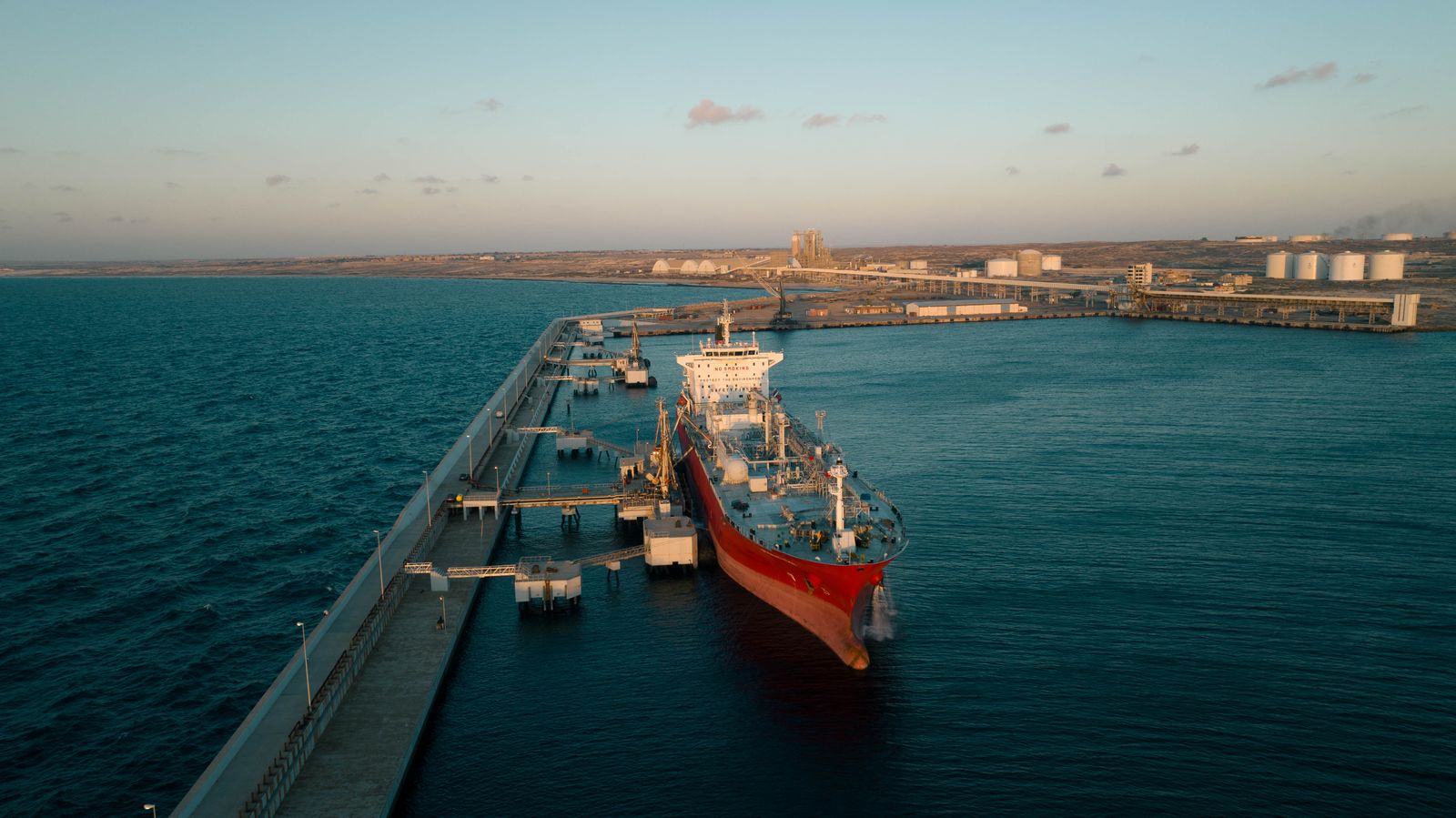
The owner funds the hull retrofit; the charterer books the EVs. That split incentive is why detection waits for regulation instead of economics.
The owner pays. That is the problem. A detection retrofit is capital expenditure on the hull, so it lands on the shipowner's balance sheet — but on a time charter it is the charterer who books the electric vehicles, sets the stow and takes the freight. The party who funds the control is not the party who most avoids the loss. Shipping already has a name for this, and a track record of it stalling exactly this kind of investment.
Who pays, and who benefits
They are different people, and that is the whole issue. Detection is fitted to the ship, so the owner funds it and carries it on an asset with a 25-year life. The EV cargo that makes the deck dangerous arrives through the charterer's booking, is stowed to the charterer's plan, and earns the charterer's freight. The loss then splits again across cover: hull is the owner's, cargo is the cargo owner's, liabilities sit with P&I, and general average drags every cargo interest on the manifest in. Nobody in that chain sees the full benefit of the spend, and the one who writes the cheque sees the least of it.
Shipping already has a name for this
It is the principal–agent problem — the split incentive — and it is well documented in this industry. The textbook case is fuel: charterers, not owners, typically bear the energy costs of a vessel, so owners do not capture the savings from an efficiency retrofit. Peer-reviewed work on maritime energy-efficiency investment finds the consequence directly: when an owner cannot recover the investment — because the benefit the charterer perceives is not reflected in freight rates or in the second-hand market — the owner tends not to invest. The same literature finds that vessels on time charter are less likely to invest in technical measures than in operational ones. A detection retrofit is a technical measure on a chartered ship. It is the textbook case, wearing a different jacket.
The Höegh Xiamen is the split in one casualty
It is rare to see the allocation problem stated this cleanly by an accident investigator. The Höegh Xiamen burned at its Jacksonville berth on 4 June 2020, a total loss of the vessel and 2,420 used vehicles valued at $40 million. The NTSB determined the probable cause was ineffective oversight of the longshoremen by the time charterer, Grimaldi Deep Sea, and its stevedore contractor — a Coast Guard sample of 59 loaded vehicles found not one battery secured to Grimaldi's own disconnect procedure. The cargo operation that caused the fire was the charterer's. The hull that burned was the owner's. That is the split incentive, rendered as a casualty.
Regulation removes the question — but only at the floor
The standard fix for a split incentive is to stop asking and mandate it, and that is what has happened. Amended SOLAS Regulation II-2/20, under Resolution MSC.550(108), requires individually identifiable fixed fire detection in vehicle, special-category and ro-ro spaces — for ships keel-laid on or after 1 January 2026, and for existing ships no later than the first survey after 1 January 2028. The owner fits it regardless of who benefits, because the regulator decided the argument. But the mandate sets a floor, not a ceiling. Everything above it — earlier detection, per-vehicle localisation, coverage that survives the loading window — is still a voluntary spend by the party who captures the least of it.
What actually closes the gap
Three levers, and the literature points at all of them: the owner has to be able to recover the investment.
- Underwriting differentiation: if detection is a rated feature, better terms or a lower deductible convert a charterer-and-cargo benefit into an owner return. That is the only lever that pays the payer directly.
- Charterparty allocation: a clause that shares the capex, or a fitment warranty the charterer requires — which prices the control into the deal rather than leaving it to goodwill.
- Cargo-side demand: when manufacturers and charterers specify detection-fitted tonnage in tenders, the benefit shows up where the research says it must — in freight rates and second-hand value.
- Absent any of those, the floor is what gets fitted, because the floor is the only part someone is compelled to buy.
What it means for owners and charterers
For owners, the honest read is that beyond-minimum detection is hard to justify on your own P&L while the cargo risk and the freight sit with someone else — which is an argument for pricing it into the charter or the insurance, not for skipping it. For charterers, the uncomfortable read is the Höegh Xiamen one: the operation you control can destroy an asset you do not own, and general average will find your cargo anyway. For underwriters, the split is the lever — you are the only party who can pay the payer. A control that everyone agrees is worth having and nobody is structurally motivated to buy is a control that arrives late, by regulation, at the minimum specification.
How RoRoSAFE helps
Split incentives shrink when the cost is small, the install is non-disruptive and the benefit is documented for both sides. RoRoSAFE installs alongside the berth without drydock or off-hire, and scales per deck. Its export-ready reports show owner, charterer and underwriter the same per-vehicle monitoring record. That gives the parties something concrete to share the cost of.
Pilot: one deck · installed alongside the berth · no drydock · 6 months of dashboard access
Sources
- 1. Sustainability (MDPI), 2020, 12(19):7943 — 'The Influence of Economic Barriers and Drivers on Energy Efficiency Investments in Maritime Shipping, from the Perspective of the Principal-Agent Problem': owners tend not to invest where they cannot recover the investment, because the benefit the charterer perceives is not reflected in freight rates or the second-hand market; time-chartered vessels are less likely to invest in technical (vs operational) measures.
- 2. IEA — commentary on energy costs in the shipping sector: charterers, not owners, typically bear a vessel's energy costs, so owners do not benefit from the savings; the main barrier is the classic principal–agent problem — iea.org.
- 3. NTSB — Marine Accident Report MAR-21/04, 'Fire aboard Vehicle Carrier Höegh Xiamen' (Jacksonville, 4 June 2020): probable cause was ineffective oversight of longshoremen by the time charterer, Grimaldi Deep Sea, and its stevedore contractor; a USCG sample of 59 vehicles found none with batteries secured to procedure; vessel and 2,420 used vehicles a $40M total loss — ntsb.gov.
- 4. IMO — Resolution MSC.550(108), amendments to SOLAS Regulation II-2/20: individually identifiable fixed fire detection in vehicle, special category and ro-ro spaces; ships keel-laid on or after 1 January 2026, existing ships by the first survey after 1 January 2028 — imo.org.
- 5. Companion RoRoSAFE analysis — 'Does Detection Pay Back Against One Fire Loss?' (the ROI case) and 'Is EV Fire Safety Now a Car-Carrier Spec?' (cargo-side demand).
Questions, answered
Who pays for a fire-detection retrofit on a chartered car carrier?+
The owner. Detection is capital expenditure on the hull, so it lands on the shipowner's balance sheet — even though on a time charter the charterer books the EV cargo, sets the stow and takes the freight. The party funding the control is not the party who most avoids the loss, which is precisely why the investment stalls without regulation or an insurance incentive.
What is the split incentive in shipping?+
The principal–agent problem: the asset's owner and its operator have diverging priorities. The classic case is fuel — charterers bear the energy costs, so owners do not capture the savings from an efficiency retrofit. Research finds owners tend not to invest when they cannot recover it, because the benefit is not reflected in freight rates or second-hand value, and time-chartered ships under-invest in technical measures specifically.
How does the Höegh Xiamen illustrate the problem?+
It shows the two roles sitting with different parties. The NTSB found the probable cause was ineffective oversight of longshoremen by the time charterer, Grimaldi Deep Sea, and its stevedore contractor — a Coast Guard sample found none of 59 vehicles had batteries secured to procedure. The cargo operation that started the fire was the charterer's; the hull and 2,420 vehicles that burned, a $40 million total loss, were the owner's.
Does the 2026 SOLAS rule settle who pays?+
Only at the minimum. Amended SOLAS II-2/20 (MSC.550(108)) requires individually identifiable detection for ships keel-laid from 1 January 2026 and existing ships by the first survey after 1 January 2028 — so the owner fits it regardless of who benefits. But that is a floor. Anything beyond it stays a voluntary spend by the party who captures the least benefit, unless insurance terms or the charterparty change that.
Continue the thread

Does Detection Pay Back Against One Fire Loss?
Yes, lopsidedly. A single car-carrier fire runs into the hundreds of millions; a per-vessel detection retrofit is a fraction of one hull deductible.

Is EV Fire Safety Now a Car-Carrier Spec?
Increasingly yes: NOCC Pacific is the first PCTC delivered with DNV's EV fire-safety notation, making early detection a newbuild spec, not a retrofit.

Höegh Xiamen: Anatomy of a Total Loss
The NTSB traced a $40M car-carrier total loss to one used vehicle's improperly disconnected battery — and the oversight that let 2,420 cars load unchecked.

A Safety Layer You Can Retrofit Afloat
A cargo-hold sensor grid only matters if it can be installed without taking the ship out of service for weeks. Here is how we approach the constraint.