
Can UL 9540A Data Set Marine Thresholds?

Land battery test standards generate cell-level runaway data. Mapping it onto a RoRo deck takes three corrections — SOC, ventilation, and cargo mix.
Partly, and only after correction. UL 9540A cell-level testing produces exactly the data a detection engineer wants — vent-gas composition, cell vent temperature, and thermal-runaway onset — but it was written for stationary battery energy storage systems, not a vehicle deck. The gas signatures and onset temperatures transfer; the concentrations, timing, and alarm setpoints do not, because state of charge, ventilation, and a mixed ICE/EV cargo all shift the operating point.
What UL 9540A cell-level testing actually measures
The cell-level test in UL 9540A — the first of its four escalating levels (cell, module, unit, installation) — drives a single cell into thermal runaway and records the hazard characteristics. It captures cell vent-gas composition, the cell vent temperature, and the onset temperature at which runaway becomes self-sustaining. The 2025 (5th edition) revision clarified the thermal-runaway propagation criteria and extended coverage to additional chemistries including lead-acid, nickel-cadmium, and high-temperature sodium. That makes it the most consistently produced public dataset of how a cell off-gasses before it burns — which is why detection vendors reach for it.
The gas signature transfers — the concentration does not
The chemistry is the part that travels. Across the peer-reviewed literature, Li-ion vent gas is dominated by hydrogen, carbon monoxide, carbon dioxide, methane, and ethylene — the same five species whether the cell is in a BESS rack or a car on Deck 5. A detection setpoint built around that signature is physically defensible. What does not transfer is the concentration: a UL 9540A chamber measures gas in a controlled, near-static volume, while a ventilated cargo deck dilutes the same release by orders of magnitude before it reaches a deck-area sensor.
Correction one: state of charge
State of charge moves both the gas mix and the severity, and cargo EVs are not shipped at a fixed SOC. With increasing SOC the CO2 fraction falls while the hydrogen and CO fractions rise, so a fixed-ratio gas discriminator tuned at one SOC drifts at another. Severity scales harder: published prismatic-cell work reports thermal-runaway intensity climbing steeply above 50% SOC, with total gas emission rising several-fold and peak cell temperature rising materially across the 25–75% SOC range. This is the technical basis for SOC-at-loading policy — a 30% cap is not bureaucratic, it lowers both the gas yield and the heat a detection system has to catch.
Correction two: ventilation and background
A cell-test concentration is measured at the source; a deck sensor sees what survives ventilation and dilution. At typical RoRo ventilation rates a vent-gas plume is diluted long before it crosses a deck-area sensor, which is the same physics that collapses the off-gas lead-time window at sea. A cargo deck also carries a non-zero hydrocarbon background from cold ICE engines and fuel systems, so the discrimination problem is not 'gas versus clean air' as in a sealed BESS room — it is 'runaway off-gas versus a moving cargo baseline'. Thresholds therefore have to be set against measured deck background, not a chamber zero.
Correction three: cargo mix and chemistry spread
A BESS installation tests one cell type; a vehicle deck carries dozens. UL 9540A data is single-chemistry per report, but a RoRo cargo run mixes NMC, LFP, and increasingly sodium-ion across makes and model years, each with a different onset temperature and gas ratio. A threshold tuned to one chemistry's onset will be early for some of the fleet and late for others. The practical consequence is that detection cannot rely on a single per-cell setpoint copied from one test — it needs a signature band wide enough to cover the chemistry spread on the manifest, with localised thermal confirmation to resolve which vehicle is the source.
What this means for class and underwriters
For a classification-society reviewer, UL 9540A is useful as the provenance for a gas-signature claim — but a threshold derived from it has to show the three corrections explicitly, or it is a land number wearing a marine label. For underwriters, the distinction matters in a claim: a detection setpoint traceable to a recognised cell-test standard and then corrected for SOC, ventilation, and cargo mix is defensible; a raw chamber ppm pasted into a marine spec is not. EMSA's STARSS study (Bureau Veritas and RISE) exists precisely because the land evidence base needs a marine translation layer before it drives shipboard fire-safety rules.
How RoRoSAFE helps
Land test data transfers only after correcting for charge, ventilation and cargo mix. RoRoSAFE's thresholds are set that way. Each vehicle is compared with its own baseline and its neighbours rather than with a fixed land-derived number, and thermal and gas channels are fused. That is how cell-level science becomes an alarm a deck can rely on.
Pilot: one deck · installed alongside the berth · no drydock · 6 months of dashboard access
Sources
- 1. UL 9540A — Test Method for Evaluating Thermal Runaway Fire Propagation in Battery Energy Storage Systems (cell/module/unit/installation levels; 2025 5th edition revisions) — ul.com/services/ul-9540a-test-method, standardscatalog.ul.com
- 2. Fire and explosion characteristics of vent gas from lithium-ion batteries after thermal runaway: a comparative study — Journal of Energy Storage / ScienceDirect (vent-gas species H2, CO, CO2, CH4, C2H4)
- 3. Experimental study on thermal runaway and venting gas explosion hazards in prismatic lithium-ion batteries at different states of charge — Process Safety and Environmental Protection / ScienceDirect
- 4. EMSA — Safe Transport of Alternative Fuel Vehicles on Ro-Ro Ships (STARSS), Bureau Veritas and RISE — emsa.europa.eu/afv/starss.html
- 5. Companion RoRoSAFE analysis — 'The 30-Minute Off-Gas Window' and 'Setting Thermal Anomaly Detection Thresholds'
Questions, answered
Can UL 9540A test data be used to set fire-detection thresholds on a RoRo deck?+
The gas signature and onset behaviour transfer; the concentrations and setpoints do not. UL 9540A measures cell vent gas in a controlled chamber, so the five-species signature (H2, CO, CO2, CH4, C2H4) is reusable, but the ppm levels are diluted by deck ventilation and shifted by state of charge and a mixed cargo. Use the standard for provenance, then correct for SOC, ventilation, and chemistry spread.
What does the UL 9540A cell-level test measure?+
It drives a single cell into thermal runaway and records the hazard characteristics: cell vent-gas composition, cell vent temperature, and the onset temperature at which runaway becomes self-sustaining. It is the first of four escalating levels — cell, module, unit, installation. The 2025 fifth edition clarified thermal-runaway propagation criteria and added chemistries including lead-acid, nickel-cadmium, and high-temperature sodium.
Why does state of charge change the detection problem?+
SOC shifts both the gas mix and the severity. As SOC rises the CO2 fraction falls while hydrogen and CO rise, so a fixed-ratio gas discriminator drifts. Severity climbs sharply above roughly 50% SOC, with total gas emission rising several-fold across the 25–75% range. Because cargo EVs ship at varying SOC, this is the engineering case for a state-of-charge cap at loading.
Why isn't a single per-cell threshold enough on a vehicle deck?+
A vehicle deck carries dozens of chemistries — NMC, LFP, sodium-ion — each with a different onset temperature and gas ratio, where a BESS installation tests one. A setpoint tuned to one chemistry is early for some of the fleet and late for others. Detection needs a signature band wide enough for the manifest's chemistry spread, plus localised thermal confirmation to identify the source vehicle.
Continue the thread

Setting Anomaly Thresholds: ΔT and Dwell
A trip condition has three axes — magnitude, persistence, and spatial coherence. Get the first two wrong and the third can't save you.

H₂, CO, CO₂: The Thermal-Runaway Signature
The order matters more than the shortlist. Solvent vapour beats H₂ by about fifteen minutes — and LFP and NMC invert which gas dominates.

The Four Stages of Li-Ion Thermal Runaway
Li-ion runaway moves from SEI breakdown near 80–120 °C through venting to fire. Useful detection works in the venting window, before smoke and flame.
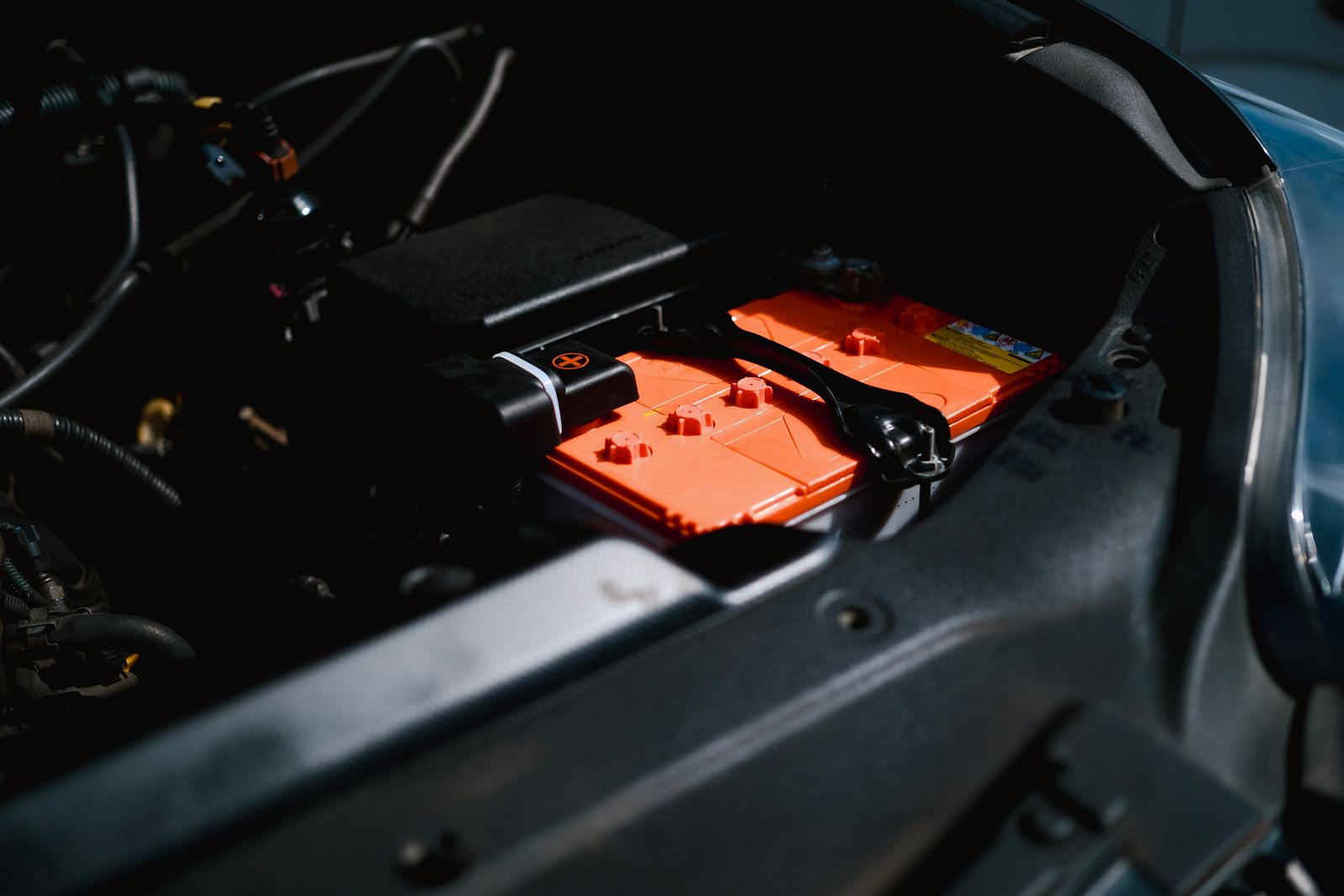
Can Acoustic Sensors Detect a Cell Vent Early?
Acoustic and ultrasonic sensors flag a lithium-ion cell venting minutes before temperature, voltage or gas do — but vehicle-deck use is still emerging.
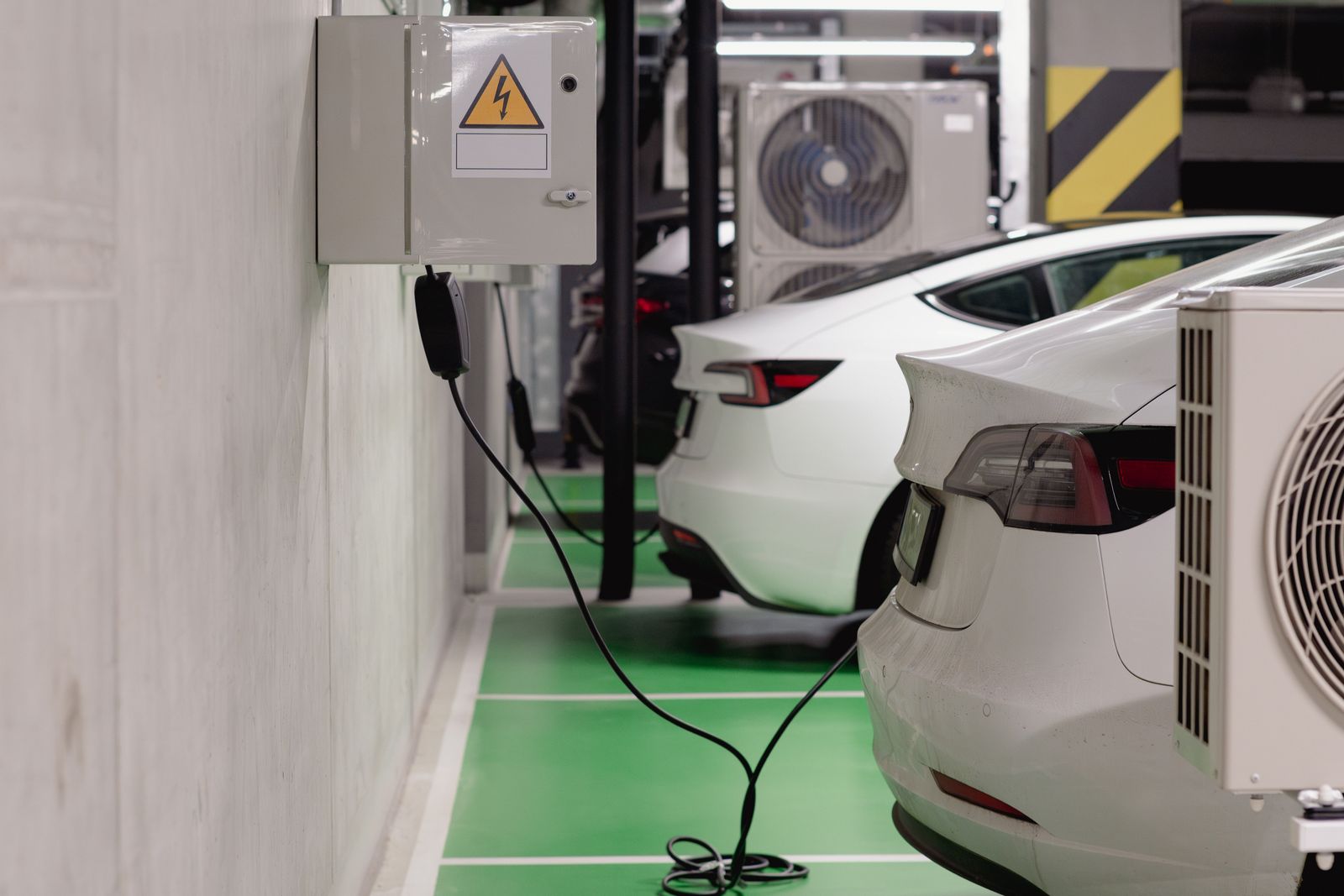
Does GB 38031 Change Marine Detection?
GB 38031-2025 makes an EV pack contain a cell runaway for 120 minutes with no fire. At sea that makes silent off-gas detection more vital, not less.