
Can Acoustic Sensors Detect a Cell Vent Early?
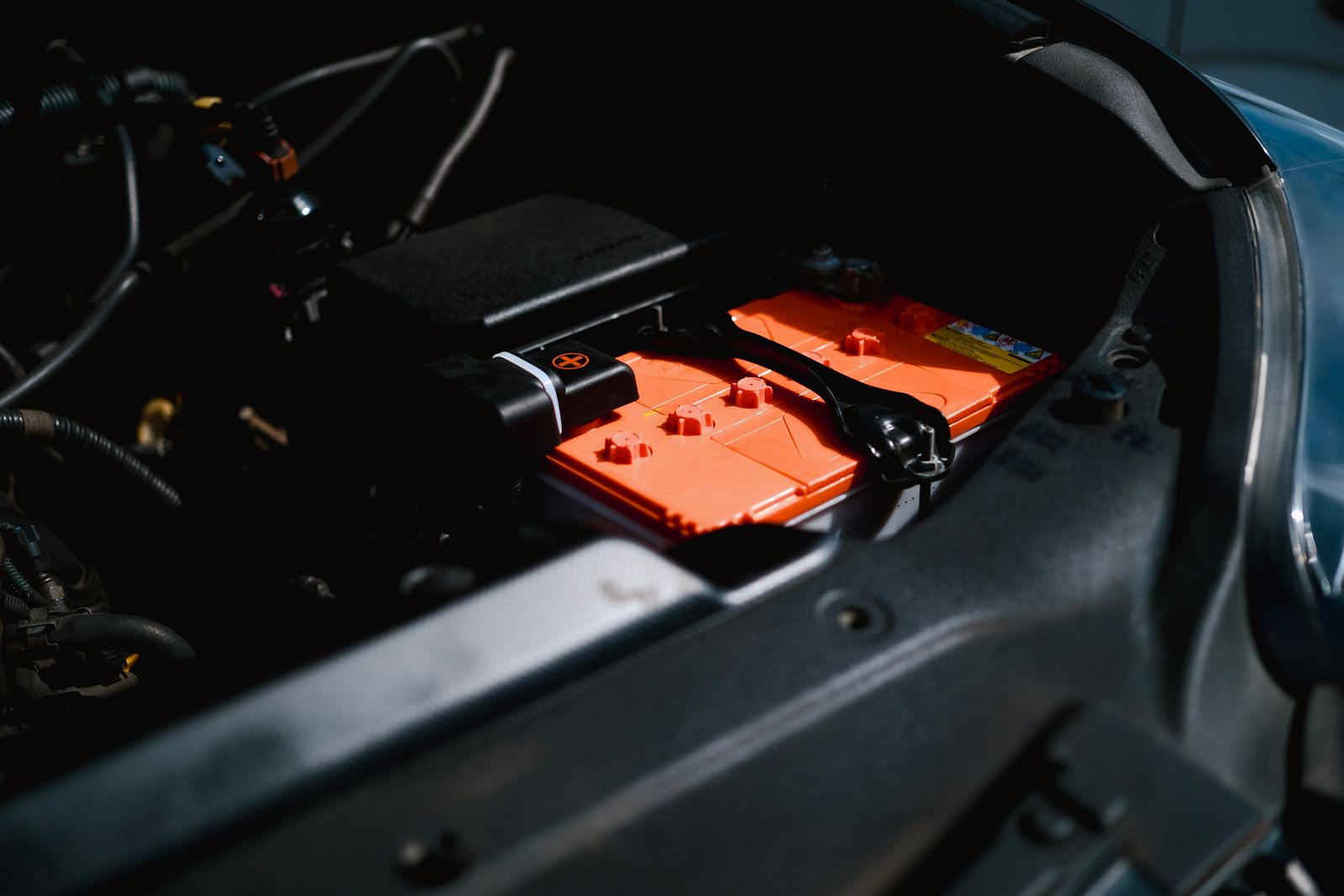
Acoustic and ultrasonic sensors flag a lithium-ion cell venting minutes before temperature, voltage or gas do — but vehicle-deck use is still emerging.
Yes — in laboratory and battery-storage testing, acoustic and ultrasonic sensing detects a lithium-ion cell venting before temperature, voltage or gas sensors register anything, because the vent is a mechanical pressure event before it is a thermal one. Reported lead times run to hundreds of seconds. On a vehicle deck the physics still hold; the open question is coverage and ambient noise, not whether the signal exists.
Two acoustic modalities, one early signal
"Acoustic" covers two distinct methods. Passive acoustic emission listens for the sound the cell makes: as internal gas generation raises pressure, the safety vent opens with a sharp release — a click-and-hiss the sensor can pick up. Active ultrasonic works the other way, transmitting an ultrasonic pulse through the cell and reading how gas generation, swelling and density change alter its attenuation and time-of-flight. Both register a failing cell before the exothermic temperature spike, and both precede an off-gas cloud reaching a remote gas sensor.
How much earlier — the lead-time evidence
The peer-reviewed lead times are large. One ultrasonic study reported early warning of venting 282–954 seconds ahead and of thermal runaway 377–851 seconds ahead across heating powers of 600–1200 W, with ultrasonic flagging the event earlier than a force sensor — previously regarded as the most responsive channel. Passive acoustic classifiers trained on venting signatures have reported 98.6% and 99.98% classification accuracy in recent work. Where the failure is a slow overcharge, warnings on the order of two hours before failure have been reported. The consistent finding across the 2025 literature is that acoustic and ultrasonic channels lead temperature, voltage and gas.
Why the vent is a pressure event first
The sequence explains the lead time. Before a cell goes into thermal runaway, electrolyte breakdown generates gas and internal pressure climbs; the vent then releases that pressure mechanically. That pressure release and the structural changes preceding it are acoustic and ultrasonic events that happen ahead of the runaway's heat, and well ahead of vented gas migrating across a large space to a fixed detector. Temperature and off-gas detection are downstream of transport and thermal lag; the acoustic signal is at the source. This is public-domain battery physics, and it is why the modality keeps appearing in early-warning research.
What it takes to work on a vehicle deck
Almost all of this evidence comes from battery-energy-storage, EV-pack and aerospace test rigs — controlled environments with the sensor close to the cell. A car deck is the opposite: large, ventilated, and full of ambient machinery, hull and sea noise, with hundreds of vehicles between any fixed sensor and a failing cell. The engineering problems are coverage (hearing a vent metres away, not millimetres), discrimination (separating a vent from a slammed door or a dropped lashing), and environmental robustness. None of these is a physics objection; they are the reasons acoustic sensing is positioned as one input in a multi-modal stack rather than a standalone deck detector.
Where it fits in a detection stack
The credible marine path is fusion, not replacement. An acoustic or ultrasonic vent event is most valuable as corroboration — tightening the confidence and the timing of a thermal or off-gas anomaly the other channels are already forming. NASA and US Department of Energy work has pushed ultrasonic monitoring toward battery-management integration; a marine deployment would follow the same logic but demand staged-test validation on representative decks before any lead-time claim is trusted. Used that way, the modality's strength — being first and being robust to the transport lag that slows gas and heat — is additive to a detection layer already built on infrared thermal and electrochemical sensing.
What this means for engineers and class
For classification-society and shipowner engineers, acoustic and ultrasonic detection is a maturing modality with strong laboratory lead-time evidence and limited marine validation — track it, and ask for representative staged-test data rather than citing a BESS figure. For detection designers, it is a corroborating channel that can shorten time-to-alarm and add robustness, provided the noise-discrimination and coverage problems are solved for the specific space. The signal exists earlier than the alternatives; converting that into a dependable vehicle-deck alarm is an engineering and validation problem, not a scientific one.
How RoRoSAFE helps
Acoustic sensing is a promising signal that is still emerging on vehicle decks. RoRoSAFE builds on channels that work there today: infrared thermal and electrochemical vent-gas sensing under each parked vehicle, fused before an alarm is raised. The goal is the same early window, flagging a venting cell before visible smoke, with signals that survive a working deck.
Pilot: one deck · installed alongside the berth · no drydock · 6 months of dashboard access
Sources
- Han et al., "Advances in Early Warning of Thermal Runaway in Lithium-Ion Battery Energy Storage Systems," Advanced Sensor Research (Wiley, 2025) — review of acoustic/ultrasonic and conventional early-warning methods.
- "Advanced ultrasonic detection of lithium-ion battery thermal runaway under various heating powers," Journal of Power Sources (2025) — ultrasonic lead times vs force/temperature sensors.
- Venting-acoustic-signal recognition studies, Journal of Energy Storage (2025) — Vision Transformer and SE-Net-GRU classifiers.
- NASA NTRS — "Local Ultrasonic Resonance Spectroscopy of Lithium Metal Batteries for Aerospace Applications" (ultrasonic NDE for internal battery monitoring).
- US DOE / OSTI — ultrasonic characterization of Li-ion thermal-runaway conditions for real-time BMS integration.
Questions, answered
Can acoustic sensors detect an EV battery fire before smoke?+
In testing, yes. Acoustic and ultrasonic sensing detects a lithium-ion cell venting before temperature, voltage or gas sensors respond, because the vent is a mechanical pressure release that happens before the thermal spike and before off-gas reaches a remote detector. Reported lead times run to hundreds of seconds in laboratory and battery-storage conditions.
What is the difference between acoustic emission and ultrasonic detection?+
Passive acoustic emission listens for the sound a cell makes when its vent opens — a sharp pressure release. Active ultrasonic transmits a pulse through the cell and measures how gas, swelling and density changes alter its attenuation and time-of-flight. Passive hears the failure; active probes for the conditions leading to it. Both precede temperature and gas signals.
How much earlier is acoustic detection than temperature or gas?+
One ultrasonic study reported warning of venting 282–954 seconds ahead and of thermal runaway 377–851 seconds ahead under 600–1200 W heating, earlier than a force sensor — previously the most responsive channel. The lead comes from detecting a pressure event at the cell rather than waiting for heat or vented gas to travel to a fixed sensor.
Does acoustic detection work on a ship's vehicle deck?+
Not yet as a proven standalone. The evidence is from battery-storage, EV-pack and aerospace rigs with sensors close to the cell. A car deck is large, ventilated and noisy, so coverage and distinguishing a vent from ambient noise are unsolved at scale. The realistic role is a corroborating input within a multi-modal detection stack, pending staged-test validation.
Continue the thread

Multi-Modal Fusion: Heat, Gas, and Smoke
Each sensor modality has different blind spots. Multi-modal fusion is not a buzzword — it is the only architecture that survives the marine failure modes.

Gas Sensing for Li-Ion Runaway: Bench vs Sea
Gas sensors catch Li-ion runaway early on a bench; at sea, airflow and background gas erode the lead. Which gases, where to mount, why it is a backup.

The Four Stages of Li-Ion Thermal Runaway
Li-ion runaway moves from SEI breakdown near 80–120 °C through venting to fire. Useful detection works in the venting window, before smoke and flame.